My lenses run from 16mm to 200mm. As a practical matter, they're free from the two distortions mentioned. I know that if I shoot a piece of graph paper at 16mm I can find some distortion but when I shoot a parade or a street dance or the interior of an old church, there is no noticeable distortion. I don't think I'd want to pay for the lens that was technically free from all distortion and, for me, it isn't necessary.
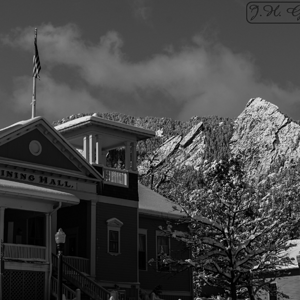
Keep in mind, too, that distortion is introduced by orientation. If I shoot at 16mm with the lens perfectly horizontal there isn't any noticeable distortion. If I angle the lens up, that's another matter and lens design wouldn't have any effect on that. That's why they have lenses with adjustments to the front element to compensate. I don't own one though.
Caveat: I'm not an optical engineer. I just take pictures.
Edward Weston took a famous portrait of Jose Orozco. The picture is slightly blurred because it was late in the day, the light was going, and his widest aperture was f/6.3 so the shutter speed was a little slow for a portrait. The picture is famous and Edward Weston described it as "practically satisfactory". I find that concept far more valuable than absolute technical perfection.