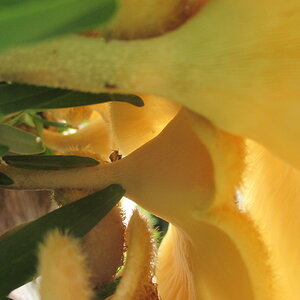
Macro lens: a lens which will permit you to focus on subjects much closer to the lens than non-macro lenses. There is no formal definition of 'macro' any more than there is a definition of 'high fidelity.'
Close-up lens: a lens placed on the front of a lens to permit focussing on subjects closer to the lens than otherwise possible. Supplied in diopter strengths of 1, 2, 3, 4 and 10. When stacked, strengths are additive. There can be a small loss of definition.
Extension tubes: let you increase the distance between a lens and the film plane. This in turn permits you to focus on subjects much closer to the lens than when the lens is mounted directly on the camera. Tubes normally come in a set of different lengths. The tubes can be stacked. Some expensive sets permit the camera to be operated in automatic mode [though this is not very important.]
Reversing ring. When you wish to get so close to a subject that the size of the image on the film will be larger than the size of the subject itself ['magnification' of the subject], a reversing ring is used to 'flip' the lens around. This results in a sharper image at the point of focus. [Lenses are not formulated to run in greater than 1:1 magnification.] Reversing rings are not usually 'automatic.' You must go to manual mode. Images larger than 1:1 will require an increase in exposure.
Depth of Focus [DOF]: the range of distances within which things will appear to be in sharp focus. [Actually, only one specific distance will be in sharp focus, but the degree of 'out-of-focus' of objects within the DOF will not be noticeable.] Objects closer or further away than the limits of the DOF will be noticeably out of focus. Those closest or furthest away will be out of focus by the greatest amount. DOF is a function of the focal length of the lens*, the distance to the subject and the f stop used for the exposure.
Shorter focal length of the lens = greater DOF. Higher f stop number = greater DOF. The further away the point of focus is from the front of the lens, the greater the DOF. The precise distance on which the lens is focussed is 1/3 'deep' inside the DOF.
For the best results in extension tube/reversing ring/close-up lens 'macro' photography a tripod, a hand-held exposure meter, a cable release [use 2 or 10 second delay on digital cameras], manual focus, manual exposure and the smallest possible f stop are usually 'standard.' In general, 'macro' work is a slow process due to the accurate set-up required.
NOTE: Focus with the lens wide open. Then stop down as far as possible [highest f number] for the actual exposure to provide the greatest DOF. Remember that the DOF is 1/3 in front of and 2/3 to the rear of your point of focus. As you stop down, correct the exposure by decreasing the shutter speed.
NOTE: The older manual focus 35mm rigs may be easier to use in 'macro' work than today's digitals. The cost of film is rarely a problem due to the deliberate nature of 'macro' work.
* Probably answers your last question.