What's new

AA filter strength?

EchoingWhisper

TPF Noob!
Joined
Aug 12, 2011
Messages
1,553
Reaction score
54
Location
Malaysia
Can others edit my Photos
Photos OK to edit
Is possible for camera manufacturers to produce a camera that allows us to set the AA filter strength in camera? Or is there a camera in the market that lets you select the type of AA filter you want before you buy the camera?
 
The AA filter is essentially part of the full sensor construction and, as such, is not designed to be replaced nor adjusted. Futhermore chances are that improving upon what the camera makers already give us is uneconomical for the gain you would expect to get (based upon the fact that whilst the AA can be removed there is no AA replacement service).

About the only way you'd get this is with a RED camera system which lets you use different sensors and is a modular setup (its also very very expensive).

In general though sharpening in editing is a stress free and simple way to restore the lost detail and most of the time if you shoot in RAW mode the capture sharpening, automatically applied by the RAW processing software (by default - unless you change things) removes a good portion of the AA filter softening.

 
I see, so the softening from AA filter can be removed? That means you still get the same amount of detail?
 
The AA filter is matched to the sensor as it is designed to spread each point of light over the beyer filter on the sensor. The sensor is made up of a small grid of filters arranged in RGBG patterns. This inherently causes some blurring to occur as your typical 10mpx camera only really has 2.5 million blue pixels, 2.5 million red pixels and 5 million green pixels, yet in software we derive (interpolate the data) to get 10 million full colour pixels.

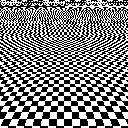
By messing with AA filter you get two effects. Firstly the introduction of weird patterns. Take this image here of an infinite checkerboard for example. There is no anti-aliasing:
Aliased.png

Whereas if you blurred the image slightly immediately before sampling it you end up with a slightly fuzzier image, but one that would be more attuned to what our eye would see:
Antialiased-lanczos.png


Also on a digital camera the result would look even stranger as individual points of light will suddenly hit only single pixels rather than a group of 4 on the beyer filter. This would mean that at the top of the checkerboard you'd get weird rainbow like effects like this one shot on a 5DmkII preproduction model with an incorrect AA filter:
WHP034-ADD39-5D2-zone-plate.png


So the question is: Do you want a tac sharp images that looks like crap whenever you try to photograph a fine pattern? Or do you want an image with a slight lack of sharpness, which can be sharpened quite acceptably in post processing, and is completely irrelevant in the field anyway unless you blow your images up to 100%?
 

Create an account or login to comment

You must be a member in order to leave a comment

Create account

Create an account on our community. It's easy!

Log in

Already have an account? Log in here.

Back
Top Bottom