What's new

First time astrophotography

ericardo79

TPF Noob!
Joined
Jun 7, 2012
Messages
26
Reaction score
5
Location
Australia
Can others edit my Photos
Photos OK to edit
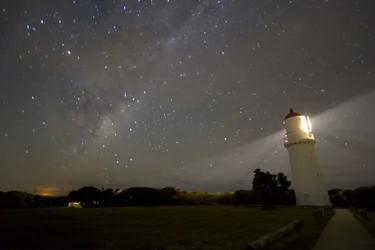
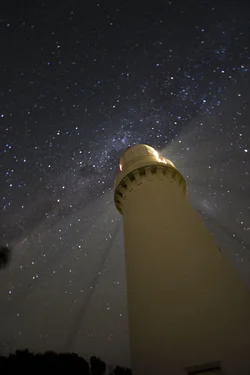
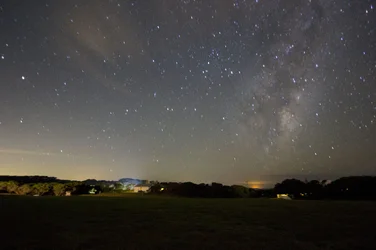
I was really amazed by what a DSLR can capture in space! Taken in Cape Schanck, Victoria, Australia. Not the best as it was my first attempt.
$IMG_3466211.webp$IMG_3480216.webp$IMG_3482213.webp
 
hi there,
You have great composition. just 1 tip: use a tripod, you can see the stars are a bit blurred. or try this: star trails, google it, you'll be amazed! Follow that tip and the photo will look amazing!
 
had the tripod on man. never take these shots without tripod. but it was windy. I think I need to mirror up!
 
oh soz i was confused, but you should just try a longer shutter speed to make those stars look like falling ones!
 
Best to choose what you want to expose for.
The stars? Or the lighthouse?

Both? :D

The light pollution from the city, and lighthouse are screwing with your contrast.
That's why your skies look so washed.

I've found in most cases, with the right lens, you can get a perfect exposure for the stars in 5-6 minutes that don't blur too badly from star movement.
Once that lighthouse comes shining its light around, you're washed. :(
 
Nice astronomy shots.
Like the stars so much!
Best to focus at Infinity.
 
Last edited:
did you apply noise reduction to this?
 
What ISO?
ISO is the sensitivity of the sensor which produces noise in an image which can be described as small dots with different colors than the actual subject. They have a pattern like a cloth as they are actually heated pixels in your camera's sensor which cause them to produce wrong colors.
The larger the ISO number, the more noise you see in your image.
also long exposures cause the sensor to collect light in a longer time which causes it to heat producing "Long Exposure Noise".
 
Last edited:
What ISO?
ISO is the noise in an image which can be described as small dots with different colors than the actual subject. The have a pattern like a cloth as they are actually heated pixels in your camera's sensor which cause them to produce wrong colors.
The larger the ISO number, the more noise you see in your image.
also long exposures cause the sensor to collect light in a longer time which causes it to heat producing "Long Exposure Noise".

ISO is the sensitivity to light, in reference to the imaging sensor. (Not a noise level.)
It's true in most lower end cameras that noise is prevalent at "high" ISO.
That's relative.

:lol:

I was asking what ISO the photo(s) were made at.
 
What ISO?
ISO is the noise in an image which can be described as small dots with different colors than the actual subject. The have a pattern like a cloth as they are actually heated pixels in your camera's sensor which cause them to produce wrong colors.
The larger the ISO number, the more noise you see in your image.
also long exposures cause the sensor to collect light in a longer time which causes it to heat producing "Long Exposure Noise".

ISO is the sensitivity to light, in reference to the imaging sensor. (Not a noise level.)
It's true in most lower end cameras that noise is prevalent at "high" ISO.
That's relative.

:lol:

I was asking what ISO the photo(s) were made at.


Oops!
Forgot to mention that!
hahahaha Good that you know!
I was kinda surprized :sexywink:
 
It's all good.


For anyone else reading about this, you want to shoot these style photos with as low of ISO possible on your camera.
 
My objective was to actually capture the lighthouse with the brown strip of gas from milky way. I think that will make a brilliant pic. I used my 10-22mm and had my ISO at 800, f3.5 and shutter open for 2 mins. Focused at infinity. I was also a rookie cause I didn't have a remote shutter so my finger had to be on the snap button for 2 mins!
 
Yeah, you're doing a few things that can easily be improved to make you even happier with the photos. Shutter has to be in bulb? Gotta get a remote trigger release. Some people (myself included a couple times) have used rubber bands and a small object to hold it down, but its really a pain in the butt. Lower your ISO to its lowest value. 50-100. If there is enough ambient light, you can focus on the light house before your exposure.
 

Create an account or login to comment

You must be a member in order to leave a comment

Create account

Create an account on our community. It's easy!

Log in

Already have an account? Log in here.

Back
Top Bottom