Looking at the Canon website I couldn't see any ability to control the shutter speed specifically, as there doesn't appear to be the normal (A,S,P,M) options.
"Modes
Smart Auto (32 scenes detected), P, Portrait, FaceSelf-Timer, Low Light (5.0 MP), Fish-eye Effect, Miniature Effect, Toy Camera Effect, Monochrome, Super Vivid, Poster Effect, Fireworks, Long Shutter"
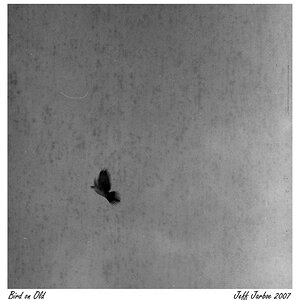
As astroNikon points out, a high shutter speed wouldn't be able to be deployed at night anyway. The faster the shutter, the less light is let into the camera, so you'd require a sky-high ISO to counteract that, which would mean an incredibly noisy image. To freeze the moving bat, you'd have to be at 1/2000 sec at least (your camera's max). Essentially you'd end up with a black screen. Add to that fact you're trying to focus on a rapid, erratically moving target. The AF system is highly unlikely to lock onto a black critter at night.
If by some miracle the camera did actually land focus, you would need a flash to freeze the action. It would act as your shutter speed and expose the image correctly. Personally, I wouldn't hold out much hope of successfully being able to photograph one. Even with something like a Canon 5D MKIII and a f/1.2 aperture lens and a speedlite, it would still be a major challenge to nail a keeper of a bat in flight.
I seem to remember seeing a highly sophisticated, automated set up being used to do just that many moons ago. A tripod mounted, pre-focused camera was positioned next to a bat's known flight path. Flashes were deployed to act as the shutter and light source for the image. The camera was triggered when the bat either broke an optical relay, or the sound of it's wings were detected. I forget which. So yeah, good luck with your IXUS lol.






![[No title]](/data/xfmg/thumbnail/31/31094-f975d7e61424996edc28cec3b9dd70a8.jpg?1734159245)