What's new

Is there an advantage to using a B+W filter rather than digital desaturation?

I have always used software to get high quality black and white photos from color shots and have been very happy with them. I would be interested in hearing others experiences as well.
 
what kind of black and white filters are you thinking about using? Even with a digital camera that will produce a black and white image it is best to do so post processing

desaturation is not the best method for converting color files into high quality black and white images.

filters are used often with black and white film but other than ND, UV or polarizing filters the changes are usually made with editing.
 
I personally prefer to shoot to BW first, but for those I convert I use the greyscale convertion or scan in 8bit greyscale.

I'll post some examples later on tonight.
 
i was not really planning on purchasing a BW filter, but i am interested in making BW shots and was wondering why bother spending money when i can just post process and achieve the same result.
 
What do you mean by 'a BW filter'? If you mean the coloured contrast filters that are used with B&W film then the best way of imitating them in post is to use something like Photoshop's Channel Mixer. Simply desaturating will not give the same result.

Best,
Helen
 
I think you may be talking about the b&w filter used to increase contrast with traditional bw film. If used with digital I imagine some discoloration and light loss would be about the only result. :) I use pshop and a trade secret :wink: that makes very good contrast b&w images. Lemme know if you need the trade secret. :)
 
I believe he is talking about the brand of filter makers, "B + W". If not, then I wouldn't be quite sure.
 
well actually you guys are complicating my question a bit.

i saw filters that made the image black and white and what i'm wondering is what advantage this gives over post-editing the color photo to black and white.
 
well actually you guys are complicating my question a bit.

i saw filters that made the image black and white and what i'm wondering is what advantage this gives over post-editing the color photo to black and white.

I thought that that was what you meant, so that's why I asked. There's no such filter, as far as I know. There are filters that give the impression of a monochrome image when you look through them, but they depend on our perception. The only way a filter can remove colour information is by removing all light except that of a certain wavelength - ie a certain colour. For example, if you put a deep red filter over your camera you could get a near monochrome image, but it would be made up of only red. It would not be the same as desaturating a colour image, or converting to greyscale (which is different), or using any method that took contributions from all three colour channels.

That's highly simplified, but I hope that it gives you the idea.

Best,
Helen
 
I was under the impression that by BW filter the OP was refering to the PS filters --> Colors --> Convert to Greyscale as it was to my knowledge that B/W filters where filters specifically designed for B/W shooting (IE. Red filters).
 
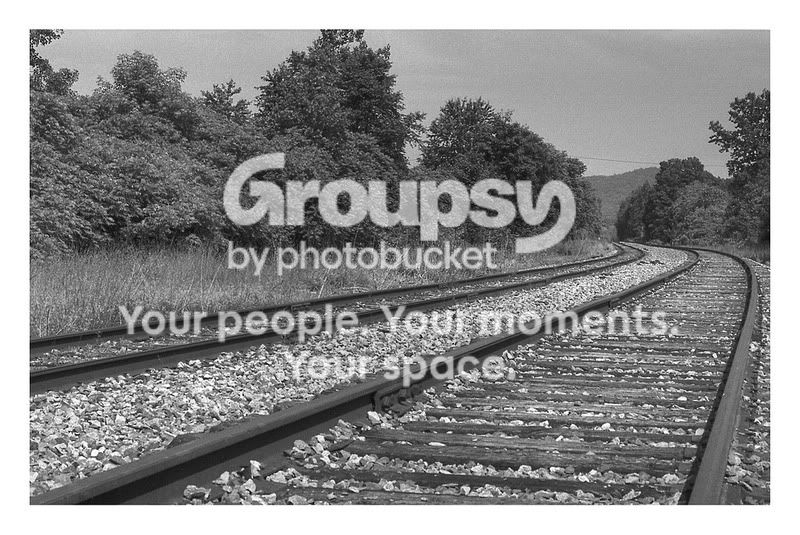
The examples I promised

Color image

Click picture to go to the TPF thread speciffically for this picture.

Converted threw Desaturation
126291_018_3desat.jpg


http://img.photobucket.com/albums/v371/battousaiofnphiles/Photos/Railroad/126291_018_3desat.jpg

Converted threw GS convertion
126291_018_3_GSconv.jpg


http://img.photobucket.com/albums/v371/battousaiofnphiles/Photos/Railroad/126291_018_3_GSconv.jpg

For those of you who can not see the difference as they have been posted there are links provided for the B/Ws so you can open them in individual tabs and switch back and fourth and see them change.
 
oh wow ok thanks that clears up a lot =]
 
Thats funny, because the desaturated one looks better to me - more contrasty. Maybe I'm missing something but from I've read here desaturation is not the way to do it?
 
Yes there is an advantage to using different BW conversion methods then desaturation. If you learn a bit about channels you notice that one will carry more of the contrast, the other detail, and some noise - if my memory serves me correct if you pitch the blue channel during conversion it gets id of alot of the grittiness. Anyways, desaturation neither takes away or adds contrast but it leaves you know control. i personally use the Lab conversion method with some tweeks.

I have no idea if that answers your question but...

 

Create an account or login to comment

You must be a member in order to leave a comment

Create account

Create an account on our community. It's easy!

Log in

Already have an account? Log in here.

New Topics

Back
Top Bottom