I see what your saying but trust me, your eye can not detect a 50,000 km change in distance on an object over 350,000 km away. Plus I don't think it travels that far (for everyone on the planet) in just a few hours. We spin.
I was directly refuting your claim, "The size of the moon nor it's distance changes." This is not factually correct, plain and simple. Also, the eye can detect a change in 15% diameter fairly well. But, this change happens over the course of half a lunar month, the time between perigee and apogee. I was not attempting to relate this to the horizon illusion.
As for the horizon illusion, Phil Plait addresses it in his book,
Bad Astronomy. The two posits from this thread - that the moon looks big because of comparison with near-field objects, or that the atmosphere acts like a lens - are not true.
The latter is not true because, while the atmosphere will refract light, it will do so to make the moon look vertically smaller. It has no effect on the horizontal dimension when the moon is on the horizon (also, taking a picture and comparing it to one when the moon is overhead will show they are almost exactly the same size, as can't be the case if this were true). The former is not the case, as the simple case that EW1066 referred to - it looks huge even where there's NOTHING on the horizon to compare it to.
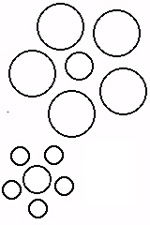
Phil says claims that we still don't actually know why the horizon illusion happens. It's definitely in our head, with the way our brain interprets images, though. He posits that the two most likely factors are (1) how we judge the size of distant objects (even with nothing there for comparison), and (2) how we perceive the shape of the sky itself.
By the way, I never gave feedback on the photo. I think it's a little too long of an exposure - or you bumped up the highlights too much in processing. Try shortening the length of exposure by about 2-3 stops and see what happens.