What's new

My Black and White portfolio

ChristianBoyatt

TPF Noob!
Joined
Jul 29, 2012
Messages
3
Reaction score
0
Location
United States
Can others edit my Photos
Photos OK to edit
$0103121244.webp$0103121244a.webp$0103121244b.webp$0103121244c.webp$0103121244d.webp$0103121245.webp$0103121246.webp$0103121246a.webp$0103121247.webp$0103121247a.webp
 
j
 

Attachments

  • $0128121653.webp
    $0128121653.webp
    153.7 KB · Views: 130
  • $0128121653a.webp
    $0128121653a.webp
    146.3 KB · Views: 135
  • $0205121415.webp
    $0205121415.webp
    217.7 KB · Views: 144
  • $0205121417.webp
    $0205121417.webp
    188.6 KB · Views: 158
  • $0205121417a.webp
    $0205121417a.webp
    200 KB · Views: 132
  • $0205121419c.webp
    $0205121419c.webp
    117.8 KB · Views: 149
  • $0205121420a.webp
    $0205121420a.webp
    289.1 KB · Views: 144
  • $bricks.webp
    $bricks.webp
    73.1 KB · Views: 147
  • $bull.webp
    $bull.webp
    75.5 KB · Views: 142
  • $calf.webp
    $calf.webp
    55.4 KB · Views: 142
Not exactly sure what's your idea of showing the pictures, but if you're expecting for comments/critique then I'd suggest specifying it in the title or text of the post; and also post A LOT less pictures per thread... I'd say no more than 2-3... In any case, if you want to upload more pictures as a series or something, number them... Otherwise, I really don't see many people taking the time to do this.

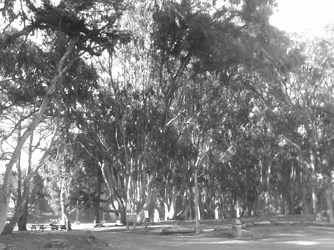
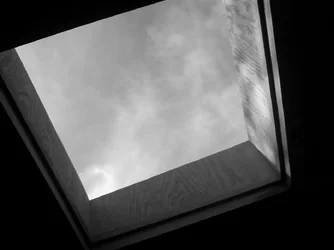
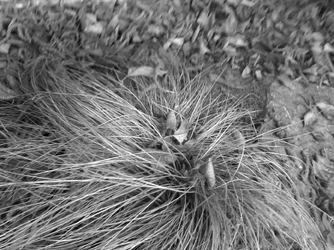
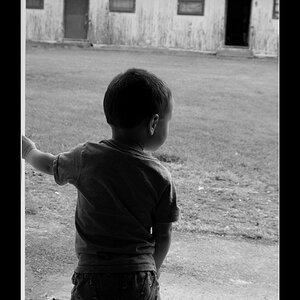
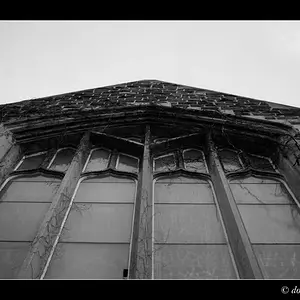
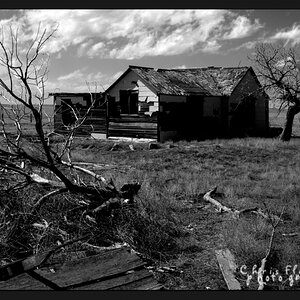
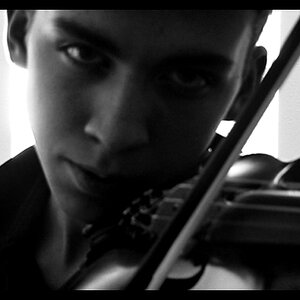
In general, I'd say watch out for blown highlights, work a little bit on the contrast and overall translation to B&W and be more careful with the focus. Some compositions are ok, but nothing beyond that, and most of them could really be improved from a compositional perspective.

Anyway, my 2 cents... and welcome to the forum!
 
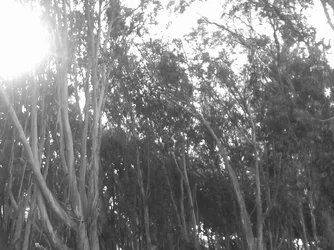
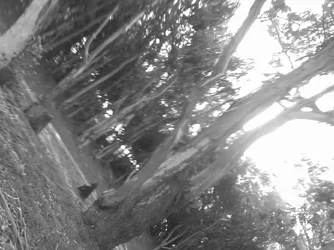
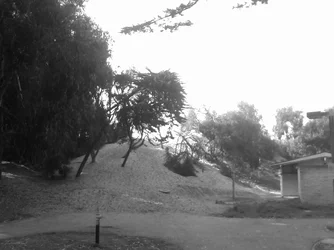
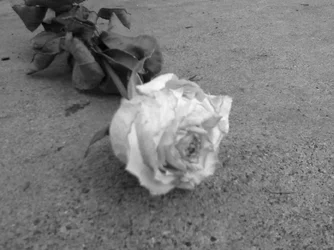
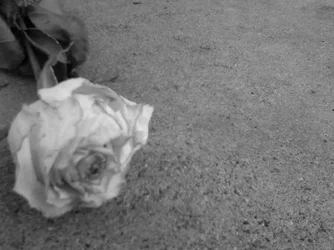
Christian, these need some work I'm afraid. The 1st shot of the stand of trees has the obvious problem with the overly-bright sun in the upper corner. The sky is washed out in a few of the scenes. Focus issues with the roses. But the bigger problem is that most of them lack a visual element that gets the attention of the viewer. Subject matter is rather bland in several shots. I don't know how long you've been at it. Perhaps black and white photography is still somewhat new to you. If I could offer a small bit of advice it would be this: Black and white photography is about tones. You have to have black blacks and white whites and a full range of gray tones; Your metering of these scenes has caused everything to be pretty much gray. very few of these actually have a tonal scale that would create contrast and visual punch. I don't mean to be too critical. B & W is not easy to master. With more experience you will learn how to get the tones that make good black and white pictures. You have some good ideas; it's the execution that is lacking in most of these. Keep shooting and try to remember.. get some blacks and whites in there.
 
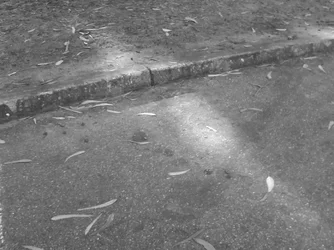
If this is your portfolio, I'd say it needs to be whittled down quite substantially. Particularly the shots that are out of focus, or slightly different compositions of the same subject (the flower comes to mind specifically). There are also some very low contrast images that have neither black or white, but just a lot of gray. There needs to be more contrast/tonality in the shadows to really make a dynamic image.

Keep it up though, especially if you are still new to photography. Some of your shots have potential, and I mean that.

All that being said, you will get much more constructive critique if you post 1-3 of your favorite images for review.
 
Christian, It looks to me as you are just starting in photography and you want to have some portfolio quickly. It seems easy, but it doesn't work that way, takes time. While you shoot whatever you find interesting, work on your technique and at some point you will be outstanding. And I mean you as there is no magic built in any camera, even highly advanced digital photo-computer.
 
I'm a noobie too, and I'm discovering that the magic key to taking good photos is practice. Practice taking picture. Practice looking at the results very hard. Practice being honest about what you did wrong. Practice throwing away photos that aren't good enough.

Go to the library and check out some books of photography. Not books ABOUT photography, but books OF photography. Study the works of other photographers. Compare them to your own pictures and try to figure out why their pictures are better than yours.

And above all, don't be afraid to throw away pictures. In this digital age there are no film costs. You don't have to buy photo paper and chemicals to see your results. It's just as expensive to take 50 pictures as it is to take one. So when you go out to shoot some pictures don't take one or two, take 50 or 100. I recently visited a local "Fiesta Latina" and took just over 300 pictures in 5 hours. Six of those pictures were worth keeping. The other 294 pictures got deleted.
 
I'm a noobie too, and I'm discovering that the magic key to taking good photos is practice. Practice taking picture. Practice looking at the results very hard. Practice being honest about what you did wrong. Practice throwing away photos that aren't good enough.

Go to the library and check out some books of photography. Not books ABOUT photography, but books OF photography. Study the works of other photographers. Compare them to your own pictures and try to figure out why their pictures are better than yours.

And above all, don't be afraid to throw away pictures. In this digital age there are no film costs. You don't have to buy photo paper and chemicals to see your results. It's just as expensive to take 50 pictures as it is to take one. So when you go out to shoot some pictures don't take one or two, take 50 or 100. I recently visited a local "Fiesta Latina" and took just over 300 pictures in 5 hours. Six of those pictures were worth keeping. The other 294 pictures got deleted.


This is good advice. Not every click of the shutter is going to produce a perfect picture; even for pros. The key is to learn from your mistakes and take lots of pictures. Learning to see "photographically" is a skill that must be acquired with lots of trial and error involved. Practice, practice, practice.
 
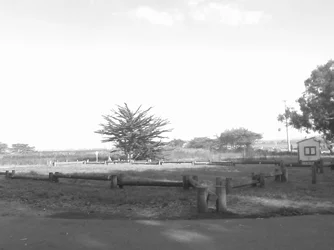
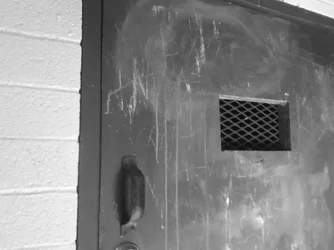
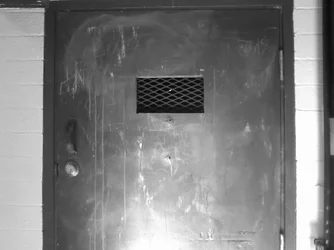
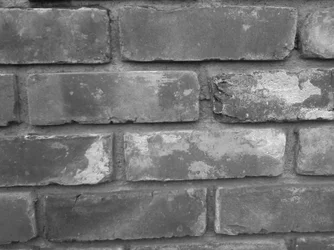
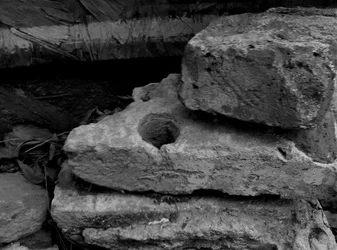
Most of the negative things I see are problems with subject and framing. On some of your photos I'm not sure what you want me to look at, and on others like the brick wall, the crookedness and asymmetry rob the photo of good balance and eye appeal.

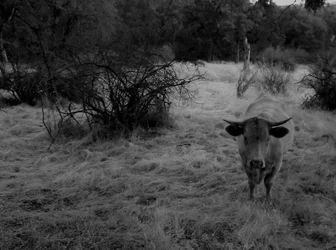
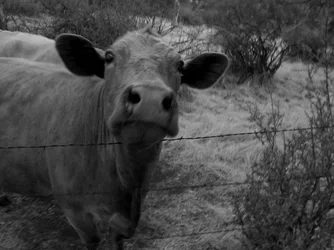
I do like the photo of the cow, however. It has a very lonely western feel to it. The composition is also better than some of the others because you have both the element of the cow and the environment "working together."
 
To balance all the "negative", let me add that you have some very interesting choices of subjects, and clearly you have imagination and a good eye for interesting subject matter. For a lot of people that's the hard part. Now work on the technical aspects of exposure, framing, focus, light/dark balance, etc., so that you can do justice to your good ideas.

 
Great start,,Practice, practice, practice. Think one shot at a time. If you are not shooting film I suggest trying it. It will force you to shoot 24 or 36 exposures, one shot at a time.
 
Last edited:
To balance all the "negative", let me add that you have some very interesting choices of subjects, and clearly you have imagination and a good eye for interesting subject matter. For a lot of people that's the hard part. Now work on the technical aspects of exposure, framing, focus, light/dark balance, etc., so that you can do justice to your good ideas.
.
+1
 
o hey tyler said:
If this is your portfolio, I'd say it needs to be whittled down quite substantially. Particularly the shots that are out of focus, or slightly different compositions of the same subject (the flower comes to mind specifically). There are also some very low contrast images that have neither black or white, but just a lot of gray. There needs to be more contrast/tonality in the shadows to really make a dynamic image.

Keep it up though, especially if you are still new to photography. Some of your shots have potential, and I mean that.

All that being said, you will get much more constructive critique if you post 1-3 of your favorite images for review.

Imagine me saying....everything this guy said
 
Somewhere above someone mentioned tones. That's the key to a great B&W photograph. When you look at a subject, you have to think tones, not color.
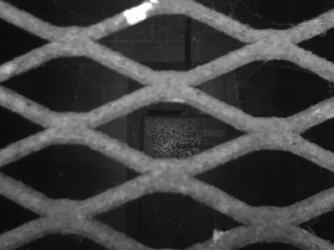
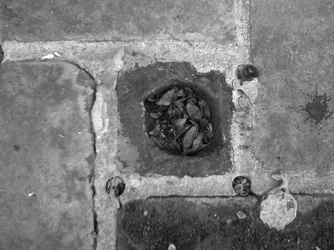
For me, the shot with the most promise would be the stone wall with the hole in it. You have the possiblity there of near blacks with a few highlights approaching white and all the tones in between. What ruins this shot is the lack of contrast along with the lack of focus.
I'm sure someone is going to mention my "tones, not color" comment regarding different colors reproducing differently on B&W film and this is true. You'll learn this and learn how to further enhance your photos with the use of filters in film photography or software in the digital world.
 
Last edited:
Somewhere above someone mentioned tones. That's the key to a great B&W photograph. When you look at a subject, you have to think tones, not color.
For me, the shot with the most promise would be the stone wall with the hole in it. You have the possiblity there of near blacks with a few highlights approaching white and all the tones in between. What ruins this shot is the lack of contrast along with the lack of focus.
I'm sure someone is going to mention my "tones, not color" comment regarding different colors reproducing differently on B&W film and this is true. You'll learn this and learn how to further enhance your photos with the use of filters in film photography or software in the digital world.


Yeah, I commented on this above. It's so true. If you want to take good black and white photographs you must learn to "see in black and white". You have to develop an eye for where the shadows and highlights are and emphasize them or you end up with the narrow spectrum of gray tones that are evident in most of these photos. Best thing I ever did for my personal understanding of this concept was to study the Ansel Adams "zone system". I learned how to meter a scene to get proper exposure for both shade and highlight areas. And, working with film, to develop and print in a way that enhances that theme. Taking a light reading off of a "gray card" is one way to get a decent exposure for any scene. Understanding how a light meter works is essential.
 

Create an account or login to comment

You must be a member in order to leave a comment

Create account

Create an account on our community. It's easy!

Log in

Already have an account? Log in here.

Back
Top Bottom