I see attempts at this that REALLY miss the mark... adding SO much fill that it becomes the main. What you've done here is such a perfect example of how it's properly done. Would you tell us a bit more about how you calculate for a proper lighting ratio?
Thanks!
-Pete
Well Pete, I have to be really honest with you here- most journalists (and particularly PHOTOjournalist) are horrible with numbers. We don't handle them very well and so go to the world of words instead... :mrgreen: That being said, there really wasn't any "calculations".
The first thing that I learned about digital is that latitude-wise, it is perhaps more exact than slide film. I suspect that rather than the half stop latitude that you have with slides, on digital, it's a third. In fact, my guess is that camera companies went to the one-third-stop shutter speeds simply because of this. That's my own theory though and your mileage and opinions may vary. But, it does work numerically-speaking.
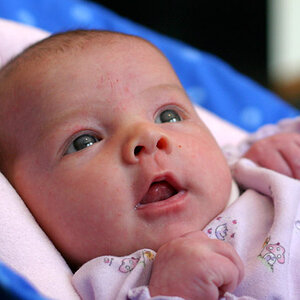
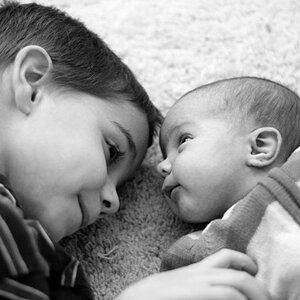
If you look at the shot, you will see that it's well-exposed just as an ambient light image. Note the detail in the hair. It has highlights, but isn't completely blown out. The fill-flash light will raise the detail in the darker, shadow areas to a level that will add detail to them. If you overexpose the highlights, you've overexposed EVERYTHING because the shadow values will be too high. This gives you that overexposed look that you are talking about. The same is true if the ambient light exposure is too low. In this case, you get the big flash shadows if you're flash is on-camera. So, to me, the single most important consideration in using fill-flash is to make sure your ambient light exposure is spot-on.
I use a Nikon D200 and an SB800 flash. I typically set the flash to a full stop UNDER "normal" and use the DTTL (or whatever it's called...) and let the flash take care of the rest. All of my shots are made with manual exposure and again, I take great care in the exposure made.
Another example of this is a shot that I posted in the "Professional Gallery" here. The shot is of a magician, and you'll note that in that frame, his hair is also highlighted, but not blown out. If my memory serves me correctly, there's only about a third of a stop between the facial exposure and the hair light. Enough to highlight, but not blow it completely out. You can check this on that image as well by looking at the "rimlight" on his shoulders. Note that there's still detail in the shirt and collar. And this shot was "worked" around the ambient light of the flame. SInce the flame is a "flash", I used a flash meter to measure the intensity of that light source and then built all of the other (4) lights around that exposure so that it all balances out. Good primary exposure and then balance around it. This, for me anyway, works every time.
Sorry I wrote so much, and hope this answers your questions.




![[No title]](/data/xfmg/thumbnail/39/39532-073f9eb14e26e2b99cc29112b92a2ab6.jpg?1734173679)
![[No title]](/data/xfmg/thumbnail/34/34120-9085bc65df236ba03977d33a60b852d3.jpg?1734164595)
![[No title]](/data/xfmg/thumbnail/34/34119-711b53445c011079fb89b6f42682ed00.jpg?1734164590)