What's new

New to DSLR photography, I need help

kingofwesteros

TPF Noob!
Joined
Aug 26, 2014
Messages
3
Reaction score
0
Location
NY
Can others edit my Photos
Photos OK to edit
Hi everyone,

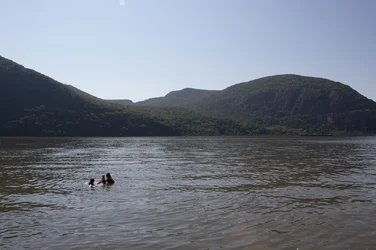
I'm very new to DSLR photography and I've watched a few tutorials about aperture, ISO and shutter speed but I'm aware I need to watch more because my photos are coming out terrible. Take a look at this photo I took yesterday at a beach in Hudson Valley, NY. https://www.flickr.com/photos/127325498@N08/14859986319/in/photostream/lightbox/

There's a lot wrong with the photo. The lens flare, the underexposure, but mainly I wanted to know why the background looks so dull. It was a bright sunny day. I used an aperture of f/18 which is close to the rule of thumb f/16 for sunny days. I used an ISO of 320 which seemed appropriate and I just used the shutter speed dial to get the meter balanced or just below balanced because when the meter was at 0, the picture looked too bright in the display panel preview. Why does the background look so dull and noisy if I only used an ISO of 320?

I'm using a Canon EOS 60D w/ a EFS 18-135 lens.

Thanks for your help in advance!

p.s. I know for the lens flare I need a lens hood. If you could reccomend a good one for my lens, I would be very grateful.
 

Attachments

  • $dull.webp
    $dull.webp
    169.3 KB · Views: 161
Bright sun tends to wash out colours and make photos look flat. Underexposure also increases noise.

Never judge exposure by how it looks in the view panel. Use your light meter in camera and a histogram.

You need to realise that cameras don't "see" the world in the same way we do. Our eyes can process a lot more than the camera can and we need to pick the right conditions to render the scene the way we want it.
 
The camera sensor could not handle the dynamic range from the bright sky and the darkness of the mountains (highlights & shadows). As weepete mentioned, our eyes are better at handling those things than your camera.

You will have to decide which is more important to you between the highlights and shadows, or you will have to take several exposures and blend them together. The use of a tripod would benefit you in taking multiple exposures of the same scene.

You may also use software to help lighten shadows or darken highlights.
 
The camera sensor could not handle the dynamic range from the bright sky and the darkness of the mountains (highlights & shadows). As weepete mentioned, our eyes are better at handling those things than your camera.

You will have to decide which is more important to you between the highlights and shadows, or you will have to take several exposures and blend them together. The use of a tripod would benefit you in taking multiple exposures of the same scene.

You may also use software to help lighten shadows or darken highlights.

Thanks for the tips. Do you suggest using the viewfinder rather than the view panel? By the way, I usually get my meter to 0 by using the shutter speed dial and leave my ISO and aperture alone. Is that common? I'm sorry for being such a noob. I know I have to read up on this stuff. I was thinking of purchasing the Lynda.com video tutorials for the 60D but it's costly and doesn't look like it covers aperture, ISO and shutter speed. Any suggestions? Video would be better for me (rather than books).
 
Cambridge in Colour. Especially the two entitled "Understanding Camera Exposure: Aperture, ISO & Shutter Speed" and "Understanding Camera Metering".
 
My personal rule for ISO is to leave it as low as possible (100) and only boost it up when I really need to for low light situations or when I need to bring shutter speed way up. It's just less noise to deal with in post. ISO is the one element of the exposure triangle that does relatively little and I tend to adjust it last.

I would say the main problem with this particular photo is light and subject. I'm not sure what time of day it is but the sun looks quite hard, anywhere near midday is a notoriously difficult time of day to shoot any kind of landscape. Next time try dawn or dusk.

The subject is also a bit ambiguous. Should we be focusing on the family in the water, the water or the mountains? The family is quite small in frame so I would say the mountains were probably your primary subject. In which case I would have placed the horizon lower in frame (2/3rds) to give more sky BUT for that to work we'd need a more interesting sky. The flat blue doesn't really do anything for our subject. To avoid that we could place the horizon on the top third line but equally the water is a bit dull and brown, it's not very inviting.

So to remedy those I would go back at dusk on a day with some beautiful clouds, place the horizon in the lower third to get away from the murky water. If it were sunset you could be lucky enough to get sunrays coming through the hills and then you could have a shot that you would feel more proud of. But even then I wonder if those mountains are reeeeally that interesting and if it would be worth it.

A good photograph gets all the elements right: an interesting subject, good composition, good lighting whether it's natural or artificial, a perfect exposure making sure there are no blown out highlights or black shadows. And for me (others may disagree) the raw photo is just a base with which to work with in Photoshop or Lightroom. That's where I take a good starting point, a photo with at least most of those elements and I make it into something that I think is great.

It takes time :) We all started somewhere. You will learn, you will grow and you will start taking good photographs if you keep at it. It took me several years to be taking the photos I'm taking today and I've always been very into post production due to my career (VFX artist) so I do put a lot of emphasis on that. And post takes time to learn as well and it's this whole other part of photography.
 
I'm not sure if someone covered this (I didn't notice it), but with lighting that harsh, all the tactics to rescue your photo can *help*, but the real problem remains the harsh lighting. That same scene, shot at golden hour (closer to dawn or dusk) would show a lot more detail and color because the light isn't baking down on the scene directly, but rather bathing it in a much softer glow.

It's still worth learning all those tactics, IMO -- I've had a bit of luck with HDR myself -- because sometimes you just can't wait for the light to get better, but in those circumstances, you're probably not going to get a jaw-dropping photo no matter what you do. Lighting is everything.
 
The camera sensor could not handle the dynamic range from the bright sky and the darkness of the mountains (highlights & shadows). As weepete mentioned, our eyes are better at handling those things than your camera.

You will have to decide which is more important to you between the highlights and shadows, or you will have to take several exposures and blend them together. The use of a tripod would benefit you in taking multiple exposures of the same scene.

You may also use software to help lighten shadows or darken highlights.

Thanks for the tips. Do you suggest using the viewfinder rather than the view panel? By the way, I usually get my meter to 0 by using the shutter speed dial and leave my ISO and aperture alone. Is that common? I'm sorry for being such a noob. I know I have to read up on this stuff. I was thinking of purchasing the Lynda.com video tutorials for the 60D but it's costly and doesn't look like it covers aperture, ISO and shutter speed. Any suggestions? Video would be better for me (rather than books).

Hi King,

There are tons of videos that explain exposure. Try this one out .
As far as using the liveview lcd versus the viewfinder, that is personal preference and usually will depend on what you are trying to shoot, the angle you are shooting it at, and probably the time of day or night (In a nutshell, there are pros and cons to both).

I can't remember the last time I used liveview, but it has it's place.
 
Last edited by a moderator:
Google the "exposure triangle" there's plenty of stuff on the web about it.

You are using your cameras in built light meter which is a good start, but you also need to know what your metering on and where you want that exposure to be to get the exposure you want.

Setting exposure using the shutter speed as a variable can be good, as long as you don't create unintensional blur. Rule of thumb is [1/focal length] x crop factor(1.6 for canon) is your minimum Shutter speed for hand held. So if your focal length is 100mm then the minimum shutter speed should be 1/100 x 1.6 = 1/160th sec. For other things in motion you'll need faster still, so for someone walking briskly it'll be nearer 1/250th, running 1/500th and fast sports 1/800th and upwards regardless of focal length.

After a while and learning some basics like depth of field you can make a choice of which settings you can compromise on and which you need to set.
 
You guys are extremely helpful! Thank you!
 
As far as bad beginning photos go, that one really isn't too bad.
One thing to keep in mind when doing the exposure is how you have the camera metering it. I'm not sure what the exact modes are on your Canon, but with Nikon you get spot, center weighted, or dynamic. I'm sure the Canon has three similar settings with a slightly different name that do the exact same thing. Spot will meter the light only right where the focus point is, Center weighted takes a larger bubble around the focusing point, and dynamic will kind of average out everything in your viewfinder.
On a picture like the one you posted, it looks like you probably had something like the dynamic metering. That's not always the best choice when photographing something like water, or a bright sky landscape, and your picture is a double whammy of those. The camera is going to meter for the glare on the water, and the whitest points in those sky. It will lower the exposure to keep those highlights from blowing out, leaving everything else darker. Try playing with the metering settings and the focusing points, as you can take better control over where exactly the camera is metering the exposure.
As far as lens hoods go, anything hard plastic. A hood is one of the few things in this hobby you can cheap out on. It's literally a plastic ring and nothing else, a big dollar brand isn't going to get you anything special. But I do recommend hard plastic as they protect the lens better.
 

Create an account or login to comment

You must be a member in order to leave a comment

Create account

Create an account on our community. It's easy!

Log in

Already have an account? Log in here.

New Topics

Back
Top Bottom