camz
No longer a newbie, moving up!
- Joined
- Jun 11, 2009
- Messages
- 1,878
- Reaction score
- 285
- Location
- Bay Area
- Can others edit my Photos
- Photos NOT OK to edit
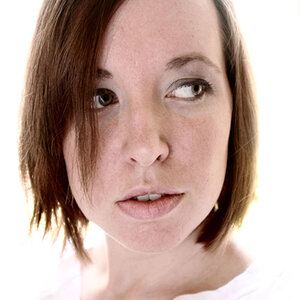
So me and a buddy(also a fellow portrait photographer) had an argument which lens is better for portraits on a full frame. He says that the canon 70-200mm L IS 2.8 is the best because it covers a very flexible focal length of 85-135mm which is the standard focal length when it comes to portraiture(according to him..hehe). He says it also gives the best bokeh at 200mm.
I on the other hand completely disagree. I love using the 85 because it is just way faster(1.2 vs 2.8). I rather have the flexibility in light control rather then the focal length. I haven't had issues with zooming with my legs before but I've definitely had issues with slower lenses. And my main counter argument on his focal length point is that digitally cropping the image can always solve the issue of zooming that the 85 prime does not have. And in regards to bokeh...I told him common nothing beats the 85 cream machine. Also the weight factor of the 70-200mm at >3lbs.
So I was wondering what you guys used for your portrait work. Feel free to comment if there are other lenses besides the two I mentioned for portraiture. Nikon shooters are also welcome to discuss which is the best focal length or lens you use for portraits . I want to see what's out there.
I on the other hand completely disagree. I love using the 85 because it is just way faster(1.2 vs 2.8). I rather have the flexibility in light control rather then the focal length. I haven't had issues with zooming with my legs before but I've definitely had issues with slower lenses. And my main counter argument on his focal length point is that digitally cropping the image can always solve the issue of zooming that the 85 prime does not have. And in regards to bokeh...I told him common nothing beats the 85 cream machine. Also the weight factor of the 70-200mm at >3lbs.
So I was wondering what you guys used for your portrait work. Feel free to comment if there are other lenses besides the two I mentioned for portraiture. Nikon shooters are also welcome to discuss which is the best focal length or lens you use for portraits
. I want to see what's out there.


![[No title]](/data/xfmg/thumbnail/42/42492-60144191c917c21139f8acd72f6ba090.jpg?1734177011)
![[No title]](/data/xfmg/thumbnail/35/35868-15d995e4052bf05e2038e8b2a545a08f.jpg?1734167589)