What's new

What is the effect of UV Filter?

My UV filter saved my 24-70L lens from being shattered on a concrete floor. That counts for something. :)
Your logic is flawed.
You don't know that the UV filter saved your lens. You only know the UV filter shattered.
The only way to know the UV filter 'saved' the lens would be to precisely duplicate the same drop (speed, angle of impact, same point of impact on the lens, etc), but without a UV filter on the lens.
You were lucky the sharp shards of broken filter glass didn't damage the front lens element, because that often happens when a UV/clear filter breaks.

UV filters are thin, have minimal edge support, are made from a different kind of glass camera lens are made from, and are easily broken.
Camera lens front lens elements area a lot thicker, are often backed by even more lens elements, and will stand up to a lot more abuse than most people realize.

Inexpensive UV filters cause focus sharpness and other image quality problems. Even pricey, coated UV filters promote lens flare, and can cause other IQ issues because of the air gap they add to the lens.

Inexpensive filters are mounted in aluminum mounts and the aluminum will corrode by electrolysis when mounted on metal bodied lenses, and become very difficult to remove. That's why good filters are in brass mounts.
Some shooting situations almost demand some kind of 'protection' be used, but those situations aren't often encountered by the vast majority of photographers.

 
Last edited by a moderator:
So we've got a gun thread AND a UV filter thread going at the same time! Now all we need is a TPF is full of bullies thread, and a What is Art Anyways thread!
 
My UV filter saved my 24-70L lens from being shattered on a concrete floor. That counts for something. :)
Your logic is flawed.
You don't know that the UV filter saved your lens. You only know the UV filter shattered.
The only way to know the UV filter 'saved' the lens would be to precisely duplicate the same drop (speed, angle of impact, same point of impact on the lens, etc), but without a UV filter on the lens.
You were lucky the sharp shards of broken filter glass didn't damage the front lens element, because that often happens when a UV/clear filter breaks.

UV filters are thin, have minimal edge support, are made from a different kind of glass camera lens are made from, and are easily broken.
Camera lens front lens elements area a lot thicker, are often backed by even more lens elements, and will stand up to a lot more abuse than most people realize.


My UV filter did not shatter. I had a pretty good quality, thick edged filter on that lens. When the lens fell onto the concrete it landed on the edge of the filter. The edge of the filter was completely bent inward after the fall. I sent the lens into Canon after this, because I could not even remove the filter off of the lens. They were able to remove the filter with heat and something else (I don't remember what) with no destruction to the lens. They told me I was lucky to have had the filter on my lens, or my lens would not have survived at the angle it fell.
 
Last edited by a moderator:
Back in my film days, I owned 4 cameras and a stable of 18 lenses. All but three of them had a UV or Skylight filter on them (the fisheye, 300 and 500 didn't have filter threads). When I sold all my film gear years ago for lack of use, the lenses were sold with the filters still on them, some of them had never been removed since the day I purchased them and installed the filter.

When I started into digital, I followed suit. Then I had an epiphany. In all my film years (~25 years worth!), I never ONCE replaced any of those filters. Each filter on the film lenses I sold was just as scratch free when I sold it as when I purchased it. And this was back when I was shooting for a living.

Today, I still have those UV filters in the bag, but I have yet to feel the need to install one regardless of the conditions I'm shooting in.

IMHO, the popularity of using a filter to 'protect' a lens is a by-product of stores up-selling them as filters have a huge profit margin.
This is very close to my story/experience as well, but I actually detected Newton Rings on images while doing a sensor cleaning one time, tracked it to the UV filter, and that was my true epiphany moment. Haven't used a UV filter on a digital camera lens since.

I also had an incident wherein I had a UV filter break while on my 100-400mm L lens, but I never saw any actual evidence nor was ever inclined to think, let alone become convinced, that it "saved" my lens - only that the thin glass of the UV filter was easily broken.

Since my "epiphany" moment, I only put UV filters on lenses of film cameras, and only for the benefit of the UV filtering, not for "protection".
 
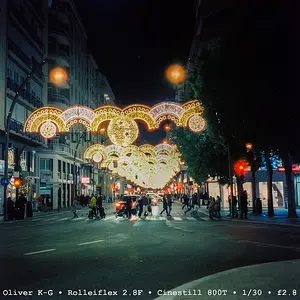
UV filters can give some very beautiful ring-like or blob-like glowing effects when shot toward bright light sources like lights, birthday candles, fireworks, headlights, street lights, tavern lights, restaurant lights, bar lights, lawn lights, pool lights, the sun, the moon, the stars, the ocean, nightclub marquees, billboards, dash lights, and of course, lighted matches and implements used by flame-swallowers and sword-swallowers at Las Vegas shows. So, all in all, they can often add that creative flare-flair to your shots!
 
My UV filter did not shatter. I had a pretty good quality, thick edged filter on that lens. When the lens fell onto the concrete it landed on the edge of the filter. The edge of the filter was completely bent inward after the fall. I sent the lens into Canon after this, because I could not even remove the filter off of the lens. They were able to remove the filter with heat and something else (I don't remember what) with no destruction to the lens. They told me I was lucky to have had the filter on my lens, or my lens would not have survived at the angle it fell.
I stand corrected regarding what happened to the filter.
Getting a bent UV filter off after it has been damaged is usually a problem. Imagine what it's like unscrewing a filter that was broken and bent such that the shards were forced back into the front lens element.

Still no one, including 'they' at Canon, can only speculate/guess how the lens may or may not have been damaged if there were no UV filter on the lens when it was dropped.

Lenses damaged from dropping, with or without a filter, can usually be repaired. Scratched or broken front lens elements can be replaced.
People talk about dropped lens damage, or a damaged front lens element as if the damage is not repairable, and the entire lens would have to be replaced.

No doubt, a lens can be damaged to the point that buying a replacement lens would cost less than repairing it, but that is not likely to happen - unless the lens is a Canon EF 50 mm f/1.8 II, or it's been run over by a Mack truck.
 
UV filters can give some very beautiful ring-like or blob-like glowing effects when shot toward bright light sources like lights, birthday candles, fireworks, headlights, street lights, tavern lights, restaurant lights, bar lights, lawn lights, pool lights, the sun, the moon, the stars, the ocean, nightclub marquees, billboards, dash lights, and of course, lighted matches and implements used by flame-swallowers and sword-swallowers at Las Vegas shows. So, all in all, they can often add that creative flare-flair to your shots!

This is my experience.
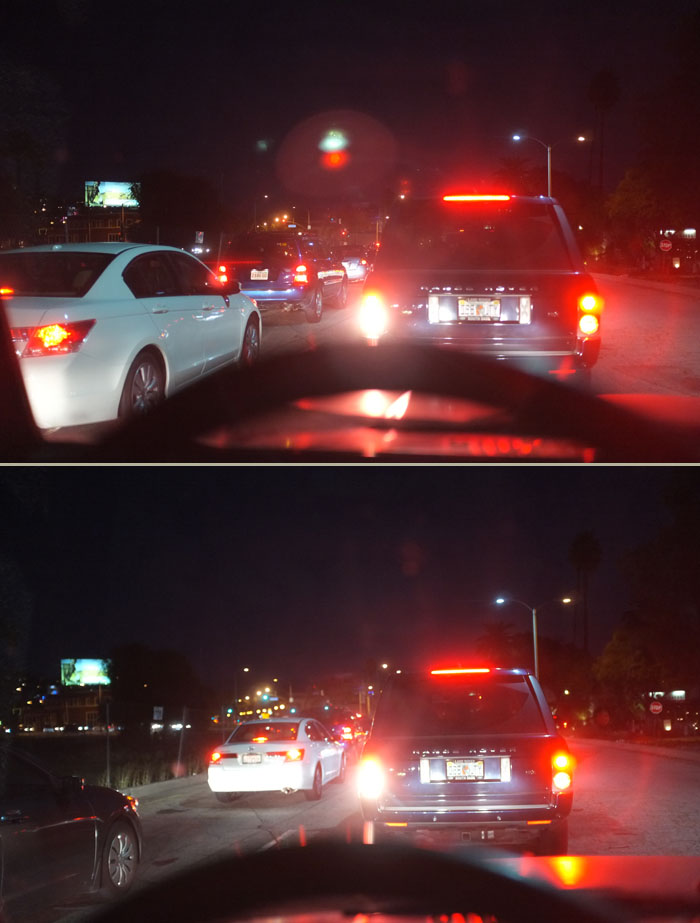
My X100.. I used a filter on this camera at first since the lens isn't interchangeable, till I noticed those blobs. I don't use protective filters anymore. Haven't had any issues in all my years of photography anyway..

top=uv filter, bottom=not (note blob right in the center)

flare.jpg
 

Create an account or login to comment

You must be a member in order to leave a comment

Create account

Create an account on our community. It's easy!

Log in

Already have an account? Log in here.

Back
Top Bottom