What's new

As Shot vs Auto

Personally I will set the WB for the scene, but sometimes I do come to auto, (although I usually find auto to be a ever so slightly cool). If I have have time, and remember, I will use a white balance card. I recently bought another WB card that I really like, its called a Zebra card that I got from a lab I started using. Much better imho than my plain grey cards, in quality and functionality.
 
If the same white balance is applied to both the JPEG preview and the output file, then both histograms will be similar. The histogram can be trusted, but only if white balance is properly set to something that resembles the light available.

False. There is sooo much more to processing a file to get a result than white balance. Most raw converters will differ in tonality, white balance, and applied camera calibration points. Combined with the way some raw processors work I guarantee to you that in many cases you will not be able to replicate the histogram in say Lightroom as it appears on the back of your camera.

I would HIGHLY disagree that clipping in one channel is not "bad". Clipping is always bad, period, and should always be avoided. Yes, you can rebuild one channel from the information from other channels and other such channel chop trick. However, this scenario will always result in lost detail.

Provided that the color itself is within gamut, it is much better to decrease exposure than to allow one channel to blow out. I am also playing with the idea of optically filtering that color and color correcting in post.

So that comes down to would you rather a horribly dark image, a dull undersaturated image, or a vivid image as true to the original image as possible and looks fantastic? People almost seem to fetishise not clipping anything at the expense of actually producing a nice image. You said it yourself, provided colour is within gamut. That's very bold use of the word providing there, as if many cases where single channel clipping aren't the direct result of out of gamut colours; quite often they are. Try it next time you're in vegas or in a forest with sunlight lighting up the backs of leaves. There are colours in the world that I can't display on my wide gamut monitor, can't print, and when the future finally arrives, can't even be displayed on an OLED display.

Not all clipping is bad, actually quite often some is necessary to create a pleasing image.
 
Not all clipping is bad, actually quite often some is necessary to create a pleasing image.

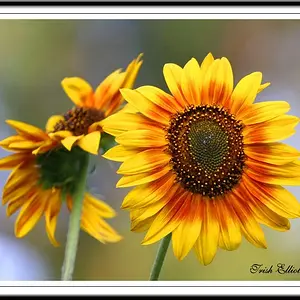
For example, in my experiences its very hard to shoot a subject with strong yellow colourations in macro (specifically with flash in my case, but I suspect if I turned it off and used regular light and longer exposures the problem would remain the same) without having the yellow channel clip. This is even if the luminescence channel shows no clipping at all.
Further, as Garbz says, if I do expose with the yellow channel not clipping the overall exposure is clearly underexposed.

I've not look into/didn't know about this channel saving method using the other channels - but I generally just process the RAW twice - once normally and once dragging the exposure slider down to get the yellows back out of clipping - then impose one photo over the other and play with layer masks and opacity of the brushes to slip one over the other.
 
Well. First of all, I said the histograms will be similar, not the same, and for the sake of this discussion they are going to be close enough.

Second, it's not about what I can display, it's about useable detail in post production. So while I certainly cannot print or display the entire AdobeRGB gamut, I can use that information to fit the image into another gamut which I can print or display. If my entire red channel is blown to bits, and my green and blue channels are vastly under exposed, I cannot use information from any of those channels to make useable information about the subject when going to a specific device, you'll loose all subtlety in tone and color that is there.

No detail is no detail, period. Sure it might look great, but it is overexposed within that channel. If I want this effect I can always remove the detail from the other channels; it's much harder to put it back in. And this is why I use AdobeRGB, not because it looks pretty, not even because I can print, display or capture the entire AdobeRGB gamut. Rather because it covers a greater color space than my camera's native gamut. Using adobe RGB I know that if a channel clips it's beyond the physical capabilities of my camera, and not the theoretical capabilities of my workflow.

As a result, in practice I hardly ever run into this situation except when shooting a scene where the brightest feature is not white. Because I am a firm believer in exposing to the right, i'll meter off this bright feature and stop up as far as I can. Even if one or two channels clip, because I've already exposed at the outer limits of my camera's latitude, I can still decrease exposure and still be within, and usually beyond, the appropriate zone.

If you approach exposure, raw data and your working profile as WYSIWYG, then you're under utilizing your camera's abilities.

---

Overread - When you drop the exposure level in post, do you regain detail? If so, you could also try dragging the color temperature to a higher value (cooler color/away from yellow) and placing the imposed version on luminance mode, this will provide detail from the other channels without significantly cutting the overall brightness of the yellows.

If you are getting useable information then you aren't actually clipping in exposure, otherwise decreasing exposure in the RAW processor will not have any effect, but rather pushing the channel beyond the working gamut.

 
One thing I just found out, if you're a Nikon user, do not use Lightroom's auto white balance, use your camera's. The auto white balance from Lightroom is very wrong,
 
No detail is no detail, period. Sure it might look great, but it is overexposed within that channel.

My point is that if you weigh anything more important than the bit I've emphasised above then you idea of photography is vastly different than mine.


Detail is for mathematicians and scientists.
 

Create an account or login to comment

You must be a member in order to leave a comment

Create account

Create an account on our community. It's easy!

Log in

Already have an account? Log in here.

Back
Top Bottom