What's new

At the aquarium

TreeofLifeStairs

No longer a newbie, moving up!
Joined
May 12, 2013
Messages
1,082
Reaction score
289
Location
California
Can others edit my Photos
Photos OK to edit
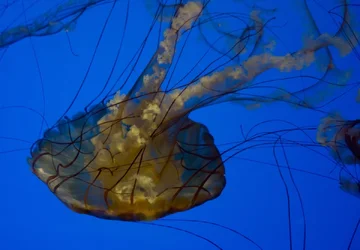
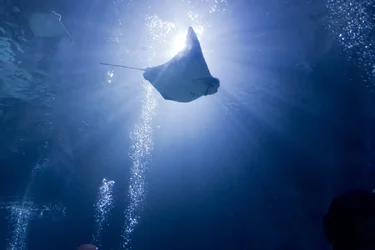
These were shot different days and at different aquariums, I think they are the best of each day. Let me know your thoughts.

$Jelly-sml.webp$Ray-sml.webp
 
I like them.

When taking these kind of pics, do you put the lens right on the glass?
 
I like them. When taking these kind of pics, do you put the lens right on the glass?

No, I've never tried that. The aquarium is fairly dimly lit so I didn't find there to be any reflections. If that's what you are asking about.
 
Yes, that's what I was wondering.
 
If you are concerned about reflections you could always use a polarizing filter. I personally don't own one or ever used one but I have seen the difference they make and I can be quite dramatic.
 
If you are concerned about reflections you could always use a polarizing filter. I personally don't own one or ever used one but I have seen the difference they make and I can be quite dramatic.

I've found they generally don't work that well inside the aquarium, they cut the amount of light coming in to the point where either you take a big hit in ISO or shutter speed. That might vary from aquarium to aquarium of course but the one at the Henry Doorly zoo is so poorly lit that even at 1.8 it's hard to get a high enough shutter speed to get a decent shot of a moving target.
 
Polarizing filters typically work fine with water or glass but often fail completely when encountering the Plexiglas used in aquariums, zoos and museums. Several years ago I bought a very expensive polarizing filter, IIRC it was B+W, that did nothing to reduce reflections from Plexiglas. I was quite annoyed about this and sent an email to them. IIRC the response was that while glass is a coherent substance Plexiglas isn't coherent at all. Reflections occur from the outside, the inside and throughout the particles of Plexiglas so polarizing filters just don't work very good. Mine reduced the picture quality a bit so I took it off.
 
Polarizing filters typically work fine with water or glass but often fail completely when encountering the Plexiglas used in aquariums, zoos and museums. Several years ago I bought a very expensive polarizing filter, IIRC it was B+W, that did nothing to reduce reflections from Plexiglas. I was quite annoyed about this and sent an email to them. IIRC the response was that while glass is a coherent substance Plexiglas isn't coherent at all. Reflections occur from the outside, the inside and throughout the particles of Plexiglas so polarizing filters just don't work very good. Mine reduced the picture quality a bit so I took it off.

So they gave you a long sciency answer basically saying, "Pexiglass. The stuff is just too dang thick".. lol. I tried a CPL a few times at various other places in the zoo where the lighting is better and like you I didn't find it to be all that effective. I've noticed my best bet is to stand back from the glass a bit and then look throught the viewfinder, if I spot some relections I need to move slightly or rotate a little until they arent there anymore, then wait for the shot I need. Not always perfect but the best solution I've come up with thus far.

Oh, Tree, forgot to mention I really like shot #2 - love the lighting on that one.

 
Polarizing filters typically work fine with water or glass but often fail completely when encountering the Plexiglas used in aquariums, zoos and museums. Several years ago I bought a very expensive polarizing filter, IIRC it was B+W, that did nothing to reduce reflections from Plexiglas. I was quite annoyed about this and sent an email to them. IIRC the response was that while glass is a coherent substance Plexiglas isn't coherent at all. Reflections occur from the outside, the inside and throughout the particles of Plexiglas so polarizing filters just don't work very good. Mine reduced the picture quality a bit so I took it off.

So they gave you a long sciency answer basically saying, "Pexiglass. The stuff is just too dang thick".. lol. I tried a CPL a few times at various other places in the zoo where the lighting is better and like you I didn't find it to be all that effective. I've noticed my best bet is to stand back from the glass a bit and then look throught the viewfinder, if I spot some relections I need to move slightly or rotate a little until they arent there anymore, then wait for the shot I need. Not always perfect but the best solution I've come up with thus far.

Oh, Tree, forgot to mention I really like shot #2 - love the lighting on that one.

Yes, that's how I have to do all my photography other than outdoor stuff. When I shot the Smithsonian Museum of the North American Indian and Museum of Natural History last summer I was holding the 6D above my head and shooting downward, holding it below my waist and shooting upward and moving left and right to try to get rid of the reflections. Sometimes I would use a flash at an angle just to block out the static reflections.
 

Create an account or login to comment

You must be a member in order to leave a comment

Create account

Create an account on our community. It's easy!

Log in

Already have an account? Log in here.

Back
Top Bottom