What's new

Beginner Macro Question

JFPhotography

TPF Noob!
Joined
Jan 26, 2017
Messages
15
Reaction score
2
Location
New York City / Munich, Germany
Can others edit my Photos
Photos OK to edit
So I have a question. Macro photography is something I really wanted to get into and as I've been researching lenses, I just got a Nikon 105 f2.8 IF-ED used, but in perfect condition at a great price.

Anyway, I've taken a lot of nice shots indoors using the tripod and shutter release. My question is, does anyone have any good advice for shooting macro hand held? I spent the day in the park here out with the camera and lens shooting various flowers, leaves, tree bark, etc...and about 80% of the photos came out un-usable due to the blur from the camera shake because the lens is really heavy.

If anyone can give me any tips and thoughts and perhaps example photos of hand held macro, I'd really appreciate it.

Thanks everyone!
 
Higher shutter speed.

There are techniques for shooting at shutter speeds under the Rule-of-Thumb. (Which is not shoot with a shutter speed less than the reciprocal of the focal length of your lens.

So:
500mm Lens = 1/500 of a second or higher
50mm Lens = 1/50 of a second or higher

(This is a General Rule, which doesn't always work in specific cases.)

Due to the tight tolerances and shallow DOF of a macro, often you have to go with a shutter speed higher than the Rule of Thumb. Which in turn delivers an image with shallower DOF making critical focusing more difficult.

Elevating the ISO to attain the desired shutter speed and aperture will go a long way for sharp macro images.

Use a tripod.

If space is tight, use a monopod. (If you are shooting in a tight space and you don't have a monopod, use your tripod but only extend one leg,)

Stay relaxed, but with a firm grip on the camera and lens. Mash the camera against your forehead and nose for stability, your left hand under the lens with the camera resting on the palm. Don't get excited and jab the shutter release down. Depress the button about halfway the entire focusing time then, at the proper time just add a bit more pressure, like a squeeze, to release the shutter.

Sometimes shallow rocking helps. Get the camera and lens set for the image/framing you desire. Then get the final focus by gently rocking back and forth. If you have good timing, then release the shutter when the image gets in focus. Focus peaking or split image focusing is extremely useful with this technique. If your timing isn't so good, when make you rocks shallower and shallower.

There are many techniques for at shooting at low shutter some involve mechanical devices, like a string pod to breathing techniques ... slowing down your breathing and releasing the shutter between breaths.

If the wind is blowing, go have a beer.
 
Last edited:
Electronic flash and a small softbox ( the so-called micro- or mini-softbox size,like this one Wescott | Micro Apollo Light Modifier | 2200 e) can simulate bright sunshinme pretty well. Use a Nikon SC-17,SC-28,or SC-29 cord to connect even low-tech flash units to the camera's hotshoe, and then hold the flash in your left hand, and angle it from an overhead position at 10,11,12 or 1 to 3 o'clock, and it will look al LOT like sunlight!

With flash, you can stop wind movement, and at close distances this box is a soft, "large source" light relative to tiny subjects.
 
Try to lean on something when possible or make sure your arms are resting on your chest for added stability.
 
One more thing ... if you use a soft-sided camera bag ... in certain situations, it can be used to rest the camera as a makeshift pod.
 
One more thing ... if you use a soft-sided camera bag ... in certain situations, it can be used to rest the camera as a makeshift pod.

Absolutely. You can also use a bean bag or rice bag, your folded up jacket, I've even used rocks. Just make sure you don't ding your equipment.

One of the beefier Gorilla or gorilla type pods is also useful as the can be folded and molded to meet many different angles and shots. I still keep my hands on the camera, but it can really provide stability for ergonomically awkward shots.


"Rule 408: Time is not the boss of you"
 
Without a tripod and a focussing rail, I'd really find it difficult to place the focus where it needs to be. Also, I've a contraption that I've created out of a cut-out plastic white vase that becomes a diffuser for one or two flashes that are held by brackets above the diffuser. Works well with stationary small object, pretty useless for anything moving quickly (unless you wait until the subject moves into the zone of focus).
 
Shooting handheld you tend to move back and forth slightly throwing things out of focus. I use a Nikon 105mm VR micro nikkor. I use (C)ontinuous focus mode which adjusts to this back and forth. I shoot at f/22-f/32 and I use a Nikon R1C1 Macro Flash kit. You can get pretty good results with a regular flash like a Yongnuo and a flash diffuser. I like one called the Light Bender.

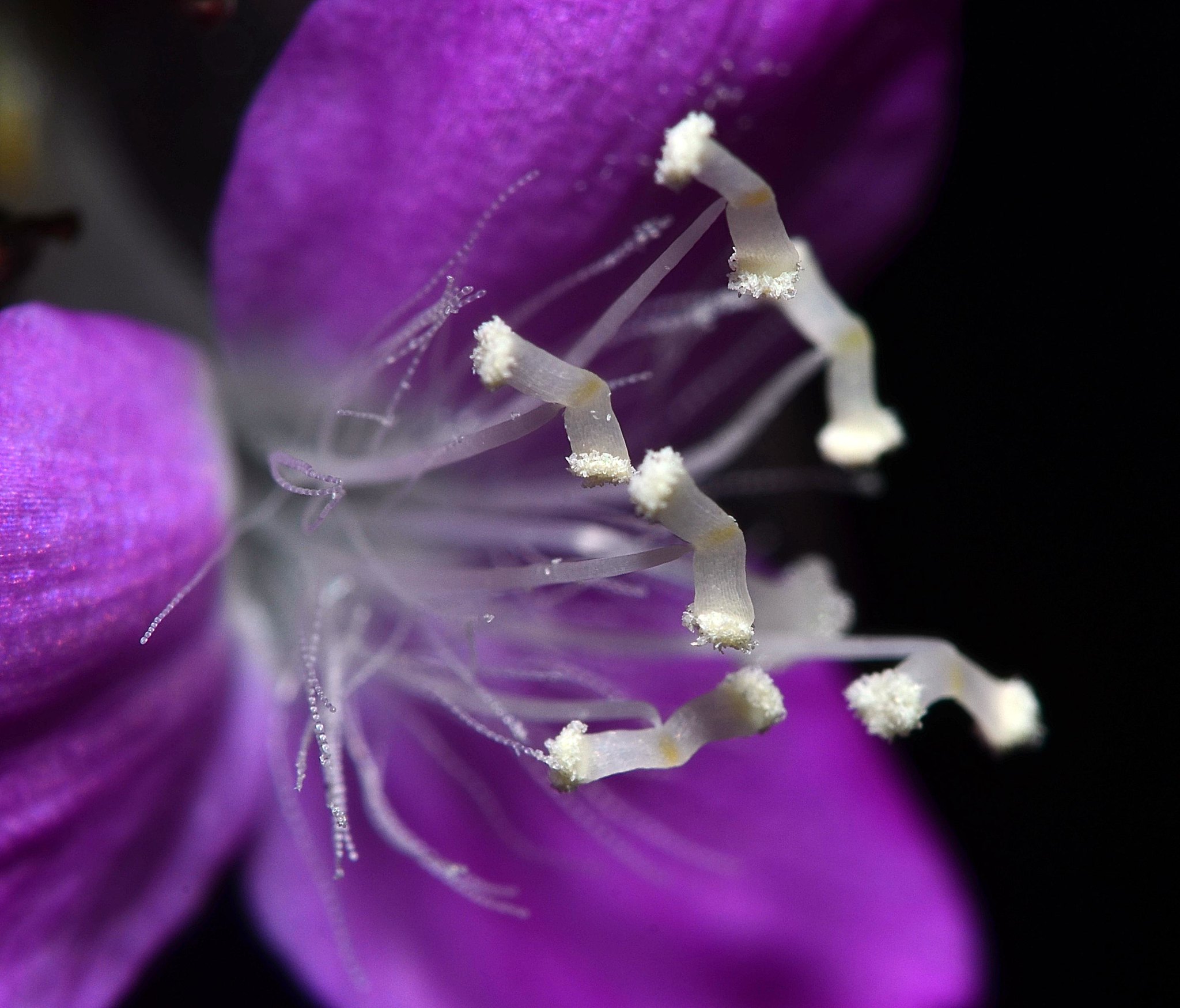
wondering jew bloom by Tom Straight, on Flickr
 
Last edited:
Without decent support I think the only practical way is to use flash. I do this quite a lot often with the flash held at arms length via a TTL cable, or sometimes using the on camera flash diffused by tissue, very occasionally by ring flash...

Close ups where the magnification is less than 1x can often be managed without flash, but that often wants the aperture too wide for best results.

I have managed ~6x handheld without flash (braced on a table) but the banks of desk lights caused terrible flare!!!
 
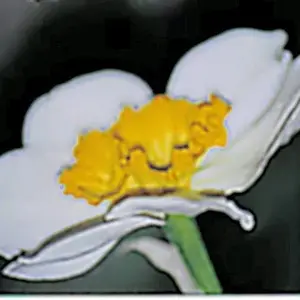
Simulated sunlight,tiny crocus in blooms, lighted by a speedlight flash on Nikon SC-17 off-camera flash connecting cable, small Photoflex air-filled softbox mounted to flash, 90mm macro lens at f/4.8, Fuji S2 Pro 6MP d-slr.
DSCF0306_1_CrocusBibble.webp
 

Create an account or login to comment

You must be a member in order to leave a comment

Create account

Create an account on our community. It's easy!

Log in

Already have an account? Log in here.

New Topics

Back
Top Bottom