jcdeboever
Been spending a lot of time on here!
- Joined
- Sep 5, 2015
- Messages
- 19,860
- Reaction score
- 16,082
- Location
- Michigan
- Can others edit my Photos
- Photos OK to edit
Working hard on zone system, trying to grasp concept.

...
Spotmeter can be also used for finding the best exposure for catching details in maximum number of zones. But if you own modern dslr your 3D matrix lightmetering mode will do the same thing and much faster.![]()
I got that....
Spotmeter can be also used for finding the best exposure for catching details in maximum number of zones. But if you own modern dslr your 3D matrix lightmetering mode will do the same thing and much faster.![]()
John is shooting SOOC, with the limitations of in-camera processing, he has found that the zone system has application(s). John also shoots film and he has a spotmeter. Between digital and film he is exploring and refining his concepts of metering and adapting them to how he shoots and his previsualized expectations.
With powerful photo manipulation programs, the zone system is pretty much irrelevant on the print end of the spectrum. But it does pertain and provide a solid foundation for understanding metering and for consistently attaining "proper" exposures.
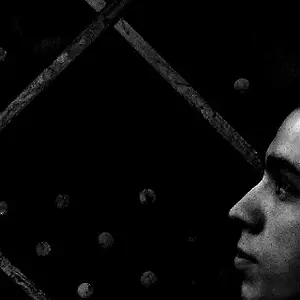
There is only question how he is using the spot to learn metering. With picture like this would be nice for John to reveal what was the goal in given exercise and what are his conclusions. This would be a good start to talk about the picture.I use it as an exercise to find the blacks and the blown out areas. Compare to what the camera is telling me in A and M mode while in spot, center, matrix, and journal for reference.I got that....
Spotmeter can be also used for finding the best exposure for catching details in maximum number of zones. But if you own modern dslr your 3D matrix lightmetering mode will do the same thing and much faster.![]()
John is shooting SOOC, with the limitations of in-camera processing, he has found that the zone system has application(s). John also shoots film and he has a spotmeter. Between digital and film he is exploring and refining his concepts of metering and adapting them to how he shoots and his previsualized expectations.
With powerful photo manipulation programs, the zone system is pretty much irrelevant on the print end of the spectrum. But it does pertain and provide a solid foundation for understanding metering and for consistently attaining "proper" exposures.There is only question how he is using the spot to learn metering. With picture like this would be nice for John to reveal what was the goal in given exercise and what are his conclusions. This would be a good start to talk about the picture.
What can I say... I admire your approach. You are fighting for something, for better understanding of exposure. Most people today doesn't have enough patience for that. Especially with zone system and digital camera. I am sure, that your pictures are technically better and better. Not because of zone system but because of your growing expertise in seeing the light, which you may even not realize you've got by now.I use it as an exercise to find the blacks and the blown out areas. Compare to what the camera is telling me in A and M mode while in spot, center, matrix, and journal for reference.
My goal of the exercise is to be able to plan and anticipate tonal values while not totally relying on camera meter and histograms. The other goal is to gauge if I am understanding what I am reading in the book "Negative", it is very difficult for me to grasp the books as I am not the sharpest knife in the drawer. I frequently went between the Hedgcoe book and Adams book. Hedgecoe made it easier but Adams had more depth.
The result in digital is learning to capture a better image in the camera to minimize or eliminate post processing and to achieve the look I want. My journal is full of custom acros simulation settings and readings to compare. I have been able to make 3 simulations based on many different tests.
Would I do this every time? NO, unless shooting landscapes. It was a long drawn out project of mine that helped me think about exposure as opposed to you just need to get that camera meter to zero and call it good. I wondered... Why was the camera saying zero was good? Is it right? Could it be better? At zero, is this the image appearance I want? Reading the Adams and Hedgecoe books (several times already) was difficult and it made me rethink what I was doing with digital, so I set out to answer some of my own questions. I am very happy I took this on, because I am now able to dial in a controlled appearance in my camera as a result.
Some people are going to read this and think I'm an idiot and wasting my time. I found it the most useful project to date. I am pre visualizing better, taking less images, and looking for light and tonal values. Composition is natural for me. I found that the automatic readings are averages and were holding me back into the look I wanted to achieve. It maybe the hard way to do it but I have only been shooting for 2 years and I want to improve my photography.