- Joined
- Oct 3, 2013
- Messages
- 11,518
- Reaction score
- 4,788
- Location
- Louisville, Nebraksa - United States
- Can others edit my Photos
- Photos OK to edit
And by that statement, you are already SO far ahead of the game.
What lens do you actually have right now? I have a Sigma 150-500 now, but until about March of this year, I was shooting with a 70-300. Neither of my birding lenses are a f/2.8 lens. Sure, I'd love to have one and maybe eventually that will happen--but you're right, learning to get the best photos you can with the equipment you have is KEY.
Great advice here. Try it and see what works best for YOU. Because there is no ONE simple "do it this way" solution; it depends on what you are most comfortable with, what kind of birds you're after and what your equipment can handle.
For me, I shoot birds a little bit differently than some. I use manual mode, but auto ISO. That way, if I'm shooting a BIF and suddenly spot something over in the shaded woods, I can quickly turn, focus and shoot and not worry about trying to adjust my ISO on the fly.
If I'm looking at getting BIF, I start with a shutter speed of 1/1000, but it may go as high as 1/2000, depending on the bird, the situation and the lighting. I'll also start with the aperture wide open, but as soon as the light will allow it, I'll generally stop down to about 7.1, as I've just found my lens is sharper there or at f/8 than wide open.
If you have great lighting, then you can set the aperture wherever your lens is sharpest, set the shutter speed at 1/1000 or higher and still have acceptable ISO. But in poor lighting conditions, it all becomes a tradeoff. Do I leave the aperture at f/7.1 and end up at ISO 1600 and a good bit of noise? Or do I shoot wide open, let the ISO drop a bit, but end up with softer images?
Just experiment and find what works best for you.
I also use a single focus point, and aim right at the bird's eye. Panning is critical to getting good BIF shots.
Just as important as all the camera settings are some other things--don't wear bright clothes and bring attention to yourself.
I often scout out an area for a while, see where the birds are congregating, then I set myself up close to that spot, as hidden as possible--while I'm setting up, the birds may get spooked and leave, but they'll generally come back if you're patient.
You're welcome to view some of my shots on my flickr page, link in signature.
And now...I'm about to head out and go birding for the first time in about three weeks!! WooHoo!! Just hope I don't freeze to death! Last time I went out, we had a high of about 75 that day. Today it is 32 degrees as I head out. Ouch!
I generally use shutter priority with the iso set to auto as well, works pretty well in the vast majority of situations. The telephoto I have is just your standard every day run of the mill 70-300mm Nikon F4.5-5.6 - nothing flashy by any means but it does a pretty good job overall. I try to keep my shutter speed up in the 1/1000 range for most birds, really small ones I've found 1/2000 is usually more than enough.
Oh, and a bag of popcorn or bread crumbs can be a very handy thing to carry along, indeed. Lol


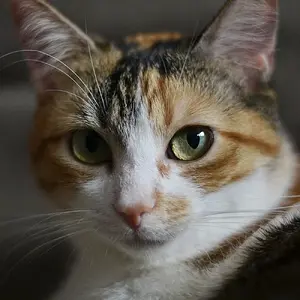
 I think I'm beginning to understand it. I noticed the price tag. I also noticed the 400mm f/2.8 lens weighed almost 10 lbs. That would be like holding up my cat.


![[No title]](/data/xfmg/thumbnail/38/38443-d3f00036791c5f915b132320c9ac8865.jpg?1734172307)
![[No title]](/data/xfmg/thumbnail/41/41423-156eb6e5a056cd1cbcf60e12a03f9d56.jpg?1734175857)