Thanks for sharing. I too am a big landscape and cityscape fan. Let me offer a little C&C:
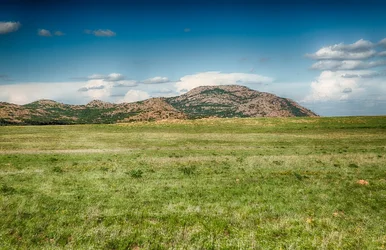
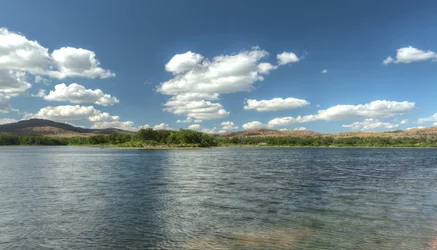
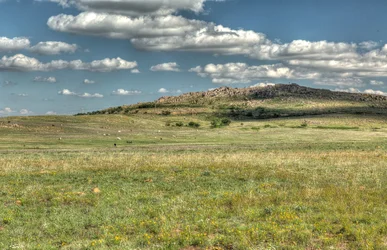
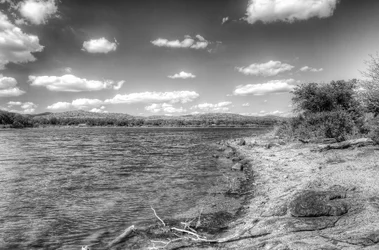
1. General composition rule for landscapes and sunrise/set shots--don't put the horizon squarely in the middle of the frame. For all 3 shots you're almost in the middle or pretty close to it. That creates tension for the viewer's eye--they can't subconsciously decide if they're supposed to look in the distance or the foreground. So as a photographer, take a stand. Say in the photo "I think you should be looking at the sky" or "the foreground is where it's at in this shot" and emphasize that in the photo.
2. Watch the perception of how level the shot is. To my "eye", #1 and #3 seem slightly a kilter. I suspect it's b/c of the terrain in #1 (it appears to rise to the right but creates the perception your photo isn't level). With #3, it's the road (the only straight line in the photo) which is probably on rising ground but again throws the photo out of balance.
3. Here's a suggestion a much smarter/better photographer gave me once about taking landscapes. He said "don't take a picture--create a picture of that scene." I suspect he was paraphrasing Ansel Adams. But the point is this: we go someplace and go "Wow.....!" when a scene takes our breath away so we pull out the camera and snap a shot. It's in focus, WB is accurate but it just doesn't have the same "Wow" factor or pizazz. So maybe we saturate it or add HDR. His point to me was that your camera doesn't see the same thing that your eye sees. So to have a picture that creates the same impression that it had in person calls for us to "create the picture." For instance, for #1, I suspect part of what grabbed you (besides the potential storm clouds) was the perspective, the size and vista. So either get down at a lower angle (which should emphasize the high ground) or aim higher (removing much of the foreground so we see more sky and the amount of space and size of it all jumps out at us and gob-smacks us in the face). Yes, leave some foreground so we have perspective but use angle or sky to emphasize how big the setting is. Or find an object (like a human, a car, a horse, a house) that adds perspective that allows us to think "holly crap that's freaking BIG...look how tiny that human is." The point is, for great landscapes, don't have "captures" but instead have "creations" b/c you manipulate how you set up the shot or compose the picture. Thus it has the same impact in viewing that you got standing there in person.






![[No title]](/data/xfmg/thumbnail/41/41800-9fad93555f178073cae2f303c5ef4e23.jpg?1734176111)