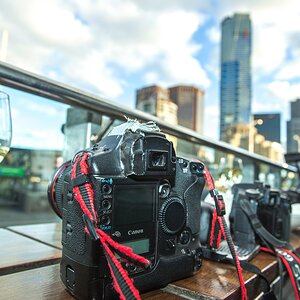
As retailers we are controlled by the manufacturers and distributors in more than simply accessibility to the products; discounts that we have previously been offered are being withdrawn on a daily basis as both Canon and Nikon struggle to recover from the earthquake and tsunami. In addition, with projected business being down for the foreseeable future, the ability of retailers to absorb the increased prices of Japanese imports will be severely reduced.
Many products are not purchased directly from the manufacturers, but from distributors eg Nikon, Inc. (USA). Orders in process that retailers would have been expecting to be filled by incoming shipments, will be charged at the increased rates set by the manufacturer / distributor, not those rates which were effective when those orders were placed - even if the retailer honors the price of back-orders to customers.
Unfortunately, the Japanese Yen is at an all time high against the dollar (as it was following the Kobe earthquake in 1995), as Japanese businesses withdraw funds from overseas markets, thus increasing the cost of everything imported from Japan, and as this chart indicates:
http://finance.yahoo.com/echarts?s=u...urce=undefined the US Dollar is becoming weaker mainly due to the Federal Reserve's QE2, which is devaluing the currency.
Retailers' overheads and running costs are fixed (unless employees are laid off). With projected business being down for the foreseeable future, the ability of retailers to absorb the increased prices of Japanese imports will be severely reduced.
The source of the funds used to purchase stock can have a huge impact, which is the main reason why MAP agreements are so very powerful.
The financial agreements between retailers and the manufacturers / distributors are complicated; it isnt a clear case that all the items on our shelves or in transit to us are necessarily owned outright by us at the point of sale to the customer.
I hope this sheds some light on the current price instability, but more than this I cannot say.



![[No title]](/data/xfmg/thumbnail/39/39491-353a6df9b207e97dadcdce4f98248fcd.jpg?1734173591)