What's new

Does it get easier?

Dont get me wrong, I am willing to do the work, I'm not whining, I'm jut wondering if your eye developed a natural eye for this as your hand does for other art forms.
 
Yep, your eye develops. Your brain too. Eventually you'll have a pretty good idea of what settings you need to use on a particular shot, within a stop or two, before you even pull your camera out of the bag. Just takes time/experience. I'd say you have the right attitude just keep your nose to the grindstone and with a little patience you'll get to where you want to be.
 
it gets easier and harder.. depends if you make a biz out of it or just a hobby =)
 
I was an artist first. I used to draw and paint. You will find your creative groove once you understand how to use your camera.
 
You'll start out aiming so high with what you want; but once you reach that you'll find other ways to improve upon what you've already taken. Thus a new benchmark is set and a new target to be met. Over time (if you learn and work at it) that bar will rise and rise till such a point that its at a generally acceptable level by your standards and the problems are small nitpicks.

I'll respectfully have to disagree with you here :)

As your aim gets higher, the nitpicks tend to get much more important. You forget one thing in your equation and that is the client. As you work your way up the ladder of quality (and rates :) ), you take your client along for the ride. Meaning you teach your client (s) as you go and your client becomes as much of a pain in the arse as you are to yourself.

It was as a response to KmH recently, I believe, that I mentioned having used a huge, huge soft box. Well, this was build specifically for one job although there were other jobs in the gunsight. I was going to shoot firefighting rolling equipment and those had to be perfect so that I could get the other contracts that were going to pay for the rig. Several thousands of dollars worth of rig built especially for me and that I couldn't pass on to just one customer.

Enormous pressure. That I could do without I might add.

But that is the problem with this business. As you grow in it, the pressure gets more intense. It doesn't go smaller or smoother or easier.

I quit the business once because of it...
 
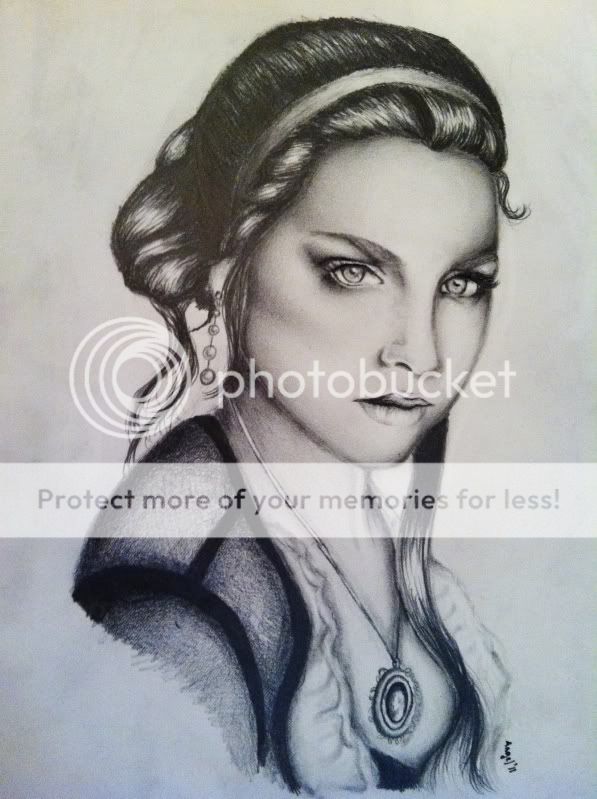
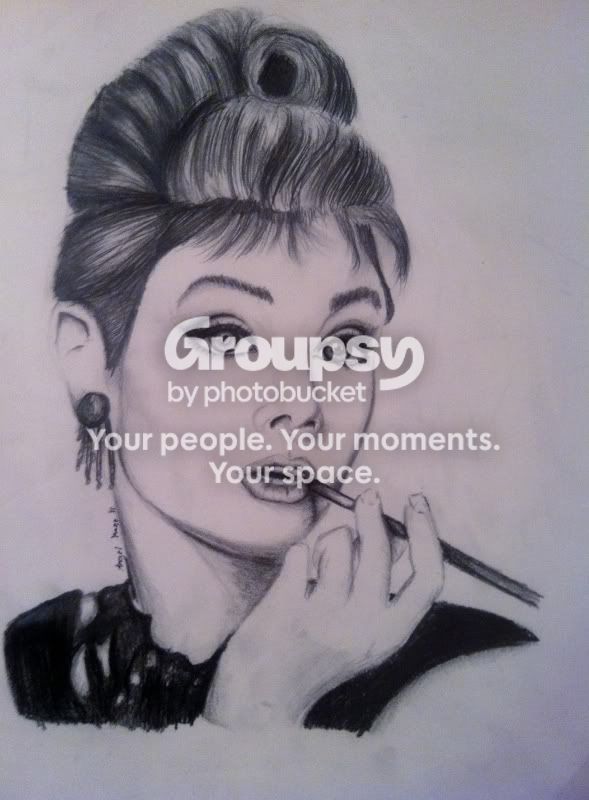
I think something I am having such immense difficulty with is being a beginner. I have a strong artistic background in singing and drawing. Being a beginner is NOT something I'm used to. I"ve been drawing for 10 years. I'm used to wowing people in all stages in the art world with my work. I am far from the best, but I do pretty well.
IMG_0500.jpg


IMG_0099-1.jpg


Is that second sketch Jean shrimpton 60's model The Shrimp ?
 
I can't just go out to take pictures, usually. Whenever I am about to take a photo, I have to think of my intent. For example; throughout the month of November I documented the fall colors and the various aspects of the changing scenery. That made it so much easier to just go out and start taking pictures. Before I'd go out I'd think to myself "this is what I'm trying to convey, this is how I want to do it." I've found that just taking random photos when I go out never really worked for me. I didn't feel anything for the subject, so I couldn't make a connection.

That disconnection led to apathy, because deep down I KNEW that this wasn't something that was worth taking pictures of. It's hard to explain it. I don't even know if any of this makes sense.
 
I can't just go out to take pictures, usually. Whenever I am about to take a photo, I have to think of my intent. For example; throughout the month of November I documented the fall colors and the various aspects of the changing scenery. That made it so much easier to just go out and start taking pictures. Before I'd go out I'd think to myself "this is what I'm trying to convey, this is how I want to do it." I've found that just taking random photos when I go out never really worked for me. I didn't feel anything for the subject, so I couldn't make a connection.

That disconnection led to apathy, because deep down I KNEW that this wasn't something that was worth taking pictures of. It's hard to explain it. I don't even know if any of this makes sense.

So basically you need foreplay before you get down with it.
 
the technique will get easier, especially if you can manage to get out of the "proper exposure" trap. Technique will become more intuitive.

Turning off auto everything is a good start. Not so much because AE doesn't work, but it may not work quite the way you think it does. The "exposure meter" is one of the most misleading and least understood tools we have available, this especially true of reflective meters: the kind found in cameras. Learning manual exposure should be, imo, something beginners are encouraged to do - rather than something lefter for more intermediate studies.

If you are feeling underwhelmed, then there is something you aren't understanding. You're likely looking at camera control from a perspective of "how do I get this to look like how it is", and not "how do I get this to how it should be" - what aspect of the subject are you most interested in, and how does that affect the technical end of things?

I think there is only a single difference between a photograph and a snapshot - what does the image say about the subject and/or the photographer. Journalists are much more interested in the subject, while the Fine Artist is much more interested expressing some aspect of themselves. Both are 'artists' but their intentions are different.

Snapshots have use and intent, to create a memory of the subject which can be recalled by those who have actually experienced it and says little more than this because the experience of the subject is so much richer than the photograph ever could potray. For artists, we must portray elements of the subject (be it absolute or abstract) to the audience with limited context - a photograph, as opposed to a snapshot, will be appreciated by those who have not seen it themselves - perhaps moreso than those who have.

I this regard, photographs are objects in and of themselves independent of the subject - we experience artwork, we become an active participant, whereas snapshot we don't.

 
Last edited:
Thank you everyone for the feedback. To answer your question, did I find drawing easy at first, yes actually. I guess this it what I mean about not being used to being a beginner. Whenever I have tried something, be it acting in high school, drawing, a new job etc I was always better then average when I started. I've always had a natural feel for things I tried. Obviously, I improve gradually and get better with time, but in the past I have always been able to produce better then beginner results. If someone told me how to do something to improve I was able to just do it. I'm more then willing to put in the work, I'm just not used to having to.

This is the first time I feel like I feel like I don't have a talent for it. I feel medicore. And I just never felt that before, even in my beginning stages throughout my life. And I don't want to be a joke either. I don't want to be one of these teen girls on Flickr (I'm 22) that just shoot random stuff with blur in the background and call it art and feel like I'm some accomplished photographer. I don't want to believe that I m better then I in fact am. I want be a photographer that can be respected. This is the first time I don't feel better then average at something.

I do agree that the aim gets hire and you get more critical with time. I used to love all of my photos, now the flaws jump out at me ten times louder then before.
 
Unfortunately, photographers are a fickle bunch - it is very hard to do something innovative or risky and get a lot of respect.

----

Oh. And be careful. You're coming across as extremely arrogant.
 

Create an account or login to comment

You must be a member in order to leave a comment

Create account

Create an account on our community. It's easy!

Log in

Already have an account? Log in here.

Back
Top Bottom