There are only two things that I can think of which can happen at very high shutter speeds.
Keep in mind the shutter never moves faster or slower regardless of the shutter speed. The shutter has two "curtains". The only thing that changes is the timing or delay between the moment that the first curtain starts to open and the moment when the second curtain starts to close. At slow speeds the first curtain sweeps open and the entire sensor is exposed for some amount of time before the second curtain sweeps closed. But at high speeds, the second curtain is "chasing" the first curtain across the sensor plane -- leaving just a slit or gap exposed.
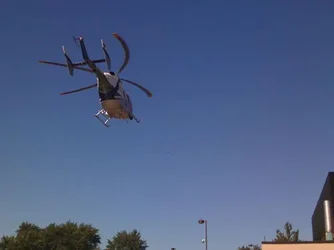
1) This can cause some wonky results when shooting something that is moving VERY fast. I have a photo of a helicopter lifting off and the rotor blades appear to curve quite unnaturally (that photo, however, was taken with an iPhone. Not technically a "curtain" shutter, but it does scan the image row by row and each row is technically not scanned at the same time, so you get the same effect that if, by the time it's scanning a lower row, an object has moved substantially from where it appeared in a higher row, then that object will look like it's bending or curving.
This means that "technically" when you shoot an athlete, their legs might be in a fractionally different position in your photo relative to the position of their upper body in your photo as compared to where they actually were in real life. You get a _very_ tiny distortion, but it's too small to notice. Likewise if you shoot water drops splashing, some of those drops are fractionally moved from where they were relative to the other water drops. When the curtains are moving at 1/200th of a second to traverse the entire shutter, then a small detail such as a drop of water (which would have been imaged in less than probably 1/8000th of a second) will appear sharp. You wont see blur. But if you photograph something moving VERY fast and you know it's supposed to be "straight" and it covers a large part of the sensor (from bottom to top... or left to right because some curtain shutters move horizontally although I think in most DSLRs they move vertically because the distance is physically shorter) then you can see the bend (like the helicopter blades).
Here's the "Rubber" helicopter (Blades rotate counter-clockwise on this aircraft. The iPhone camera (probably 1 of about 5 times I have _ever_ used the iPhone camera) scanned the image from top to bottom to capture the image as the blades were rapidly rotating.)
2) High-speed flash sync either wont work or gets very expensive. Normally the flash delays firing until the shutter is fully opened, THEN it fires, then the shutter closes. But in "high speed sync" mode (HSS) the shutter is never "fully" open because only a slit is exposed at any moment in time. This means you'd have an odd stripe in your photo separating a well-exposed part of the image from the underexposed part of the image. To compensate, cameras that can work with the flash and both support HSS can compensate. Rather than one big burst, the flash fires several bursts -- pulsed as the shutter sweeps across the sensor.
The "problem" with HSS is that the flash can't fire at full power. If two pulses are required (a top-half and bottom-half) then the flash can only fire at max 50% power. If 4 pulses are required then the flash can only fire at 25% power. You can quickly see where this goes when you need to fire 8 pulses ... or 16. There's a point where the flash is simply too weak. To compensate you need to arrange a "gang" of flashes clustered together.







![[No title]](/data/xfmg/thumbnail/41/41906-b9041eb5a3fa48eb5d5084ac2198a75c.jpg?1734176271)

![[No title]](/data/xfmg/thumbnail/36/36395-66eaff4565ecf4245f13a9c469a9273b.jpg?1734168775)