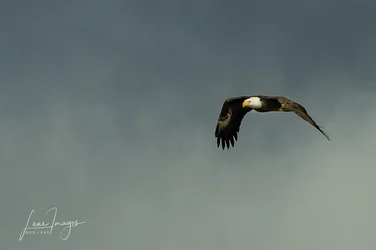
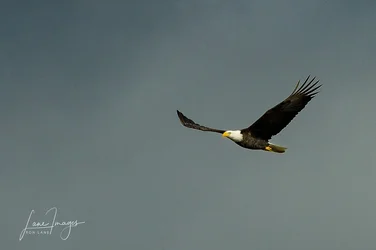
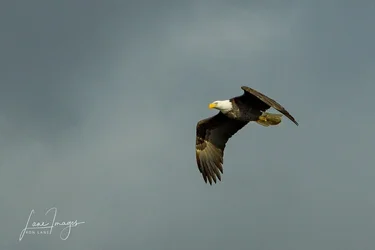
I live next to the Pacific Ocean where there are different species of birds that spend time along the ocean beach. I'm very lucky if any of the eagles allow me to get close to take good shots using 200 to 300mm macro & zoom lenses. I have a Sigma 28-300mm and a Nikon 55-200mm however I need to be fairly close to get any good shots. (I've also used a Sigma 70-300mm that has a 1:2 macro ratio) The Sigma 28-300mm is more of an all around lens with 1:3 macro ratio is considered to be nice and compact for general travel, etc. None of my lenses are ideal for nature unless perhaps you become lucky.
If larger birds such as eagles are feasting on something dead it's less likely they fly off as soon when humans approach. So it may be possible to get some good shots of Eagles (possibly other bird species) if one or more are feasting on something dead.
Snowy Plovers I've gotten a few closeup shots while sitting in my car where the Plovers didn't realize a human was nearby taking photos. Once birds realized a human is near they fly off too far to take any good photos using a 300mm lens.
Unless you can sneak up, hide in foliage, etc. a 200 to 300mm lens imo isn't good enough for nature photography.
I think at least a 200-500mm lens is be needed for general nature photography under varying conditions.
However cost starts e.g. at around ~$500.00 dollars for a used Tamron 200-500mm lens.
Eagles feasting on something dead, most likely washed up on the beach. Things are always washing up on the beach and if not edible usually will eventually be covered in sand. The shore is always drifting so most items become buried in sand. I remember one summer finding what appeared to be part of a ship (uncovered after a storm) which appeared was built sometime in the 1800s. The shore changes with time which may be from a few days, a few months to more than a hundred years. Occasional I find items that drifted from various countries across the Pacific.
There is a world wide problem with plastic garbage being collected in our oceans, much of which is eaten by different sea life including birds. It's very important to collect and pack out any garage while around different types of bodies of water as most plastic has a very long lifespan and doesn't biodegrade.
Animals Eat Ocean Plastic Because it Smells Like Food
Algae is food for tiny animals such as krill — otherwise known as zooplankton, which is food for larger sea animals. When plastic becomes part algae it's eaten by krill or zooplankton, which scientists says plastics has integrated into all of the worlds oceans. Which adds to the problem of sea animals such as sea birds eating and digesting smaller pieces of plastic floating around in water.
Eagles on this beach, depending on the time of year, are very cautious around humans. I think humans are the only species on the beach and other areas that they actually fear.
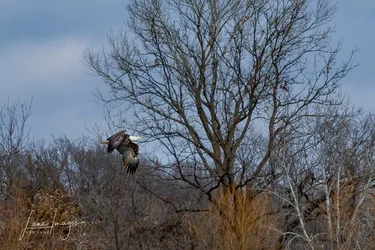
I'm still learning how to use photo editing software which I've haven't used in the past. I'm trying out Adobe CS2, Digikam and a few others. Here I tried to crop and brighten up the above photo, but I think the bird is too far away using for using Nikon 55-200mm lens as the bird appears blurred. Perhaps could have taken time to perform some manual settings as the Nikon camera was on auto.


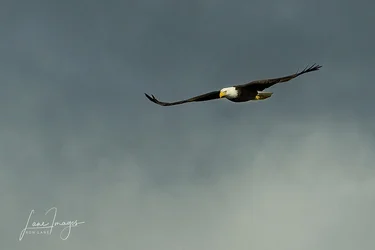

 . Those are nice Ron. Local to you?