What's new

Entry Level vs. Mid Range vs. Professional SLR (Image Quality Question)

RickD

TPF Noob!
Joined
Jul 4, 2014
Messages
32
Reaction score
9
Location
Vancouver, BC
Can others edit my Photos
Photos OK to edit
I've been wondering about this for a while, how much of the final image quality is down to the SLR / Lens that is used. I been taking pictures for over a year now and while I think some of shots come out really well, I just feel they lack the punch, vibrancy and realism of some of the shots I see on photo websites.

So I'd like to know your thoughts on this, how much of the image quality is down to me as the photographer, and how much comes down to the quality of equipment used

Thanks
 
IQ boils down to the glass, the sensor, and how the photographer shot it.

punch, vibrancy, and realism is, these days, mostly done in software after the fact.

an entry level camera, all other things being equal, can take just as good as a picture as a pro-level one to a certain extent.
 
In reading this, I would also add things other than Glass & Body. I have recently discovered the difference between good filters, great filters, and excellent filters and the MANY different choices for different situations. Than are many tools that add to IQ and this is a very difficult question to answer, so it would get the MBA (graduate answer) of.. It Depends.

To best answer this question at the most basic and simple answer from my personal experience (those light bulb moments for myself); I saw the best "upgrade" in IQ in my own photos when:

1st. Learned how to post process photos (FYI, I'm not perfect, but I understand the basics in great detail)
2nd. Upgraded my gear (D5100 dx to D600 fx)

I think my 3rd. item to that list will be learning to use filters properly; and I also think that there will be many line items as the years go on.

Hope this helps :)
 
IQ boils down to the glass, the sensor, and how the photographer shot it.

punch, vibrancy, and realism is, these days, mostly done in software after the fact.

an entry level camera, all other things being equal, can take just as good as a picture as a pro-level one to a certain extent.

Photographer knowledge and skill have more to do with image quality than the gear used.

Totally agree with both these guys, if your pictures lack the wow factor its probably you.

Shoot in RAW, dont shoot in Auto, lean how to use the camera so it will produce the pictures you will be happy with and learn to use a program with your RAW files, that will further help to give you what you are looking for.
 
Thanks for the responses everyone... There's no way I'm definitely putting it down to equipment I use, after all I have only been using an SLR for just over a year, just looking to get some opinions on the subject, although part of me says that the extra cost of the professional grade lenses must yield some sort of result when it comes to image quality. With regards to some of the other responses, I always shoot in either manual or shutter / aperture priority depending on the situation, always shoot RAW and use Lightroom for post processing. I guess the only way to find out for real is to do some side by side testing.

As a side note, are there any recommendations for lightroom tutorials, I know I can search google but just wondering if there are any that anyone has found particularly useful

:)
 
I watch some of the tutorials that the guys from N-Photo do (a Nikon related magazine, digital edition includes videos.) I found them pretty instructive. The most is learned from tidbits of lots of videos.

Also, I would suggest shooting aperture priority mode and just making sure it yields the minimum shutter speed you need.
 
I'm on digital, didn't want to specify equipment as I don't want to bring brands / formats etc. into it
 
IQ boils down to the glass, the sensor, and how the photographer shot it.

punch, vibrancy, and realism is, these days, mostly done in software after the fact.

an entry level camera, all other things being equal, can take just as good as a picture as a pro-level one to a certain extent.

Agreed,

You would be amazed at what most photos you see actually look like prior to post processing using software. I would download lightroom or photoshop and watch a couple of tutorials on youtube about editing.
 
The quality of the picture is brought about solely by the quality of the photographer. The technical aspects of the picture are by software. None of the great photographers of the 20th century had computers. Only Ansel Adams could make a print of his and meet his approval...but even sup-par prints by others of an Adams photo were superb. C-Bresson and many others produced thousands of the best photos ever taken and they did it with the little Leica 'Brick'.
 
I've been wondering about this for a while, how much of the final image quality is down to the SLR / Lens that is used. I been taking pictures for over a year now and while I think some of shots come out really well, I just feel they lack the punch, vibrancy and realism of some of the shots I see on photo websites.

So I'd like to know your thoughts on this, how much of the image quality is down to me as the photographer, and how much comes down to the quality of equipment used

Thanks

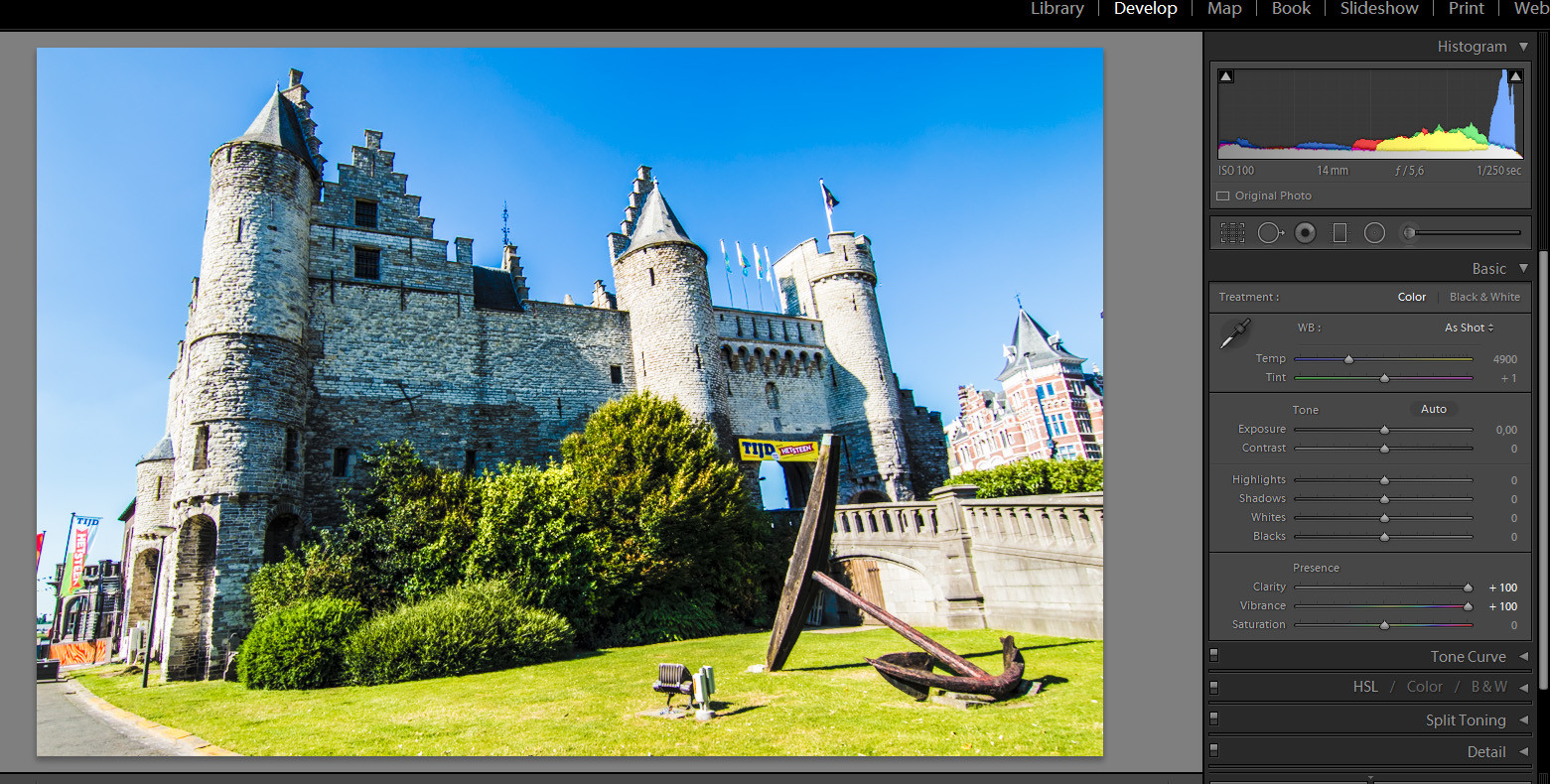
What's the problem? Just push the vibrancy and the clarity sliders to the max.

xYFlp8v.jpg
 
how much of the image quality is down to me as the photographer, and how much comes down to the quality of equipment used

Thanks

50/50 maybe. There's more to it. If you document things - situations, environments - the subject is found, not created by the photographer, and if you use available light. It's 'down' to the photographer having recognized it, interpreted it. I mean if you were the director of photography on a film location, you couldn't lay claim to the whole production so the scene and maybe the light and the 'cast' isn't down to the photographer. You need a range of tools (e.g lenses) to work however you wish, or you work with just what you have. The results can be good/bad/indifferent regardless of your equipment depending on your vision and experience. If there's a preconceived notion that a picture must achieve A,B,C then there has to be a technical approach and the equipment that will deliver that. If the criteria is very loose and the goal is free and spontaneous and artistic then any equipment might get an interesting result.
 
Image quality is rarely an issue nowadays.

Entry Level DSLRs are amazing machines that can generate stunning results, image quality wise.

And they are pretty decent in many other respects, as well.

The main differences to more expensive cameras are:
- Quality of glass. Thats the single most important factor for the image quality. Absolutely nothing stops you from using great glass on a cheap camera though.
- Extreme situations. For example, when the ISO has to be pushed up, quite frankly large sensors can only be replaced by even larger sensors. Same for color depth (number of different colors that can be distinguished) and dynamic range (range of light levels that still result in a meaningful response outside "all black" and "all white"), which are better on larger / more modern sensors.
- Quick reaction. More expensive cameras have more complex controls that allow to change all important settings very quickly on the fly.
- Build quality. Of course a more expensive camera will also be more robust.
- Reliability. Better cameras get better Autofocus and Autoexposure, making life much easier.

Also, there is postprocessing. A lot can be fixed at that stage. Not things not recorded though, or errors like "out of focus" and "wrong exposure".
 

Create an account or login to comment

You must be a member in order to leave a comment

Create account

Create an account on our community. It's easy!

Log in

Already have an account? Log in here.

New Topics

Back
Top Bottom