As indicated previously, Exposure Compensation affects the entire picture, not just part of it. While there may be some adjustments in your camera - exactly how varies by camera and manufacturer - they are likely on one of several menu screens, which may not be convenient in many cases.
I am not a fan of EC, especially when shooting with my DSLR, as I normally shoot in manual mode and make adjustments after looking at the results and histogram on the LCD. But with my higher-end point and shoot camera and its' prominent EC wheel on top, if I don't particularly care one way or another -how- the camera does it (varies based on other camera settings), I'll give the EC a click or two as needed. I sometimes use the EC wheel as an extra-easy method of exposure bracketing, as well.
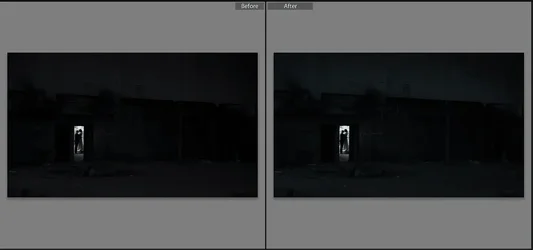
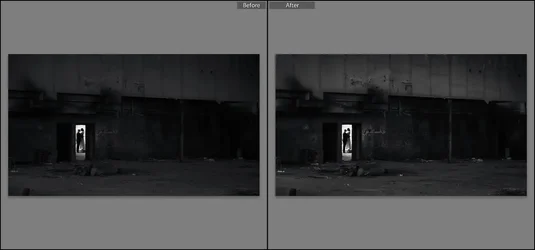
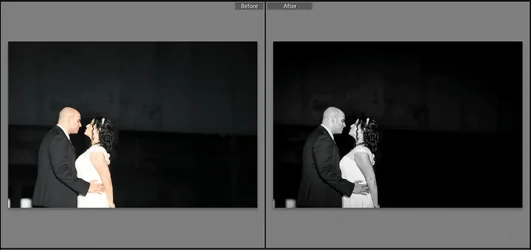
But in taking a picture with the subject brightly lit and the rest of the room dark, there are other alternatives to EC that I think will give better results. Number one, in my mind, would be to light up the rest of the room. How much lighting and how to accomplish that is up to you. But I'm thinking you really want only the subject well-lit and the surroundings and background somewhat dark. Here's where it can get interesting. One idea would be to take two shots, one metered for the subject and the other for the background, then combine them in the camera or in post. Another possibility is to reduce the exposure in the camera but add a diffused flash, so the subject is properly exposed and everything else somewhat underexposed. If I have time to 'think about' the shot in advance, that's how I'd most likely proceed. But shooting candid shots as I most often do, I don't always have that luxury. My most-often-used method is to fix it during post processing. Having the extra 'latitude' of editing from a RAW image, I can frequently brighten up the shadows a bit and perhaps tone down the highlights, and maybe even adjust contrast and exposure to get the result I want. Of course, there's a limit to how much I can 'crank up' the shadows before the noise gets too noticeable.
As an overly-experienced amateur, perhaps my biggest failure is failing to recognize screwy lighting situations that I should handle 'in camera' rather than resorting to correcting it in post processing. Biggest problem number two for me is to see and eliminate distracting elements in the photo before I take the picture, such as fire alarms, poles, reflected glare, etc. I'm getting better on the latter, but still have a long way to go. I only recognize screwy lighting maybe 20% of the time...but that's a start!





![[No title]](/data/xfmg/thumbnail/37/37658-89245697846ece2c4ecbce304510699b.jpg?1734170813)

![[No title]](/data/xfmg/thumbnail/37/37660-eb4529b6ea38a042c4e9b64866178d7b.jpg?1734170816)