What's new

Finding a way to tell a story

hamlet

No longer a newbie, moving up!
Joined
Sep 12, 2013
Messages
2,894
Reaction score
435
Location
Belgium
Can others edit my Photos
Photos OK to edit
I'm wondering how some of the folks on here frame a picture to tell a story? The way i understand it is: a picture can have too little or too much, the layers of the out of focus background can have a secondary role to frame your main subjects in. I am having a hard time processing all the elements in finding the right composition when i'm in the field, it just gets overwhelming. My question really is that: how do you sort out through the mess when you are in the middle of a shoot? Not when you have time to plan things out, but when you are shooting from the hip.
 
I may not be much help... I am 'roller coaster, hands in the air' type. Sometimes, I am prepared for what I want, and A lot of times, I am taking the time available to me and run out!
I just posted something that was 'light painting" because I was out fishing, and the fish weren't biting, so I tried light painting ;(
'Sorting out the mess'....as you stated... REBOUND... Get your thoughts about you and regroup. ' what can I do at this point with the gear I have with me'?
When all else fails, mimic what someone else has done!
Told you I wasn't any help :)
Waiting for someone to help us both?
Nancy
 
A single image doesn't tell a story. ;) You can however use an image to support or suggest a narrative. If you want to create an images that suggest a narrative you have to be able to "see" the story before you take the shot. Usually there should be some interaction between the subject and location. For example; an image of a phone sitting on a bar doesn't really say anything, but an image of a phone sitting on a bar and someone walking away could suggest that someone just left and forgot their phone. A bartender pouring a drink while cutting a dirty look to a patron could suggest that he knows the person and doesn't like them. A portrait of a wrinkly old man with the background blown out doesn't tell a story however, it just says "here's an old guy".
 
I may not be much help... I am 'roller coaster, hands in the air' type. Sometimes, I am prepared for what I want, and A lot of times, I am taking the time available to me and run out!
I just posted something that was 'light painting" because I was out fishing, and the fish weren't biting, so I tried light painting ;(
'Sorting out the mess'....as you stated... REBOUND... Get your thoughts about you and regroup. ' what can I do at this point with the gear I have with me'?
When all else fails, mimic what someone else has done!
Told you I wasn't any help :)
Waiting for someone to help us both?
Nancy
Sounds like good adaptation, means you are able to think on your feet. Copying other peoples work may actually be a good set of training wheels to gain a different perception, because every time i personally try something new i learn something.

Like if we take your light painting. How do we take that form of photography to the next level? The place where it isn't just good to look at, but that it actually tells a story. Pictures that can connect human feelings have a longer lasting presence and influence in peoples minds.
 
A single image doesn't tell a story. ;) You can however use an image to support or suggest a narrative. If you want to create an images that suggest a narrative you have to be able to "see" the story before you take the shot. Usually there should be some interaction between the subject and location. For example; an image of a phone sitting on a bar doesn't really say anything, but an image of a phone sitting on a bar and someone walking away could suggest that someone just left and forgot their phone. A bartender pouring a drink while cutting a dirty look to a patron could suggest that he knows the person and doesn't like them. A portrait of a wrinkly old man with the background blown out doesn't tell a story however, it just says "here's an old guy".
That was very short and concise, thank you. I have a starting point from which i can now learn from. :encouragement:
 
You need to figure out what the story. Photography is very similar to writing in telling the story. Similar to writing you gotta know the story to write the story. As the story unfolds some aspects which may have seemed important are no longer pertinent or important to the story. That is why journalists write copious notes and why photojournalists capture a ton of images. Often you just don't know until the end. After a fashion, you'll learn how to focus in on the pertinent and start eliminating all the distracting business.

Say a fire ... the story is about the fire itself, the destructive elements of the story is pertinent. The traffic jam produced by the fire is less important. Et cetera. So you focus on the actually fire and its destructive powers and how the fire effects the people in its path and those fighting the fire. Scale is important, showing a wide angle of the fire can bring a sense of size while focusing in on details ... say an exhausted firefighter or an adult running away from the fire cradling a wide-eyed pooch in their arms can personally touch a person.

There isn't any easy answer to framing ... it is all situational. You learn by doing.

Gary
 
I like to think of myself as a "storytelling" photographer. I agree with Gary in that the first step is finding out what your story is and then how to portray it on camera. I spend a lot of time observing my subjects, looking at everything going on around, really looking FOR the story and how can I convey what I am seeing. Let go of your ideas and instead let what is happening guide your vision.

day 299. Playtime by paige_w, on Flickr

315 by paige_w, on Flickr

[url=https://flic.kr/p/pq6zEx]paigewilks.com-2.jpg by paige_w, on Flickr[/URL]
 
It depends on the story you want to tell. Sometimes one photo will do it. sometimes a few, or many. Some examples that may, or may not work for you.

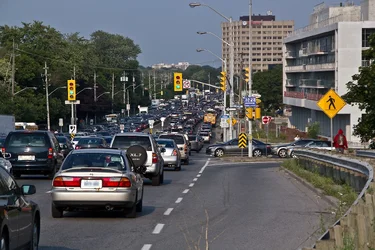
2010-07-05_19-00-12_IMG_7372.webp
From July 2010, a transformer in the west end blew out. It messed up traffic right across the city. This is Sheppard Ave., just east of the DVP/404. At the time I took the photo, I don't think I knew the cause, I just knew power was out some places and there was a lot of traffic in my way.

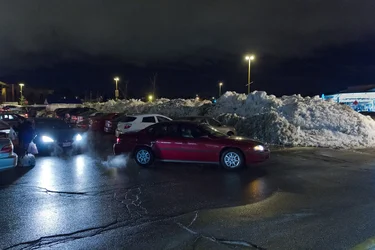
2013-03-02_19-47-22_IMG_1875.webp
I took this to show we had a lot of snow in March of 2013.

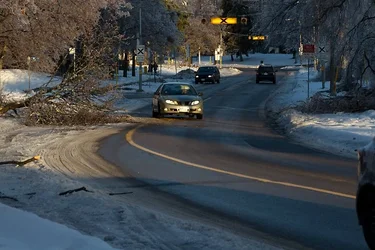
2013-12-23_15-48-18_IMG_6396.webp and 2013-12-23_15-50-44_IMG_6405.webp
A couple of photos, the first facing west and the second facing east, from a few steps away, show our ice storm, just before Christmas 2013, and the effects.
 
It depends on the story you want to tell. Sometimes one photo will do it. sometimes a few, or many. Some examples that may, or may not work for you.

View attachment 85780
From July 2010, a transformer in the west end blew out. It messed up traffic right across the city. This is Sheppard Ave., just east of the DVP/404. At the time I took the photo, I don't think I knew the cause, I just knew power was out some places and there was a lot of traffic in my way.

View attachment 85781
I took this to show we had a lot of snow in March of 2013.

View attachment 85782 and View attachment 85783
A couple of photos, the first facing west and the second facing east, from a few steps away, show our ice storm, just before Christmas 2013, and the effects.
None of those images tell a story however, which is my point. Without a title and caption we have no idea what we're supposed to be seeing. Personally, I think this article sums up my own thoughts on the whole "visual storytelling" meme in photography lately (just google "photography" and "storytelling").

But here's the rub: while narrative is irreducibly durative, photography is irreducibly non-durative. A narrative is a sequence of events unfolding over time, but a photograph is a single, almost imperceptibly small slice removed from the timeline, frozen for our consideration. If you were looking for the least narrative medium ever conceived, you would be hard-pressed to find a better candidate than photography.
 
But i do find that sometimes to understand an image, you do have to have the cultural and the educated mind to be able to enjoy something. I'm not talking about always, i'm just talking about my expierence.
 
None of those images tell a story however, which is my point. Without a title and caption we have no idea what we're supposed to be seeing. Personally, I think this article sums up my own thoughts on the whole "visual storytelling" meme in photography lately (just google "photography" and "storytelling").

That's fair. I would say the story in the first shot is that traffic was a mess on some summer day. But others may miss that. Others may have some other interpretation. True, it doesn't say when, exactly, or why, or for how long, or even where unless you are familiar with the area.

I always did pretty well in math, and geography, in school. I hated English class. I was never into trying to figure out what some fiction book was trying to tell us. An English teacher confirmed my distrust of the class by applying an interpretation to a true story that was really just a collection of facts and not a comment on anything. I think I was in grade 8 when Elton John released "Daniel". The music teacher wanted to know what it meant. The consensus was that Daniel had died. Some time, much more recently, Elton John said the song was too long so he cut the last verse, which explained the song. He also said Daniel had lost his eyesight in a war. So, he didn't lose his life.

If you want to get your story through, clear prose is probably the best way, but a photo or two can support and enforce the prose.
 
The idea of a photo telling a story has two orthogonal aspects, which sometimes work together.

As noted, a photo can support a more explicit story told or suggested by some text. A sequence of photos can do this more easily and thoroughly.

Not noted is that a photo allows the viewer to project their own story on to the photo. A great portrait gives us the impression that we know the sitter, a little. We project an imagined life story on to the photo. We know it's guesswork, and it's much more vague and question filled then a novel, but it's a narrative.

More generally a photo can pose questions and hint at answers. It can give us material onto which we can hang our own narrative. How did that get there? Was there a storm? Perhaps it was a hurricane. Perhaps it was hurricane Katrina. I wonder if this is New Orleans?

Obviously a photograph that supports a story provided in the text gives us hints and questions that allow the narrative given in the accompanying text to hang onto the photo. The caption might say that this is indeed New Orleans. Perhaps after an earlier hurricane. And so on.
 
Further:

It is facile and almost silly to point out that a photo is a static instant while narrative stretches through time. Of course. But irrelevant.

As humans we are away of continuing time. It's even possible that we construct it.

When we see a photo we have a strong tendency to visualize the photo within the time steam from which it was drawn. We are immediately curious about what came before and after the shutter press. A photo, a good photo, often implies quite a lot about what came before and after.

It is this natural process of imagining what came before and after that constitutes the viewer projecting a narrative onto a photo.
 
.......

It is this natural process of imagining what came before and after that constitutes the viewer projecting a narrative onto a photo.
Which is distinctly different then you telling them a story. You're setting the scene for their imagination, but it's up to them to imagine it.
 
Finally, consider these phrases:

A mother's love
The suffering of war
The hero's sacrifice

(I could write 1000 of these) each evokes a collection of stories. Each of you can think of a dozen stories evoked by any of these phrases.

In the same way a photograph can evoke a cloud of stories. Sometimes this is what we mean by a photo telling a story. What we really mean is it reminds us of other stories we've heard.

This too is bound up with our projection of narrative onto a photo. We see the love of the mature woman for the child, we are reminded of stories in which the mother's love is central. We guess that the woman might be the child's mother, and we fill in guesses, we pose questions, based on what we see in the photo, and on the stories we're recalling.
 

Create an account or login to comment

You must be a member in order to leave a comment

Create account

Create an account on our community. It's easy!

Log in

Already have an account? Log in here.

Back
Top Bottom