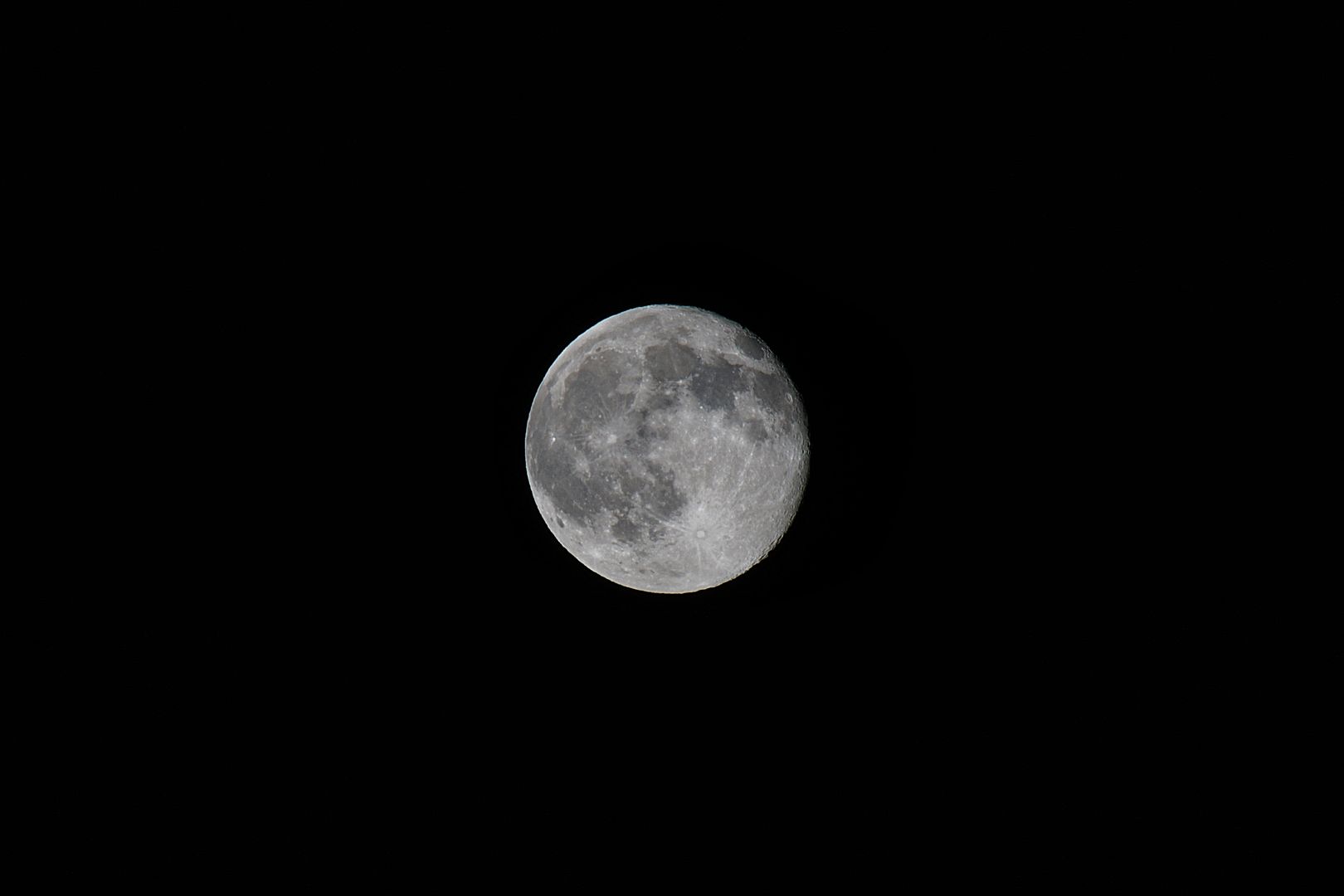
So the photo is under exposed by pretty close to 2/3 of a stop.
The Moon is a tough subject to correctly expose because of the vast dynamic range from the dark lava flows known as the Mare to the ejecta from the younger craters.
In the lower right third of a full Moon is the young crater Tycho and it's bright rays of ejecta.
Ideally Tycho should be the feature that is properly exposed.
A crop based on the rule of thirds will also add some tension and drama to the shot helping to hold the viewers eye.
Unfortunately, when the Moon is full the topographical features on the Moon do not cast any shadows making full moon shots less interesting than moon shots several days before or after full moon.
Full Moon shots made when the Moon is near the horizon so there is terrestrial landscape in the shot also have more interest, but are an even tougher shot to make because so much more of Earths atmosphere is between the camera and the Moon. That additional atmosphere absorbs a lot of blue light which makes the Moon appear much warmer.




![[No title]](/data/xfmg/thumbnail/36/36132-5bd4fa365c199003273e0ff128bf42f4.jpg?1734168228)
![[No title]](/data/xfmg/thumbnail/35/35223-d0fc07fee19dabe0456b4eeae54536fb.jpg?1734166895)