- Joined
- Dec 9, 2006
- Messages
- 23,984
- Reaction score
- 16,312
- Location
- Somewhere in Maine
- Can others edit my Photos
- Photos OK to edit
- Moderator 🛠️
- #1,381
I went around the back yard and lake shore to see what plants are there. There's also a triple-trunk tree we'd like to cut down to gise us a little more water view, but that may not happen as we'd have to get permission from the town - it's a wetland. The tree seems to be a white ash. We'll see what the town says.
Some of these are native, some are not. At least two need to go as they are either invasive and poisonous (Nightshade) or tend to take over an area. We have some Black-Eye Susans (not sure what variety) coming along in a flower box on the deck that Lazy-Lobster started from seeds. I'm hoping they are the native variety, and I will put them on the steep-not-fun-to-mow hill.
Broadleaf Arrowhead. Native and is along the lake bank. They flower and can stay.

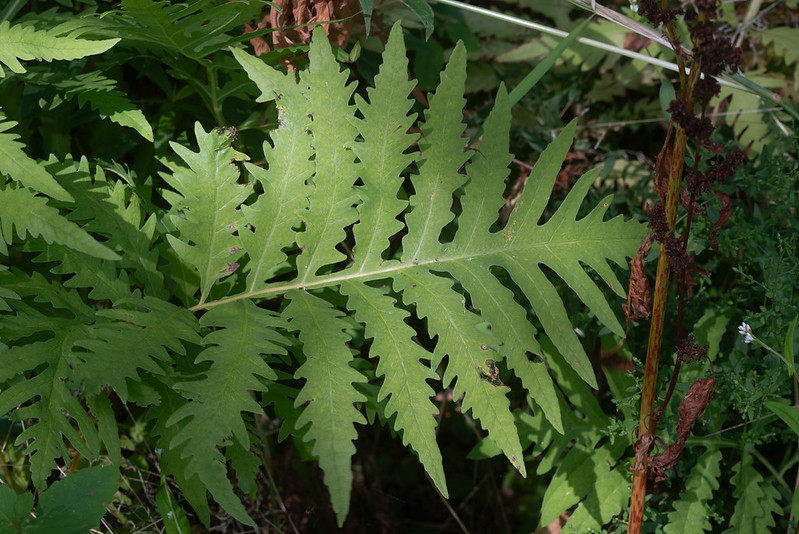
Maybe Sensitive Fern? There is quite a bit in the bottom, and can stay.
It might be Silky Dogwood. If so, it is native and will stay.

Appears to be a Jewelweed. Spotted Touch-Me-Not is native but Ornamental Jewelweed is not. I need a definite ID.

Daisy or Annual Fleabane, a native.

Ginger Mint?

Solomon's Seal, though I don't know which one. One is native, others are not. Looking for a better ID.

Virginia Creeper / Woodbine. Native but it can take over; it has to go.

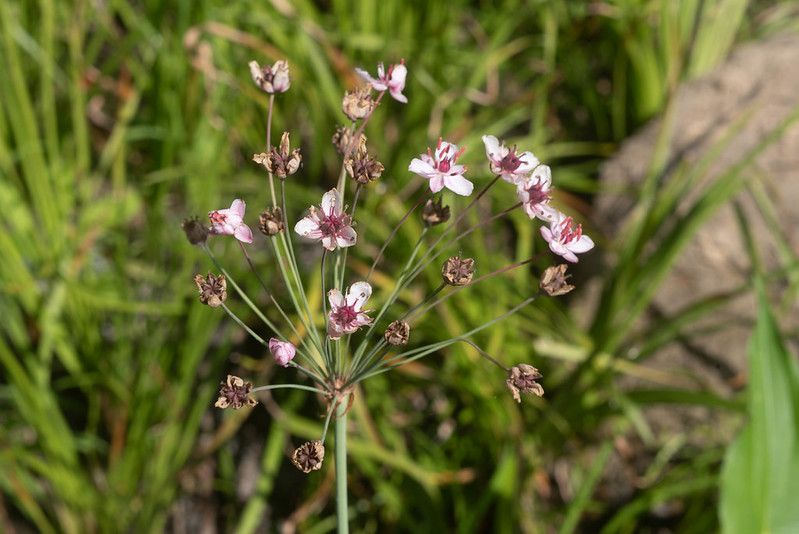
I think it's a Flowering Rush, an invasive water plant, so I'll probably collect one and take it to the Extension Service for proper ID.
Possibly Rambling Rose. If so, invasive (and prohibited from sale and distrobution) so it will have to go. I'll take it to the cooperative extension service for proper ID.

Climbing Nightshade: invasive and poisonous, so it has to go.

What Scot wouldn't want a thistle in the back yard? Probably most of them, but I'll keep this. It's along a perpetually wet area ("the creek") so it can stay as long as it doesn't spread too far.

Some of these are native, some are not. At least two need to go as they are either invasive and poisonous (Nightshade) or tend to take over an area. We have some Black-Eye Susans (not sure what variety) coming along in a flower box on the deck that Lazy-Lobster started from seeds. I'm hoping they are the native variety, and I will put them on the steep-not-fun-to-mow hill.
Broadleaf Arrowhead. Native and is along the lake bank. They flower and can stay.
Maybe Sensitive Fern? There is quite a bit in the bottom, and can stay.
It might be Silky Dogwood. If so, it is native and will stay.
Appears to be a Jewelweed. Spotted Touch-Me-Not is native but Ornamental Jewelweed is not. I need a definite ID.
Daisy or Annual Fleabane, a native.
Ginger Mint?
Solomon's Seal, though I don't know which one. One is native, others are not. Looking for a better ID.
Virginia Creeper / Woodbine. Native but it can take over; it has to go.
I think it's a Flowering Rush, an invasive water plant, so I'll probably collect one and take it to the Extension Service for proper ID.
Possibly Rambling Rose. If so, invasive (and prohibited from sale and distrobution) so it will have to go. I'll take it to the cooperative extension service for proper ID.
Climbing Nightshade: invasive and poisonous, so it has to go.
What Scot wouldn't want a thistle in the back yard? Probably most of them, but I'll keep this. It's along a perpetually wet area ("the creek") so it can stay as long as it doesn't spread too far.