What's new

Help please!!

ziggy84

TPF Noob!
Joined
Nov 26, 2012
Messages
394
Reaction score
20
Location
California, USA
Can others edit my Photos
Photos OK to edit
Hi everyone,

So I've been coming across this situation more then once and I don't know if it's because I have the kit lens or if it's operator error. In-camera settings as followed: iso 500, F36 @ 55mm for 55 secs on the 18-55mm 3.5-5.6G VR kit lens; Manual white balanced, AF-A Focus mode, AF focus mode on auto area-AF, metering is on matrix, RAW format, Long exposure noise reduction is set to "on", high iso nr is set to norm, AF is set to "on" and this is what I come up with...
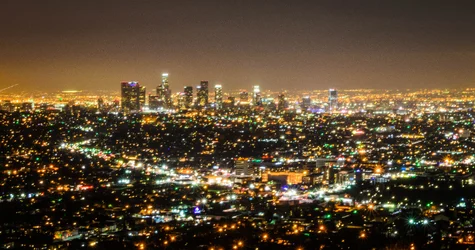

$_DSC0098.webp
 
ziggy84 said:
Hi everyone,

So I've been coming across this situation more then once and I don't know if it's because I have the kit lens or if it's operator error. In-camera settings as followed: iso 500, F36 @ 55mm for 55 secs on the 18-55mm 3.5-5.6G VR kit lens; Manual white balanced, AF-A Focus mode, AF focus mode on auto area-AF, metering is on matrix, RAW format, Long exposure noise reduction is set to "on", high iso nr is set to norm, AF is set to "on" and this is what I come up with...

<img src="http://www.thephotoforum.com/forum/attachment.php?attachmentid=35547"/>

Why f/36?
 
ziggy84 said:
Hi everyone,

So I've been coming across this situation more then once and I don't know if it's because I have the kit lens or if it's operator error. In-camera settings as followed: iso 500, F36 @ 55mm for 55 secs on the 18-55mm 3.5-5.6G VR kit lens; Manual white balanced, AF-A Focus mode, AF focus mode on auto area-AF, metering is on matrix, RAW format, Long exposure noise reduction is set to "on", high iso nr is set to norm, AF is set to "on" and this is what I come up with...

<img src="http://www.thephotoforum.com/forum/attachments/landscape-cityscape/35547-help-please-_dsc0098.jpg"/>

Why f/36?

same question from me. Why not just stop down 2 stops, so around f/11 and you would have had a much sharper shot. Not sure why you wanted such a long exposure....even if you did you could have reduced the ISO. Were you on P mode or aperture priority? I wouldn't trust automatic selection of aperture after dark......

Edited to add - was your VR on? On a tripod it should always be off.
 
Hi everyone,

So I've been coming across this situation more then once and I don't know if it's because I have the kit lens or if it's operator error. In-camera settings as followed: iso 500, F36 @ 55mm for 55 secs on the 18-55mm 3.5-5.6G VR kit lens; Manual white balanced, AF-A Focus mode, AF focus mode on auto area-AF, metering is on matrix, RAW format, Long exposure noise reduction is set to "on", high iso nr is set to norm, AF is set to "on" and this is what I come up with...


View attachment 35547

I figured smallest aperture, the sharpest picture....
 
ziggy84 said:
Hi everyone,

So I've been coming across this situation more then once and I don't know if it's because I have the kit lens or if it's operator error. In-camera settings as followed: iso 500, F36 @ 55mm for 55 secs on the 18-55mm 3.5-5.6G VR kit lens; Manual white balanced, AF-A Focus mode, AF focus mode on auto area-AF, metering is on matrix, RAW format, Long exposure noise reduction is set to "on", high iso nr is set to norm, AF is set to "on" and this is what I come up with...

<img src="http://www.thephotoforum.com/forum/attachments/landscape-cityscape/35547-help-please-_dsc0098.jpg"/>

Why f/36?

same question from me. Why not just stop down 2 stops, so around f/11 and you would have had a much sharper shot. Not sure why you wanted such a long exposure....even if you did you could have reduced the ISO. Were you on P mode or aperture priority? I wouldn't trust automatic selection of aperture after dark......

Edited to add - was your VR on? On a tripod it should always be off.

I was on manual mode. So I don't have to have the aperture all the way closed down for great depth of field??
 
Sorry stupid of me as longest automatic exposure is always 30 secs so should have figured you were on Bulb!

Avoid smallest aperture as even on the best lenses you will lose sharpness for diffraction and at f/36 you will have huge diffraction issues. Try it again at f/8 - f/11 and set your focal point for a third through the scene. You should still get good front to back focus. There is rarely any useful need to shoot at minimum aperture.
 
Okay, I'll try that next time. Thanks thereyougo!
 
Sorry stupid of me as longest automatic exposure is always 30 secs so should have figured you were on Bulb!

Avoid smallest aperture as even on the best lenses you will lose sharpness for diffraction and at f/36 you will have huge diffraction issues. Try it again at f/8 - f/11 and set your focal point for a third through the scene. You should still get good front to back focus. There is rarely any useful need to shoot at minimum aperture.

So is that something I should always do? Shoot 2 stops down from the smallest aperture?
 
Sorry stupid of me as longest automatic exposure is always 30 secs so should have figured you were on Bulb!

Avoid smallest aperture as even on the best lenses you will lose sharpness for diffraction and at f/36 you will have huge diffraction issues. Try it again at f/8 - f/11 and set your focal point for a third through the scene. You should still get good front to back focus. There is rarely any useful need to shoot at minimum aperture.

So is that something I should always do? Shoot 2 stops down from the smallest aperture?

Most lenses are sharpest at stopped down 2 stops. i.e. 2 stops down from maximum aperture (smallest number largest aperture. the f numbers are fractions so the numbers go up as the size goes down). How much depth of field you need will decide whether you want to stop down further, but this will depend on the shot you are taking and whether you have a lot of near foreground interest that needs to be sharp. For landscapes, I frequently shoot at f/11 - 16 if I have a lot of foreground interest. Where the nearest point of interest is already at infinity like in your shot, there is no need to shoot at a smaller aperture (larger number) than f/11. You could have used 100 or 200 ISO and had a cleaner image (although it's not particularly noisy) and still had a shorter exposure time which would be kinder on your batteries.

There are others on here that have much better technical knowledge than I, but research hyperfocal focussing. It will help you use the best aperture for your lens otherwise it is like weighing it down with bricks - it can't possibly give you its best at minimum aperture. Hope this helps...
 
I typically would shoot something like this at around F8 to F11. This avoids diffraction softness, and on most lens.. this is the sweet spot. Two stops down from wide open is usually recommended as the minimum needed for good sharpness, but that may not be the sharpest for that lens, as lenses vary. You need to do test shots to see where your lens is sharpest. It also also a good idea to bracket (aperture) a couple of different stops when shooting like this, and then pick the best.

Also keep in mind that long exposure will cause the sensor to heat up.. which will generate more noise. Sometime the shortest exposure possible will get you a better image... it all depends on what you are after.

There is also the question of your ISO choice... 500? Most sensors have what is called a Native ISO... and they will typically give the best results there, or in one of the standard multipliers of that (i.e 100, 200, 400, 1600, etc...). The non-standard ISO's are achieved by boosting / cutting signal, and usually are not the best choice.

"The reason why native ISO matters is that when you take a photograph at this ISO number the highlights will, if the picture is correctly exposed, have just resulted in an almost full-well number of electrons at each relevant pixel. This means that the statistical noise is lowest and the noise introduced by the read electronics is low in proportion to the signal. If you dial in a higher ISO than the native ISO the amplifiers have to work with an input signal which may, for really high ISO numbers, be much less than full-well (less photons equals less electrons) and so the underlying noise will be higher in proportion to the signal" Quote from Camera Labs Camera and Photography forum | Cameralabs ? View topic - Know your Base (or Native) ISO


Some other interesting articles...

The Imaging Resource: Image Quality: What's Really Going on in the Sensor?

ISO: Native Vs Extended | Roberts Raw! Camera News, Advice, And Learning
 
Last edited:
Sorry stupid of me as longest automatic exposure is always 30 secs so should have figured you were on Bulb!

Avoid smallest aperture as even on the best lenses you will lose sharpness for diffraction and at f/36 you will have huge diffraction issues. Try it again at f/8 - f/11 and set your focal point for a third through the scene. You should still get good front to back focus. There is rarely any useful need to shoot at minimum aperture.

So is that something I should always do? Shoot 2 stops down from the smallest aperture?

Most lenses are sharpest at stopped down 2 stops. i.e. 2 stops down from maximum aperture (smallest number largest aperture. the f numbers are fractions so the numbers go up as the size goes down). How much depth of field you need will decide whether you want to stop down further, but this will depend on the shot you are taking and whether you have a lot of near foreground interest that needs to be sharp. For landscapes, I frequently shoot at f/11 - 16 if I have a lot of foreground interest. Where the nearest point of interest is already at infinity like in your shot, there is no need to shoot at a smaller aperture (larger number) than f/11. You could have used 100 or 200 ISO and had a cleaner image (although it's not particularly noisy) and still had a shorter exposure time which would be kinder on your batteries.

There are others on here that have much better technical knowledge than I, but research hyperfocal focussing. It will help you use the best aperture for your lens otherwise it is like weighing it down with bricks - it can't possibly give you its best at minimum aperture. Hope this helps...

Yeah your info helped me out a lot. THanks for clearing that up for me thereyougo!
 
BTW, isn't the smallest aperture of the 18-55 f/22? How do you get f/36 from that lens?

It's a 3.5-5.6 variable aperture lens. KmH helped me understand it better in one of my posts earlier:

At 18 mm and f/3.5 - the lens aperture has a 5.14 mm diameter (18 mm/3.5 = 5.14 mm)
At 55 mm and f/5.6 the lens aperture has a 9.82 mm diameter (55 mm/5.6 = 9.82 mm)

However we can say the lens aperture is smaller relative to the lens focal length.

Your 18-55 mm lens is a variable aperture lens.
A 17-50 mm f/2.8 is a constant aperture lens because it can maintain f/2.8 all the way from 17 mm to 50 mm.
Many el cheapo lenses have a single fixed aperture that is not adjustable.
 
I typically would shoot something like this at around F8 to F11. This avoids diffraction softness, and on most lens.. this is the sweet spot. Two stops down from wide open is usually recommended as the minimum needed for good sharpness, but that may not be the sharpest for that lens, as lenses vary. You need to do test shots to see where your lens is sharpest. It also also a good idea to bracket (aperture) a couple of different stops when shooting like this, and then pick the best.

Also keep in mind that long exposure will cause the sensor to heat up.. which will generate more noise. Sometime the shortest exposure possible will get you a better image... it all depends on what you are after.

There is also the question of your ISO choice... 500? Most sensors have what is called a Native ISO... and they will typically give the best results there, or in one of the standard multipliers of that (i.e 100, 200, 400, 1600, etc...). The non-standard ISO's are achieved by boosting / cutting signal, and usually are not the best choice.

"The reason why native ISO matters is that when you take a photograph at this ISO number the highlights will, if the picture is correctly exposed, have just resulted in an almost full-well number of electrons at each relevant pixel. This means that the statistical noise is lowest and the noise introduced by the read electronics is low in proportion to the signal. If you dial in a higher ISO than the native ISO the amplifiers have to work with an input signal which may, for really high ISO numbers, be much less than full-well (less photons equals less electrons) and so the underlying noise will be higher in proportion to the signal" Quote from Camera Labs Camera and Photography forum | Cameralabs ? View topic - Know your Base (or Native) ISO


Some other interesting articles...

The Imaging Resource: Image Quality: What's Really Going on in the Sensor?

ISO: Native Vs Extended | Roberts Raw! Camera News, Advice, And Learning

Great information CGibson. Thanks a lot! Well I've read that the native ISO for the 5100 is 100-6400; but I'll stick to the standards. So why did they put in all the extra ISO's in digital cameras for? I shoot 100 ISO always, unless in this case, I wasn't able to with the incorrect settings I had: F36. So I turned ISO up to 500. haha BUT now that you've cleared this up for me, I'm going back out tonight and try again, bracketing 11-8.
 

Create an account or login to comment

You must be a member in order to leave a comment

Create account

Create an account on our community. It's easy!

Log in

Already have an account? Log in here.

New Topics

Back
Top Bottom