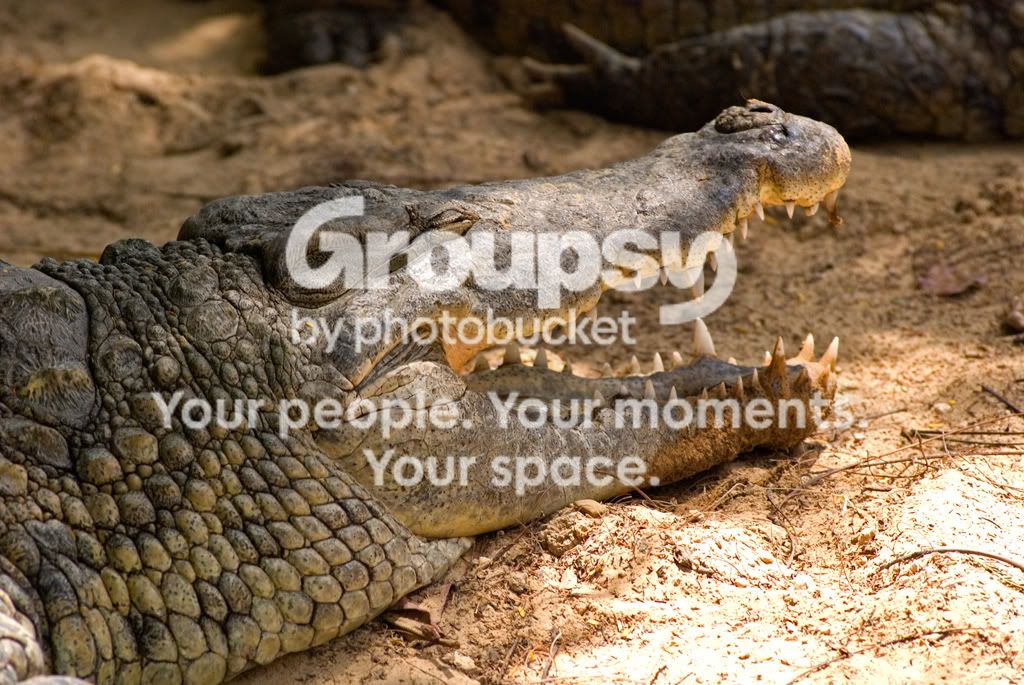
Alligators have continuous, lifelong tooth replacement as teeth break off, fall out, or are worn down and lost. You can distinguish alligators from crocodiles by the pattern and arrangement of the teeth. In the alligator, the lower row of teeth project upwards into a series of pockets in the upper jaw so that when the mouth is closed, the only teeth that can be seen are the upper teeth. The crocodile normally has both rows of teeth exposed when the jaw is closed and the teeth normally intermesh with one another. Alligators have several adaptations for living near water, marshes, rivers and estuaries. Their eyes and nostrils are set high on the head. They can still see and breath as they remain almost completely submerged. They have membranes and fleshy valves which protect the eyes and close ears, nostrils, and trachea when they are underwater. The tail is laterally compressed, making alligators powerful swimmers.








![[No title]](/data/xfmg/thumbnail/34/34687-f643984276d5d6af7e697542a2e81c23.jpg?1734165693)
![[No title]](/data/xfmg/thumbnail/34/34688-a1ead83a3067b449d62078d1170e00f6.jpg?1734165694)