What's new

Life was hard 150 years ago...

pgriz

Been spending a lot of time on here!
Joined
Jul 30, 2010
Messages
6,734
Reaction score
3,221
Location
Canada
Can others edit my Photos
Photos OK to edit
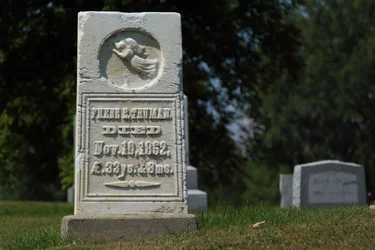
Driving through the Champlain Islands (Vermont), we came across an old cementary, but well tended. We had a look.
From the ages shown, it was clear that old age was not a problem - many died much younger than we are now accustomed to.
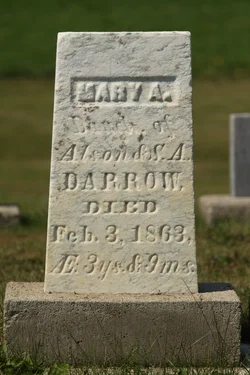
$Mary_a_small_8864.webp

$Truman_small_8860.webp

Yeah, I know. the WB is slightly too warm in the first.
 
There is a pretty old cemetery close to my house that I've shot many times. It's very interesting looking at the family histories. A lot of times the whole family is buried next to each other. You get to see who died before who and who got married. What always gets me is how many children died at early ages. It must of been very painful for families to lose some many kids. RIP
 
Until the last century, I think the average life expectancy was around 40. Now, at least in the western world, it's upward of 80. Whatever our problems, we are living much better lives than most of our ancestors. I am grateful for the blessings we receive, and we almost never acknowledge.
 
Its odd that we live longer than our ancestors, but waste that new found time we have. And dont even mention fast foods.
 
there is definitely a morbid fascination in wandering cemeteries, trying to picture the lives these people had. you do have to remind yourselves that these people would have felt the same emotions we do today, laughed and cried at the same things (well, maybe not farting dogs on youtube).
 
When you look at the "old timers" back then vs what we have now, they tended to live just about as long as our "old timers" live today. What really pulled down the average life expectancy back then was the high child and youth mortality figures.

My grandfather, born ~1890, was the 'baby' of eleven in his family. Roughly a third of his siblings died before they were ten, another third by the time they were thirty (including one killed in WW I), and the remainder (including my grandfather) were around well into their 80's.
 
I run into many old cemeteries in my rural wanderings as well, and I agree about the number of tombstones dedicated to children that you find in them. Very sad. Many of what I assume were the causes of those early deaths are prevented by vaccines that we take for granted these days.
 
Modern medicine, and "germ theory", as well as "better sanitation" is what has allowed people to live so much longer. Antibiotics, and amazing surgical methods have helped a huge amount as well. A century and a half ago, a compound fracture, or even a severe cut or burn could EASILY turn into a death sentence. "Blood poisoning" (ie. sepsis), so,so easily avoided today, killed millions of people. There used to be a joke: "My grandfather is soooo old, he remembers when mercurichrome was considered a miracle drug." [For the younger set, mercurichrome was a VERY common topical antiseptic drug that was in probably every medicine chest in the world by the 1930's...).

What's a real trip is to wander around old cemeteries and look at the number of people who died from influenza in the World War I era..."Spanish flu" killed MILLIONS of people, world-wide, in a roughly three-year span in the late nineteen-teens!
 
I like old cemeteries, and being in Maine have plenty of them: heck I have two private cemeteries on my own farm. One is comprised of a family that took care of an Inn from the 1850's. They contracted Scarlet Fever and wiped the entire family out in just a few years time. At the time, the old Inn sat on a host of roads that went to some well known cities like Bangor, Belfast, Waterville and Augusta and you can see the big rotary in the rock walls here...but now it is nothing but woods. Anyway a map I have of this town in 1859 shows the Inn, but shows it as abandoned. The thing is, there is no local history on it because the Inn was in one town, and the people were buried just over the town line in another town. One historical society actually said they could not figure out where the people in the cemetery came from. I have since informed the two towns historical societies about the whole thing so they can include these stories in the towns history. It is hard to belive but people were so scared on contracting scarlet fever that they stopped using the roads, steered clear of the inn and the whole area was just abandoned.

I have noted that children were okay usually if they could get past 4 years of age, and men always fared better unless they got hurt working. I have sen quite a few headstones with "killed by falling tree" on them, but the poor woman had it rough. Child birth killed so many of these poor women right in their prime.

Myself, I could not get past the fact that these poor people had to use a corn cob to wipe their hineys. I am just an ole farmer ad yet I have a deep sense of appreciation for toilet paper and running water.
 

Create an account or login to comment

You must be a member in order to leave a comment

Create account

Create an account on our community. It's easy!

Log in

Already have an account? Log in here.

Back
Top Bottom