What's new

More "Close Up" than "Macro" but wanting to learn

Azurite180

TPF Noob!
Joined
May 18, 2013
Messages
20
Reaction score
0
Location
MidAtlantic, USA
Can others edit my Photos
Photos NOT OK to edit
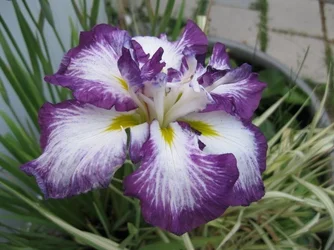
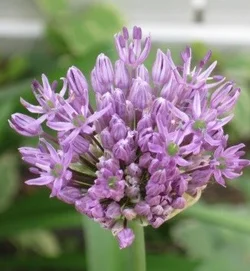
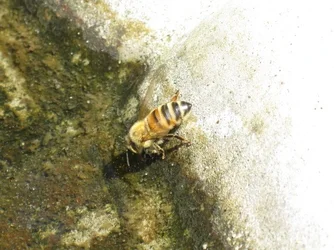
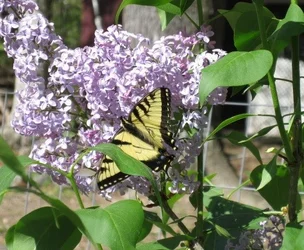
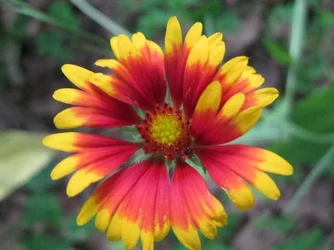
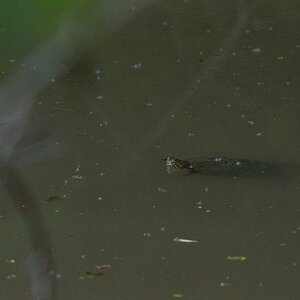
These pics were taken with a Canon Power Shot A3100, no photo editing except cropping. I'm currently shopping for a DSLR (Canon t3i or Pentax K-30?) and would love to know which lens would give me better macro capabilities. 100mm? a macro zoom? range? Camera and/or lens opinions welcome.

View attachment 45346 $flowers and bunnies 003.webp $onion flower.webp $Honeybee Closeup 6-17.webp $butterfly lilac.webp View attachment 45352
 

Attachments

  • $flowers and bunnies 011.webp
    $flowers and bunnies 011.webp
    44.9 KB · Views: 181
On the subject of macro lenses and DSLRs here are some thoughts:

1) True macro lenses - true macro is considered (photographically speaking) to be when the image reflected on the sensor by the lens is the same size as the subject is in real life. This is called the 1:1 magnification ratio. All true macro lenses will achieve this magnification - this is limited to typically prime lenses (those of a single focal length) whereas most if not all zooms which have "macro" in the title use it more as a marketing term to mean that it has close focusing capabilities (which means it can, often at best, get only to 0.5:1 or half life size which is about where you are now).

2) Focal length does not affect magnification. 1:1 on a 50mm macro lens is the same as 1:1 on a 200mm macro lens. So no matter what prime you get you'll capture the same frame. What will change though (and you'll see this more when comparing extremes of focal length like those stated before) is the degree of background blurring - where longer focal length lenses will render the background much more blurry over shorter focal length macro lenses.
The other factor that will change is that a longer focal length macro lens will give you a longer minimum focusing distance - which equates to a longer working distance*

3) Depth of field between lenses of different focal lengths remains the same; however the effect mentioned above with regard to the background blurring, can mean that (for some shots) a shorter focal length macro can "appear" to have a greater amount of depth of field in a shot because the background areas are not falling into blur as sharply.

4) Typically speaking 90mm (Tamron 90mm f2.8 macro) is the shortest focal length recommended for starting with macro photography if you want to shoot insects. You can use shorter lenses, but I would not use shorter than 60mm because of the reduction in working distance (50mm are probably just ok - anything shorter like a 40mm or 35mm are just not practical at all).
Going longer is, of course, an option.

5) The image quality in true macro lenses is very good, from own brand to 3rd party they are all great performers. This features (eg focal length, IS/OS), focal length, price and such are all far more important than the branding. So Sigma, Tamron, Tokina, Pentax, Canon - all are great macro lenses (Canon own brand tend to have the edge and provide the faster AF speeds - I would assume similar for Pentax own brand but can't confirm as I don't know their range that well).


*
Working distance = distance from the front of the lens to the subject
Minimum focusing distance = distance from the sensor/film (inside the camera) to the subject (on most DSLRs the position of the sensor/film is shown on the outside of the body with a o with a line through it).

As you can see the difference between the two for most common use isn't that much - until you get to macro where the difference is important
 
Thank you for the comprehensive response. I think I'll probably go with the Canon, simply because I can adapt other brand lenses to work on it with the proper adaptor - including my old film Pentax lenses.

Right now I'm working with that fine line between too close and not close enough to capture most detail. Frustrating to say the least, particularly when one has to wear vision correction too (trifocals progressives.)

I'm not particularly interested in photographing insects per se, though I am a beekeeper and would like to take some decent photos of bees, particularly to capture the differences between workers, drones, queens and different species. I am also interested in truly close up detail on a variety of subjects and LOVE the macro images I've seen on this forum and elsewhere.
 
Canon is a good choice certainly!

Also this might give you some idea of the difference you can expect to see:
around 0.5:1 magnification:
3235277616_3d1c9bb721.jpg


and at 1:1
3234315137_a66585f1d9.jpg


So a good macro lens will certainly give you the ability to get close and show the detailing you want.
 
I own the 100mm 2.8 macro and I absolutely love it. It is also a great lens for portraits. One advantage you would have with this lens is on a T3i it would actually be a 160mm due to the crop factor of your sensor. Hope this helps.
 
I own the 100mm 2.8 macro and I absolutely love it. It is also a great lens for portraits. One advantage you would have with this lens is on a T3i it would actually be a 160mm due to the crop factor of your sensor. Hope this helps.

Not 100% true.
A 100mm lens is a 100mm lens no matter what camera you put it on - it will still and always be a 100mm lens.

Now a few years go in the days of film the 35mm film format was "THE" most popular type of commonly used film - especially for DSLRs. As a result it became the "norm" for the casual, consumer and a good segment of the pro market - it was the standard. Now when digital came in making 35mm sized sensors was difficult and very expensive; as a result they reduced the size of the sensor and called them "crop" sensors. This is because they "cropped" part of what you'd normally see from a lens on a 35mm camera from the frame. This gives the appearance in a photo that the crop sensor us using a longer focal length lens that the lens is stated at - IF you compared it to a shot taken on a 35mm camera at the same standing position with the same focal length lens.

So unless you have experience of and are used to using 35mm sized film or digital cameras the "its like a 160mm lens" statement isn't of any worth because you've no prior experience of the 100mm lens to draw from.
 
I own the 100mm 2.8 macro and I absolutely love it. It is also a great lens for portraits. One advantage you would have with this lens is on a T3i it would actually be a 160mm due to the crop factor of your sensor. Hope this helps.

Not 100% true.
A 100mm lens is a 100mm lens no matter what camera you put it on - it will still and always be a 100mm lens.

Now a few years go in the days of film the 35mm film format was "THE" most popular type of commonly used film - especially for DSLRs. As a result it became the "norm" for the casual, consumer and a good segment of the pro market - it was the standard. Now when digital came in making 35mm sized sensors was difficult and very expensive; as a result they reduced the size of the sensor and called them "crop" sensors. This is because they "cropped" part of what you'd normally see from a lens on a 35mm camera from the frame. This gives the appearance in a photo that the crop sensor us using a longer focal length lens that the lens is stated at - IF you compared it to a shot taken on a 35mm camera at the same standing position with the same focal length lens.

So unless you have experience of and are used to using 35mm sized film or digital cameras the "its like a 160mm lens" statement isn't of any worth because you've no prior experience of the 100mm lens to draw from.

I would argue that is also not necessarily true. I think somewhat of a mix of the two are correct, but in reality it really depends on your camera and sensor in terms of megapixels and size, and here's why:

My T3i is 18 MP and an APS-C sensor, 1.6 crop factor.

A Canon EOS 1D is a full frame (FX) sensor, but is still only 18.1 MP.

In order for the 1D to have basically the same number of pixels in a larger sensor, the individual pixels have to be larger in physical size.

So, I take my 1D, pop on a 100mm lens and I get my shot. I then take the 100mm lens and pop it onto my T3i. Now, my crop sensor, physically smaller in size, gets a smaller portion of the image circle focused by the lens on it, but...it is still capturing that smaller area on the same number of pixels. In reality, the T3i is capturing the same image as if I had used a 160mm lens on the 1D (well, very close anyway considering there is a slight difference in pixel count, but not much).

Where we see bigger ratio differences is comparing an 18MP crop to, say a 22 or 24MP FX format. Then it's not necessarily a 1.6x ratio exactly.

So, it's partly true to say it's the same (or at least would be for one example), but it gets funky on the math when the pixel counts are different to greater extents when comparing the 2 sensors.

 
EDL I'm not quite sure how you're fitting the pixels into this matter.

The 100mm lens is still and always is 100mm in focal length. The "its like a 160mm" is only of any use IF you're comparing the crop sensor to the 35mm film/sensor size. If you've never shot with 35mm before or you used a different format of film size then the comparison has no meaning what so ever.

It's a commonly used argument because at the time digital took over from film many making the change were film users so the conversion become commonly passed on info; today we still see many changing over; but more and more its people getting into digital for the very first time. IF anything they have to get used to the focal lengths now meaning Less range in comparison to their experiences on piont and shoots (which have smaller sensors). We don't get to get this though as the point and shoot market sticks with "10* magnification" descriptions instead of focal lengths
 
I understand what you are saying from the point of view that anyone without prior 35mm or "full frame" sensor experience might not get it (or even need to). The 35mm size, as you said comes from the film era, but it is a reference point and relevant since DLSR's are loosely positioned at or near that 35mm size.

Yes, understood and agree that 100mm lens is always a 100mm lens, and yes, the point is the comparison of a full frame sensor to a crop sensor since we have those choices now. Going APS-C vs FX is not the same as going 35mm to medium format. The point is to maintain a reference point for anyone looking at different DSLR's and what it all means about the different sensor sizes and crop factors.

The pixels fit in because a shot from an APS-C sensor is not the same as cropping an FX shot down to the field of view of the APS-C shot. You are throwing out pixels when you do that. If both sensors have the same number of pixels, the cropped FX shot will be less pixels of data. Certainly arguments can be made about the quality of the data from the FX sensor and all that (pixel size and pitch and signal to noise ratios, etc), but for purposes of "equivalency", in order to get full pixel count shots with same field of view, the FX camera will need a longer focal length than the crop sensor.
 

Create an account or login to comment

You must be a member in order to leave a comment

Create account

Create an account on our community. It's easy!

Log in

Already have an account? Log in here.

Back
Top Bottom