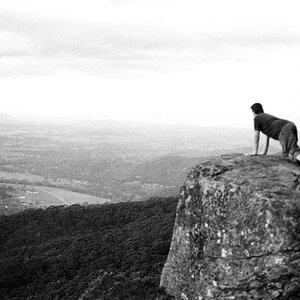
It’s a little bit more complicated than “teachers teach, newbies learn”. The process of learning can be thought of as a journey, with a starting point, a destination, and a route that will take you from here to there. Newbies typically don’t know where they are, since they haven’t learned to recognize the scenery around them. And when you don’t know what you don’t know, then you can be thinking that you’re much further up the trail than you actually are. So the first challenge is for the teacher and the student to agree that they are at the same starting point. That’s when the name-calling starts:
“Hey teach, look how high I am!”
“Pftt. You’re in a ditch, and you’ve gotten out of the swampy water and are getting up the slope of the road shoulder.”
“No, I’m not! I can see the river that I have crossed, and now up going up the foothills of that mountain!”
“Um, that “river” is two feet wide, filled with semi-stagnant water, and the “foothills” you’re climbing are some eroded road shoulders.”
“Teach – you’re not being very helpful!”
“Well, I’m trying to explain to you where you are, and you don’t want to know it. And until you get out of that ditch, we aren’t going anywhere.”
“uh, you’re a fraud.”
“And you are lazy.”
If we agree on a starting point, and we have a specific destination in mind, then we can plot a route to it. There can be more than one route to the objective, but chances are, if you follow the route the teacher outlined, you’ll get there. Of course, students can veer off the route and try to do it themselves. If they are lucky, they’ll find a shortcut, but usually, they will end up on a much more difficult path, or even in a dead-end ravine. It really helps to know the terrain, and the newbie just doesn’t have this information.



 Thanks" READ PROPERLY