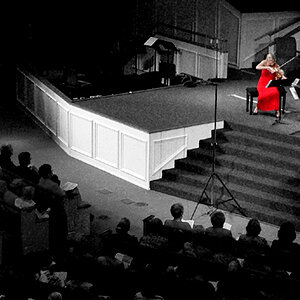
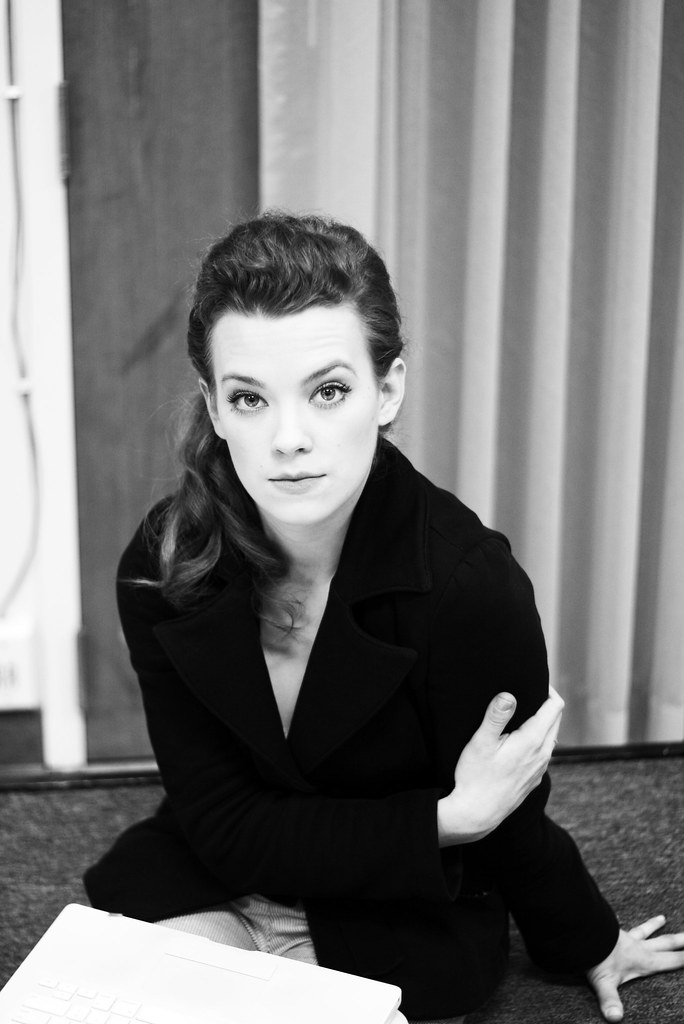
The negative space just kills some of the pictures. When the subject is taller than it is wide, the best framing is almost always a vertical framing, to match the subject's proportions. Like the most recent two shots; in the last shot, immediately above, there is a huge amount of dead space above her head, while the computer is cropped in less than half, and her hand shows three fingers plus a thumb, with two of the three fingers cropped off at the frame edge, and the thumb virtually touching the frame edge. The sliding room divider behind her takes up a lot of space, but doesn't add much; adding the full laptop computer and more space at the bottom of the frame would have added value. Basically, you have aimed too high on the subject.
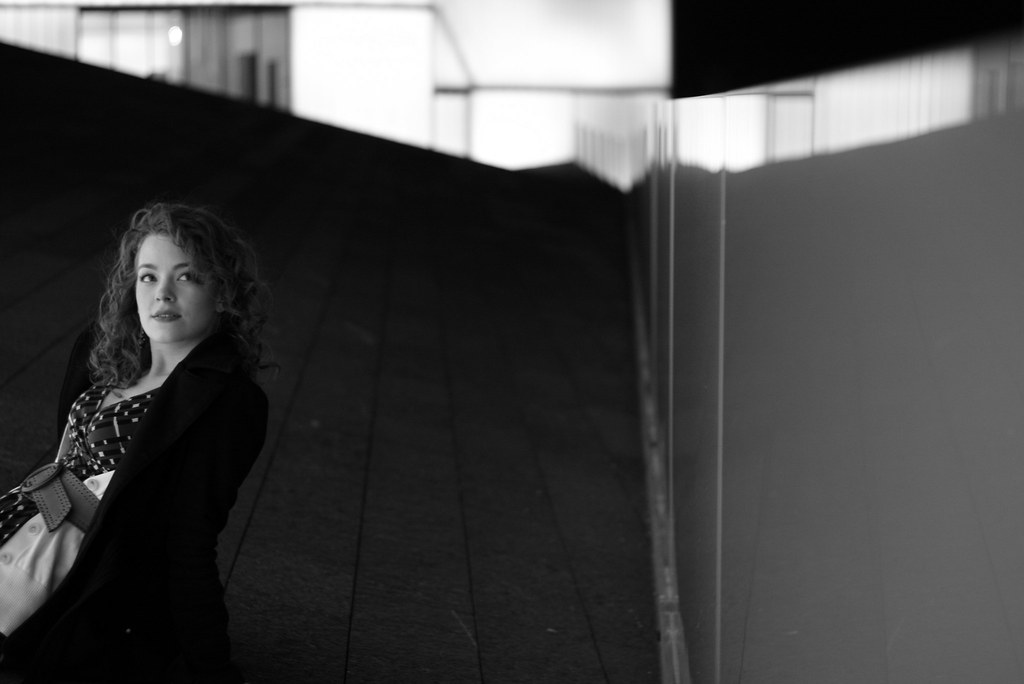
In the shot above that one, the horizontal shot of her, we see a very common decision made by many beginners: to hold the camera horizontally,and position the subject in front of an out of focus background that adds very little to the shot.
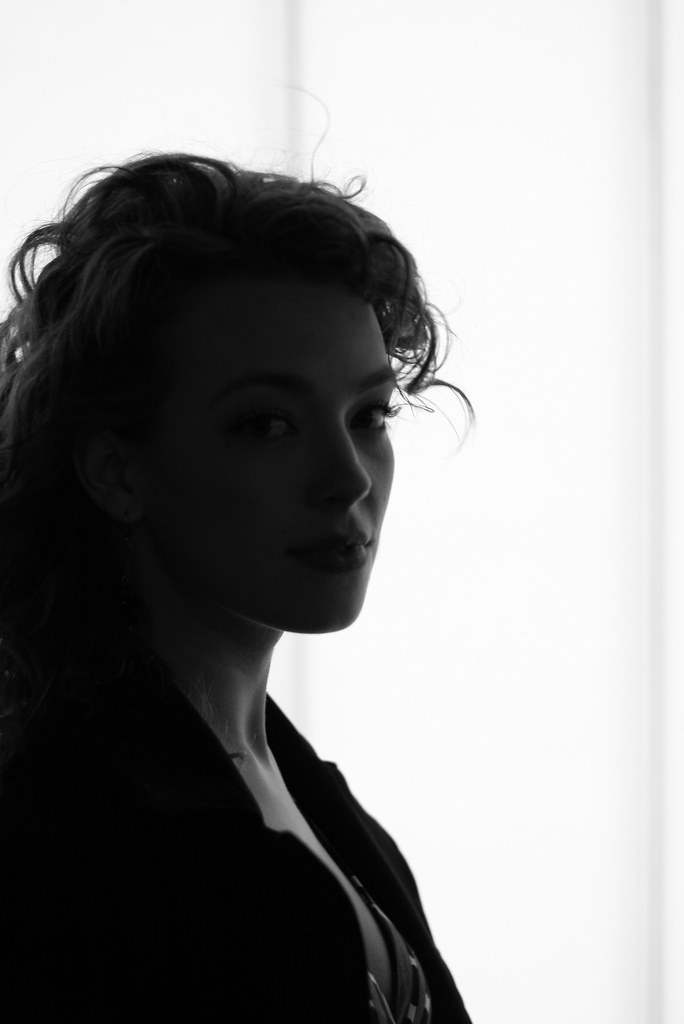
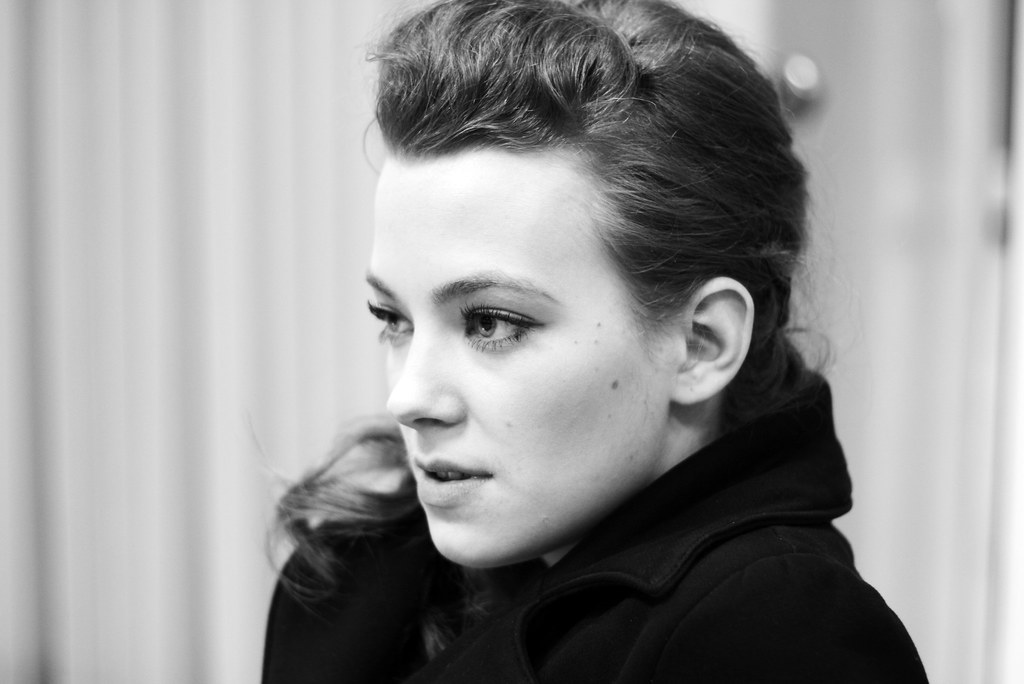
The biggest problem for many people is literally "seeing" the edges of the viewfinder when they look through the camera. Many cameras do not offer a very good edge-to-edge view of the picture area, especially if one wears eyeglasses or sunglasses. It takes a few months of literally forcing yourself to scan the entire width of the frame until doing so becomes second nature. The normal behavior is to pick up the camera and point it, held horizontally, center the main subject, focus and shoot. Not to bash on you or your work, but the shots you've posted all show a similar issue; loose composition and poor framing choices. The first shot could have been very good, but you cropped off her entire bustline,and instead showed us about 25% of the frame as empty head space. So, for general insight: look toward the edges and corners of the frame,and for standing people, almost always select a 'tall" camera orientation. Always make sure that there is not a huge amount of excess empty space that does not serve a purpose; if there is, eliminate the empty space by filling it with actual subject matter.







![[No title]](/data/xfmg/thumbnail/36/36602-3001bbe07fa5517ccd4b03e049c7b844.jpg?1734169055)


![[No title]](/data/xfmg/thumbnail/36/36600-689bc868e20f53581a083c9054ee0e47.jpg?1734169054)