Portrait lenses and macro lenses are usually quite different animals. Some of the world's absolute best "portrait" lenses, like Nikon's 85mm f/1.4 AF-D lens have sharp central areas and softer corners at the wide f/stops like f/1.4 all the way down to f/4...and also some light fall-off too. Some of the world's best macro lenses have absolutely brutally sharp, neutral image rendering that is quite unflattering to people--some of the new Zeiss macro lenses are like this, with imaging charactertistics that are, IMHO, very people UN-friendly.
Full-frame and APS-C are very different camera formats. On 1.6x Canon, you absolutely must position the camera much farther away from a subject than with a FF camera. With an 85mm lens on FF, you get an 8.5 foot tall field of view at 20 feet, but with a 1.6x Canon body, the camera must be 34.5 feet away to get the same field of view. What that means is that, to photograph a half-body pose with a 1.6x Canon body, the camera-to-subject distance is far enough that the 85mm starts to show rather deep depth of field...it's hard to interpret the difference by just looking at depth of field charts, and the "mental" or "visual" or "quantitative" differences between APS-C and FF are not as apparent from the DOF charts as they are from looking at actual photographs.
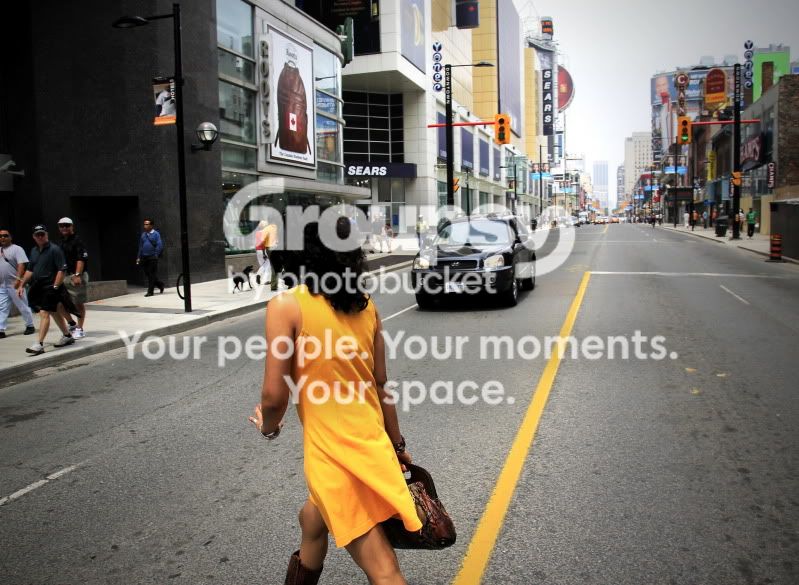
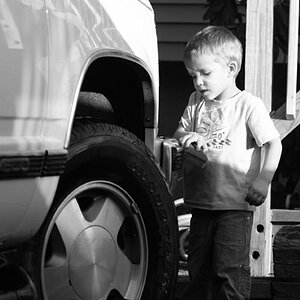
Look at the photo you posted above...see that deep depth of field? What's the focal length and f/stop you used? ANyway....long story shorter--I do not think a 50mm is a good portrait lens, nor is it a good macro length. If you want an affordable macro lens with nice bokeh, the Tamron 90mm /2.8 macro is a better lens than the Canon 100/2.8 USM Macro. Sigma's 150mm 2.8 and Tamron's 180/2.8 macro both have lovely bokeh and make very pretty images. The problem with macro lenses is that at portrait distances like 6,7,8,9,10,15,20,30,40 feet (seriously, you'll be shooting at 40 feet with a 150 macro more often than you might anticipate on 1.6x), macro lenses have very,very,very hair-trigger focusing travel, and the slightest mis-aiming of the AF bracket, or the slightest bit of carelessness, and the subject will be out of focus in the final images much more often than if you were shooting with a field lens, ie, a non-macro design, like the Canon 85/1.8. Macro lenses are optimized for focusing at close distances, and beyond around 2 meters, the vast majority of macro lenses have very few degrees of focusing all the way to Infinity, and that design characteristic can cause some serious problems with most AF systems, and a macro lens used at say 10-20-25 feet is often not going to focus accurately enough to shoot moving subjects with more than about 75% success rate--you can have 25% or 30% out of focus, useless shots in Continuous AF, and even in Single, the reality is that a macro lens can be a real PITA unless you're working inside of six feet or so...







![[No title]](/data/xfmg/thumbnail/33/33359-a5cf76b8e843e82b3831650af6dfa6b3.jpg?1734163289)