What's new

reflection reduction

Joined
Sep 27, 2009
Messages
582
Reaction score
41
Location
FL
Can others edit my Photos
Photos NOT OK to edit
I can't seem to do anything to eliminate or even reduce reflections from transparent plastic materials. My circular polarizing filters do a decent job on glass and water but are completely useless when I encounter plastic. Anybody have any ideas?
 
LIGHT: Science and Magic. An Introduction To Photographic Lighting. By Hunter, Biver, and Faqua.
 
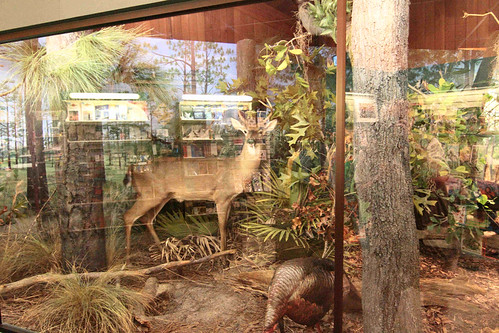
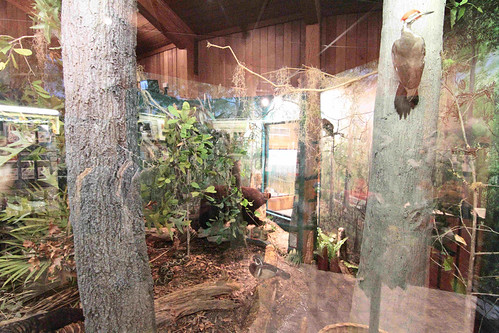
Will the book tell me how to eliminate reflections like these:

4631822828_3005059a58.jpg


4631821200_2da6001295.jpg


I realize if one is in complete control of the light then reflections can be controlled however, as you can see from the photos, I am frequently in situations where i have little or no control.
 
yup, and more. polarization is most effective around 30 degrees from the reflecting surface. Another approach you can use is to use a rubber lens hood, and hold it tight to the glass, so no light is reflected, with a longerish lens you won't even know the glass is there. With shorter lenses, you need to be sure the glass is clean.
 
LIGHT: Science and Magic. An Introduction To Photographic Lighting. By Hunter, Biver, and Faqua.


I like what I read in the review, it looks more like a book of information than a book written for sales.

Thanks!
 
Will the book tell me how to eliminate reflections like these:


I realize if one is in complete control of the light then reflections can be controlled however, as you can see from the photos, I am frequently in situations where i have little or no control.
When you don't have control of the light, there are limits to what you can do.

There is also a difference between reflections off smooth translucent surfaces, and shooting through various substances because they all have different refractive indexes and properties.
 
Last edited:
The effect of particularities in digital images. Our approach relies on a simple modification of the capture setup: a multi-flash camera is used to take multiple pictures of the scene, each one with a differently positioned light source. We then formulate the problem of specular highlights reduction as solving a Poisson equation on a gradient field obtained from the input images. Experimental results are demonstrated on real and synthetic images. The entire setup can be conceivably packaged into a self-contained device, no larger than existing digital cameras.
 

Create an account or login to comment

You must be a member in order to leave a comment

Create account

Create an account on our community. It's easy!

Log in

Already have an account? Log in here.

Back
Top Bottom