What's new

Shooting in harsh light

photo90813

TPF Noob!
Joined
May 18, 2013
Messages
1
Reaction score
0
Location
Long Beach, California
Can others edit my Photos
Photos OK to edit
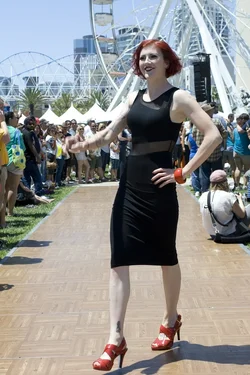
I went to an outdoor event a couple weeks ago and it was about 1 p.m. harsh lighting without me having any control over the light since it was this fashion show and the runway was in the direct sun. So at first I just took the shots and the subjects had shadows and so then I thought to use my speedlight to put a fill light on them and then the photos were too bright. I included two examples. Anyways, I am really wanting to master this harsh lighting situation because I go to a lot of festivals and I'm sure I will run into this situation again. If you can give me any advice I would appreciate it. Thank You.
BTW camera was on Aperture priority and flash on ETL.

 

Attachments

  • $fsa.webp
    $fsa.webp
    145.8 KB · Views: 180
  • $fsb.webp
    $fsb.webp
    142.4 KB · Views: 181
Personally, I hate Av mode when using flash. In your first photo, you can see how the shutter speed was too slow to freeze the motion of the model's hand.

I'd go for M mode, set the shutter to max sync speed (probably 1/200 or so, depending on your camera), ISO to 100, and aperture to somewhere between f/8 and f/11. Much bigger than that and the ambient light alone may be enough to make the results too bright.

Trouble is, you're going to be working your flash pretty hard at f/11 with the models more than a few feet away, so be careful.
 
BTW camera was on Aperture priority and flash on ETL.

flash on ETL ?

you mean E-TTL ?

I don't think flash is nesessary in such situations.

The flash ruined the pic on the right with a lady in white.

Just use aperture priority and set the aperture to be F8 or smaller and use low ISO ,make sure the photometry is correct,then everything will be fine.
 
If you want to be able to shoot fill-flash candids at outdoor festivals and fairs in the bright, California spring and summertime sun, you might consider stepping back in time to a camera that can shoot PC-cord connected "normal" flash at HIGH shutter speeds, like say, a Nikon D70 or D70s. It's one of a handful of cameras, along with the older Sony CCD d-slrs, which can synchronize flash at VERY fast speeds. I mean single-pop, "normal", full-power flash.

The majority of newer cameras cannot synchronize with "normal" flash at any speed above the maximum X-synch speed, which is usually either 1/250, or 1/200 at the high end of the range, or 1/180 or 1/160 at the low end of the range of normal values.

Low-end cameras, meaning beginner or entry-level d-slrs' cannot shoot High Speed Synchronization flash, which is a new way to allow flash + bright daylight to be shot, using a flash that is capable of high speed synch, and a high-tech speedlight flash that can fire many,many high-speed micro-bursts for the entire time the shutter is traversing the film plane during an exposure. High Speed Synch cuts down on flash power, but since it's only needed for fill-in of shadows, that's not too big of an issue. If you have a mid-to high-end camera + a speedlight that offers HSS flash, you might have a good solution.

The newest Nikon cameras, combined with the newer software, like Lightroom 4, can allow you to shoot in bright sunlight, and to recover highlights and shadows pretty well without using flash fill. The blurred arm on the redhead in the black dress is annoying; I would rather have seen her exposed at a stop-motion speed with no flash.
 
BTW camera was on Aperture priority and flash on ETL.

flash on ETL ?

you mean E-TTL ?

I don't think flash is nesessary in such situations.

The flash ruined the pic on the right with a lady in white.

Just use aperture priority and set the aperture to be F8 or smaller and use low ISO ,make sure the photometry is correct,then everything will be fine.

Correctly used flash during this time of day is almost always going to help. There's a pretty harsh shadow across both women's faces which cannot be removed without flash or some type of reflector.
 
First, the best you can hope for in situations like these where you can't control the location are snapshots. The angle of the light is just wrong for flattering photos. About the best you could do is have an assistant holding a large gobo for some subtractive lighting and then fill.

Second, you need some filtration. Either a C Pol or an ND to keep the background from being blown out while you're trying to sync your flash. Yes this will make life harder on the flash but hey, sometimes life is hard. This is where the power of a monolight with a battery pack comes in handy.

If the shadow cast by the gobo is unacceptable then a reflector should be used to bring the lighting as flat as possible and then use the fill for creating your ratio.


.02
 
Obviously there's a need to get a better exposure; I use manual settings and use the meter to determine if there's the appropriate amount of light coming into the camera. In bright light I'd expect to probably be using a fairly small aperture and a relatively fast shutter speed (and a fairly low ISO).

You could try if possible to change your vantage point and get the shadows going a different direction. There's an interesting background with the ferris wheel etc., you might be able to keep that in the background but get better results w/the light and shadows from a slightly different angle.

And if you can frame shots to keep distractions (like the dude with his butt parked on the edge of the runway) out of your picture that could help you get nice backgrounds. I think it just takes practice shooting events to get the timing and to be able consistent with it. Go early and notice where everything is set up and find a good place to stand. Try taking some practice shots of just the runway before the event starts; that can be the time to adjust your settings and your vantage poont as needed.
 
You're in full direct sunlight and I don't see any clouds in the background sky. That means this is a basic "sunny 16" exposure. We know how much light you had since the sun is very consistent. My outdoor lighting on a bright sunny day is the same as your outdoor lighting on a bright sunny day.

You could shoot this in manual if you want since there's little need to meter the shot.

The exposure would be (without flash... I'll get to the flash in a moment): ISO 100, f/16, 1/100th. That's a base and you can use any "equivalent" exposure you want on the exposure triangle. If you want to blur the background so you'd rather shoot at f/4... fine. f/4 is four full stops down from f/16 so you'd speed up the shutter by four full stops -- so instead of 1/100th you'd use 1/1600th.

That will correctly expose for anything lit by the sun. It will NOT necessarily correct expose for the shadows.

You can add a flash as "fill" lighting. When I use fill flash outside on E-TTL I automatically cut the flash exposure compensation by 1 full stop and do some test shots. I might end up at -2/3rds... or maybe I got a little more and use -1 1/3rd. But I start at -1 (which is usually pretty good.) This is problem with the shutter speed (more on that in a moment).

If you think about that... -1 says the flash fires at 50% of what it should use if the flash was the only source of light. That basically means the flash is provided 1/3rd of the light (50% power) and the sun is providing 2/3rds of the light. If I use my hand-held incident meter and ask it to calculate "flash contribution", I find that outdoor flash usually looks best when the flash contribution is about 30% and -1 tends to get you pretty close to that right away. But flash contribution and how light or deep you prefer your shadows is a matter of personal taste -- I'm just telling you what I use.

You cannot use a shutter speed which is FASTER than the camera's flash sync speed UNLESS your flash can handle "high speed sync" mode and that made is enabled. For my camera, that speed is 1/200th. I've seen cameras that are at 1/180th, 1/160th. My first DSLR was 1/60th. The flash is actually only contributing light for a very brief amount of time (often less than 1/1000ths of a second and often much shorter than that.) So if a flash can deliver light in less than 1/1000th of a second, why can't you shoot at 1/1000th? The answer has to do with how the focal plane shutter works.

The shutter is mechanical. Two "doors" or "curtains" are involved. They are positions so that the "seam" where the two curtains join together is at one end of the sensor. When the shutter opens, it takes some amount of time for the first "curtain" to completely open. That same curtain cannot simply reverse to close because if it did that, the parts of the sensor nearest the point where the curtain first opened would get more light than the parts of the sensor on the opposite edge and you'd get an uneven exposure. So rather than having one "curtain", there are two. After the first "curtain" opens, the second curtain "closes" behind it. This way every photosite covering the surface of the sensor receives light for the same amount of time.

This creates a problem for flash. If the flash is only illuminating your subject for, say, 1/1000th of a second, and the flash fires the moment the curtain "begins" to open, the only the exposed part of the sensor will get the benefit of flash and the rest will be in shadow. That's no good. It must wait for the sensor to be completely uncovered before it fires. Also the second curtain must not start to close before the flash is finished. Hence it's critically important to "synchronize" the shutter and flash.

If your manufacturer tells you that your camera has a flash sync-speed of 1/200th, what that really means is that the shutter curtain requires half that time to completely open, and half that time to completely close. In other words the first curtain can completely open in just 1/400th of a second and is not able to move any faster than that. This is no problem for slower exposures, but it is a problem for faster exposures. To do a fast exposure (say ... shooting at 1/800th), the second curtain actually "chases" the first curtain... only a slit is exposed on the sensor. That's fine for ambient light, but with flash then only a band of the sensor gets the benefit of flash.

Flash "high speed sync" works by pulsing the flash rapidly as the shutter travels across the sensor. But since the flash has to pulse rapidly, it cannot fire at full power. It has to divide it's max power level by the number of pulses needed based on the shutter speed. If four pulses will be needed then no single pulse can fire at stronger than 1/4 power or there wont be enough power for that last pulse when it gets to the end.

To combat this, you can use a few techniques.

1) Don't let the shutter speed exceed the flash sync speed. This will mean you have to use a higher f-stop and that means you'll get a broad depth of field... possibly not the look you want. But at least the flash can fill the shadows in just ONE shot. For your shot, lets assume your camera can handle 1/200th as a flash sync speed. You could use ISO 100, f/11, and 1/200th (you could technically even go 1/3rd stop smaller on aperture if you wanted.)

2) You can use a 3 stop ND filter (e.g. ND 0.9). This would let you open up the aperture by 3 more stops (e.g. now you can shoot at f/4) with ISO 100 and 1/200th and get a good exposure.

3) If your flash is powerful enough and you have the battery power, you could enable high speed sync mode. But if the subjects are far and you need a lot of power and/or if you're shooting pretty fast and you can't recycle fast enough, then you have to rig your speedlites in clusters or gangs to keep up.

See:
 
Last edited by a moderator:
OP--If you truly wish to "master this" kind of lighting, I would strongly consider buying the right type of equipment, and following a 4th option: buy a camera that CAN shoot flash at high shutter speeds, like a Nikon D70, or a Nikon D40. For these types of snaps, ie, "festival" and outdoor event work, 6 megapixel at close range is plenty of detail and resolution. Not high speed synch flash, but just regular "plain vanilla" electronic flash. These cameras have both a mechanical shutter AND an electronic shutter; electronic shutters can be used at VERY high shutter speeds, with regular, full-power electronic flash pops!

Nikon's D40 and D70 and D70s, as well as the old Canon 1D, and the Nikon D1x, are still being used by people who photograph a lot of broad-daylight fill-flash work, such as in the extreme sports field (mainly snowboarding and skateboarding events), where they want a fast shutter speed to freeze movement AND they want the shadows flash-filled, OR, they want to "crush daylight", and rendered the skies as very dark, rich blue.

The D40 can shoot flash at up to 1/500 second, with the flash right in the hotshoe; if you wish to synch at faster speeds, the flash needs to be connected to the camera using a PC cord, which requires an AS-15 or similar, since the D40 has no in-built PC outlet.
 
Haha I can see my babys leg in the first picture. I didn't get any good picture that day. Holding a baby in one hand while trying to take pictures isn't easy :/
 
If you want to be able to shoot fill-flash candids at outdoor festivals and fairs in the bright, California spring and summertime sun, you might consider stepping back in time to a camera that can shoot PC-cord connected "normal" flash at HIGH shutter speeds, like say, a Nikon D70 or D70s. It's one of a handful of cameras, along with the older Sony CCD d-slrs, which can synchronize flash at VERY fast speeds. I mean single-pop, "normal", full-power flash.

The majority of newer cameras cannot synchronize with "normal" flash at any speed above the maximum X-synch speed, which is usually either 1/250, or 1/200 at the high end of the range, or 1/180 or 1/160 at the low end of the range of normal values.

Low-end cameras, meaning beginner or entry-level d-slrs' cannot shoot High Speed Synchronization flash, which is a new way to allow flash + bright daylight to be shot, using a flash that is capable of high speed synch, and a high-tech speedlight flash that can fire many,many high-speed micro-bursts for the entire time the shutter is traversing the film plane during an exposure. High Speed Synch cuts down on flash power, but since it's only needed for fill-in of shadows, that's not too big of an issue. If you have a mid-to high-end camera + a speedlight that offers HSS flash, you might have a good solution.

The newest Nikon cameras, combined with the newer software, like Lightroom 4, can allow you to shoot in bright sunlight, and to recover highlights and shadows pretty well without using flash fill. The blurred arm on the redhead in the black dress is annoying; I would rather have seen her exposed at a stop-motion speed with no flash.

FYI canons entry level line (Rebels) can use HSS. It seems that Nikon entry level cameras do not support Auto FP.
 
If you want to be able to shoot fill-flash candids at outdoor festivals and fairs in the bright, California spring and summertime sun, you might consider stepping back in time to a camera that can shoot PC-cord connected "normal" flash at HIGH shutter speeds, like say, a Nikon D70 or D70s. It's one of a handful of cameras, along with the older Sony CCD d-slrs, which can synchronize flash at VERY fast speeds. I mean single-pop, "normal", full-power flash.

The majority of newer cameras cannot synchronize with "normal" flash at any speed above the maximum X-synch speed, which is usually either 1/250, or 1/200 at the high end of the range, or 1/180 or 1/160 at the low end of the range of normal values.

Low-end cameras, meaning beginner or entry-level d-slrs' cannot shoot High Speed Synchronization flash, which is a new way to allow flash + bright daylight to be shot, using a flash that is capable of high speed synch, and a high-tech speedlight flash that can fire many,many high-speed micro-bursts for the entire time the shutter is traversing the film plane during an exposure. High Speed Synch cuts down on flash power, but since it's only needed for fill-in of shadows, that's not too big of an issue. If you have a mid-to high-end camera + a speedlight that offers HSS flash, you might have a good solution.

The newest Nikon cameras, combined with the newer software, like Lightroom 4, can allow you to shoot in bright sunlight, and to recover highlights and shadows pretty well without using flash fill. The blurred arm on the redhead in the black dress is annoying; I would rather have seen her exposed at a stop-motion speed with no flash.

FYI canons entry level line (Rebels) can use HSS. It seems that Nikon entry level cameras do not support Auto FP.


I thought so...
 
Flash was designed for low- or no-light situations, using it for fill or hi-sync is a happy coincidence (although you do use it for fill even in studio). It's still thought of in this light -pun intended- and you can tell by the low sync speeds available in most cameras.

If you want to shoot outdoors when the ambient is f16 @100 base 100 then you need to drop the ambient down to something that your camera can handle while using it's flash function (read this sync speed). You have two basic choices: either find some shade or use a filter.
 

Create an account or login to comment

You must be a member in order to leave a comment

Create account

Create an account on our community. It's easy!

Log in

Already have an account? Log in here.

Back
Top Bottom