Ever seen film directors (or actors portraying film directors) walking around looking through their fingers
as if they were a frame? That's to give them a sense of what the scene will look like when it's captured on film. Learning to see that is a huge part of learning photography, because when we look at something with our two eyes, we are able to use depth perception and movement to give us more information about what we're seeing. However, the image a camera captures will not have any
intrinsic dimensional depth to it, and obviously there is no movement.
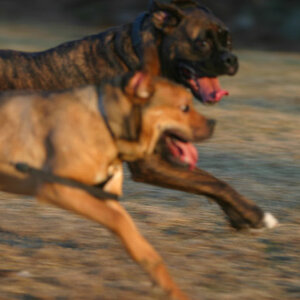
It is up to the photographer, then, to leave "clues" about depth and movement in the photograph. For depth, that is usually done with lighting, and for movement, that is usually done with shutter speed.
I say all this because I don't want to discourage you from just going out and "shooting anything," but I would encourage you to do that AND think about how it will actually translate to a static photograph. What aspects of what you're looking at would be lost if you did not have any sense of depth and dimension? Is there movement that is important to the scene that you would miss in a static photograph? Make a frame out of your fingers, look at it with one eye closed, and imagine that there's nothing else in the world except what is inside your finger-frame, and ask yourself if that is enough to describe the subject of your photo or not.
As you start learning how to use your camera, and learn about shutter speed, aperture, ISO, focal length, lighting, etc., you'll start to learn about ways you can "re-introduce" a sense of depth and movement in to your photos, but understanding
why they need to be re-introduced is a vital first step.
I look forward to seeing more from you!













 )
)


![[No title]](/data/xfmg/thumbnail/34/34345-5642c495cae8d6c7bb83c28664146cf1.jpg?1734164882)

![[No title]](/data/xfmg/thumbnail/41/41759-f0f73c457ebcb6dabcbddc7a3c000487.jpg?1734176065)