What's new

Technical Question

Rod-UK

TPF Noob!
Joined
Mar 4, 2005
Messages
133
Reaction score
0
Location
Exeter Devon UK
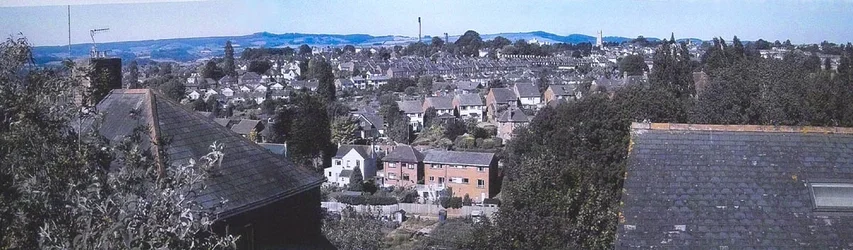
This is a view in which three pics are carefully (!!) put together to provide the panorama,
The camera was mounted on a levelled tripod and panned to provide slightly overlapping photos. the prints were then re-photographed and the joins blended in PS, the 400mm x 150mm print looks quite good (even if I say so)

The included angle from right to left is about 120 degrees, the horizon is about 10 - 15 miles away and is distinctly curved


Question;- Is this curvature a function of the lens and camera, or is it a true reflection of the curvature of the earth.


__________________
 

Attachments

  • $View from BBH.webp
    $View from BBH.webp
    166.2 KB · Views: 139
Well first off - what focal length did you use? If it was a wide then some curvature might be attributable to lens distortion.
The bulk of the curvature is probably to do with perspective and not having the tripod exactly square on to the horizon. Did you use a spirit level to set it up?
 
I would say neither, it is caused by the difference in angle of each shot and can be corrected in PS during stitching.

edit:
Hertz you posted while I was typing, im just too slow, lol.
 
If you look at the upper left corner you can see what looks like to me to be the top edge of the original exposure sloping down to the left. I have to think that it's lens, level, and/or software.

Don't we have some airplane folks on TPF? How high do you have to be before you can see the curve of the planet?
 
To produce panoramas with minimum distortion use a normal to long focal length and big overlaps. Using a 50mm lens and 35mm camera I would rotate the camera no more than 30 degrees between shots and only use about the centre one-third of each frame. You definitely want to avoid wide angle lenses because they are generally more prone to distortion at the edges than normal or moderate telephotos. You also need to ensure that the camera is leveled in all planes.
To further minimise any distortion, the axis of rotation of the camera should pass through the optical axis of the lens and be a distance equal to the focal length of the lens in front of the film plane (for a lens focused at infinity).
All of these help to reduce distortion and help a stitching programme produce the best results
 
Thank you all for the comments. One way or another you all seem to think the problem lays with the use of the camera.

When the opportunity comes about I will have another go at this panorama, taking on board all that has been said.

Cheers


_______________
 

Create an account or login to comment

You must be a member in order to leave a comment

Create account

Create an account on our community. It's easy!

Log in

Already have an account? Log in here.

Back
Top Bottom