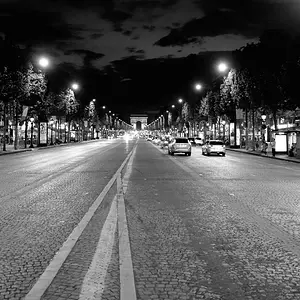
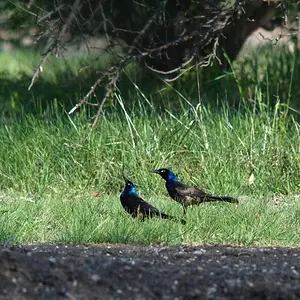
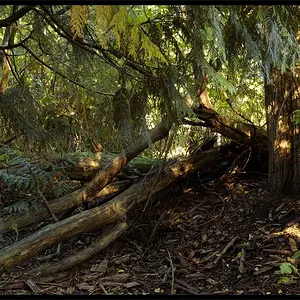
I always enjoy your images Buckster. Thanks for the info.
Thank you kindly. Always glad to help if I can.
I have a couple of questions:
if your shutter is already open, you won't get any vibration from mirror slap when you trigger the flash to take the shot
By the above quote, do you mean that these should be done in "live view" so that the mirror is locked up? I don't follow.
No, I almost never use live view, other than for shooting through my microscope.
What I mean is that when you trip open the shutter, there's a short period of vibration from that action. If you don't actually shoot the photo during that vibration period, you will avoid any camera shake and blur that it might cause.
The idea is that you dial in all your variables; ISO, aperture, shutter and focus. Dial them in and lock them down so they can't move. Darken the room and open the shutter. If there's no light, that shutter could be open indefinitely, and nothing would show up in the photo. But, if at any time while it's open a flash were to suddenly go off, you now have a photo, and it doesn't matter when that happens while the shutter is open.
So, you don't have to be viewing through the camera's viewfinder or even live view. You just have to be paying attention to the drips, timing them as they drip (or being unethical and using a machine that does all the work, if you have Bynx's mindset, LOL), and then firing that flash at the moment of the splash. The interesting thing is that you can see it when you catch it, even before it comes up in the chimp-view on the back of the camera, because the suddenly bright splash burns it into your retina for the split second it fires.
So, that means the room isn't deep-cave-can't-see-your-hand-in-front-of-your-face dark, just dark enough so that you can use a long shutter without overexposure, but just light enough that you can see what you're doing. Allowing your eyes to adjust to the dimness can help.
My shutter time on these is 4 seconds long each, with an aperture of f/22.
On this issue--are you taking multiple shots? I don't quite grasp how the long SS works.
See above.
Imagine you're in a dark room, with no light at all coming in from anywhere. You can't see a thing. You open the shutter, and leave it open for 4 seconds, or 30 seconds, or a minute, or five minutes - doesn't matter - you leave it open for a long time. During that time, there is still no light at all in the room. What do you get as a result? A photo of black nothingness.
But fire a flash at ANY time during that long exposure, and what do you get? Whatever was going on in front of the lens at the precise moment when the flash went off. If there was a splash taking place, that's what you get a photo of.
Basically, by using the long exposure in a dim room, you take the shutter speed out of the equation, allowing the flash to freeze the action.
Hope that helps. Keep asking if you have any other questions! I'm an open book and will help if I can!



![[No title]](/data/xfmg/thumbnail/37/37604-7ad625e983f92f880eb65a264eeef5e4.jpg?1734170732)
![[No title]](/data/xfmg/thumbnail/39/39532-073f9eb14e26e2b99cc29112b92a2ab6.jpg?1734173679)
![[No title]](/data/xfmg/thumbnail/32/32926-ec27ecead8c80d803404500d8f888dbf.jpg?1734162683)
![[No title]](/data/xfmg/thumbnail/37/37170-3e18af574ed51cce5bdf99af9d3cab40.jpg?1734169892)
![[No title]](/data/xfmg/thumbnail/39/39533-c2c39d37e833a4689533c897ace8c348.jpg?1734173682)