Let's take a look at it from the other direction, what resolution do you need to realisically print on your desired output medium? Let's ignore costs of capture equipment for this exercise.
The most popular sizes of silk for inkjet output (either direct or via dye-sub) is either 48-52" or 72". For the sake of argument, we'll say 50". Realistic dye sub and inkjet printing on silk requires no less than 300-360 dpi, we'll use the lower number, as most RIPs are far better at small interpolation than Photoshop, by a long shot.
So we have a 50" substrate that needs 300dpi, for a required resolution of 15,000 pixels (width) x 22,500 pixels (for a 2x3 aspect ratio).
Let's look at some capture methods to see which will be best suited for this project:
1.) DSLR- a 12mp sensor DSLR has a spatial resolution of approx 1800 pixels wide, due to the anti aliasing filter and Bayer pattern interpolation.[SUP]1[/SUP]
So, in order to utilize this capture method, we need to upsample 8.3X.
Quite likely not a desirable approach if image quality and faithfulness to the original is to be expected.
2.) MF/LF Digital Back-For this example I'll examine the use of a Sinar 54M multishot back, while not as high a resolution as many currently available backs, it's quality is far less dependent than the higher resolution digital backs on precise, sub micron alignment and optical quality.[SUP]2[/SUP] The Sinar 54m back achieves rather high spatial and color resolution by taking multiple exposures, shifting sub pixel amounts between exposures, in this fashion there is a significant increase in the real resolution captured, with the native 22mp resolution being increased four fold to ~88mp images, with 100% color resolution, as opposed to the typical single shot Bayer patter R25%/B25%/G50%. With a resolution on the short side of 4080 pixels, and in multishot mode, the same spatial frequency, it would only require an upsampling of ~3.5x to reach our target of 18K pixel width.
3.) LF scanning back- Typified by Betterlight or Phase One, these are nearly identical in operation to a flatbed scanner, but in miniature. The most common Betterlight back is the 6K, with a 6,000 x 8,000 pixel capture. Due to the unique nature of scanning backs, there is no interpolation and every pixel is captured with 100% color accuracy. Downsides are the need for continuous lighting and capture time often measured in minutes. However for art reproduction and high resolution digital capture, the advantages far outweigh the disadvantages. My own personal experience has led me to a maximum upsampling limit of 2.5-3x with my scan back, a number that will (just) attain our target resolution. Even at the 3x up sampling, the image is typically stunningly detailed and a virtual copy of the original.
4.) MF/LF film/drum scanning-While this will give you the possibility of higher resolution than digital capture, for art repro work, there's no comparision, anything above ~4800dpi capture is just empty resolution, with no added detail whatsoever. Other's may argue otherwise, but I refer you to this
comparison, draw your own conclusion.
I have extensive experience with all of the above capture methods, and had a Sinar 54m in my studio on loan for a month to compare with my current methods, quite simply my older Dicomed Field Pro scanning back (predecessor to the Betterlight), is by far the highest resolution option available to me, irregardless of price.
In order to truly appreciate the amount of detail, here is an test image I shot in the studio (obviously down sampled from the 6,000x7200 full size capture):
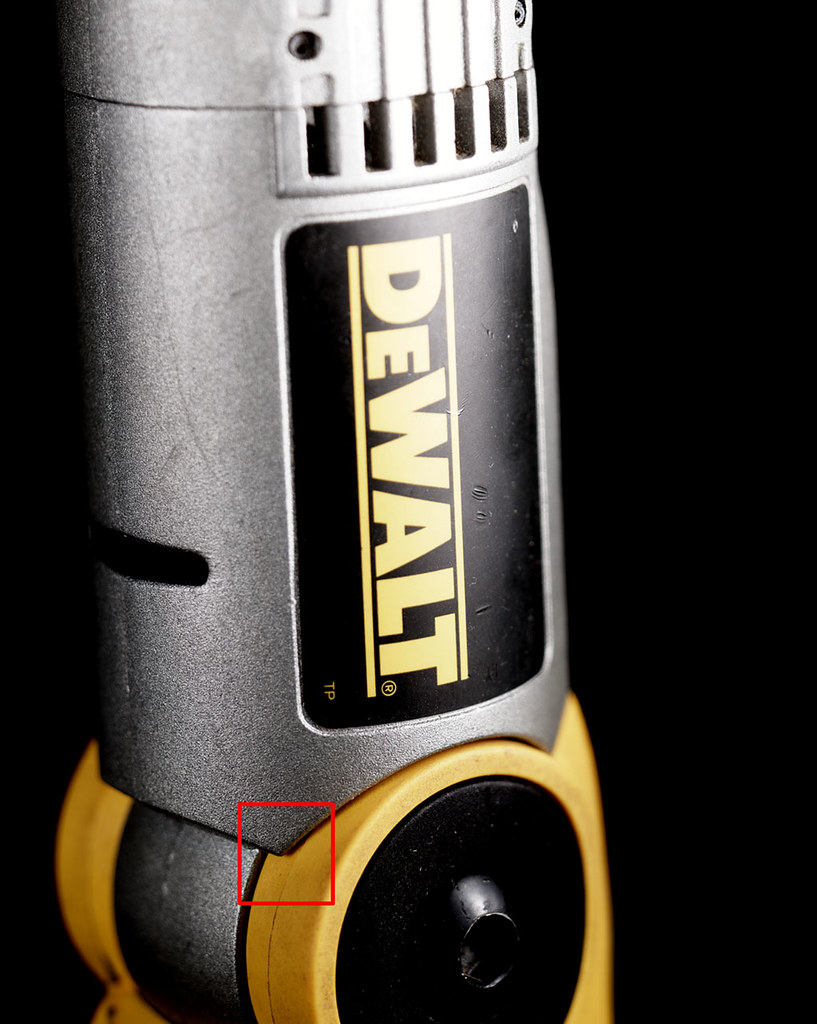
(note the red outlined area)
Here's a 1:1 of the area outlined in red:
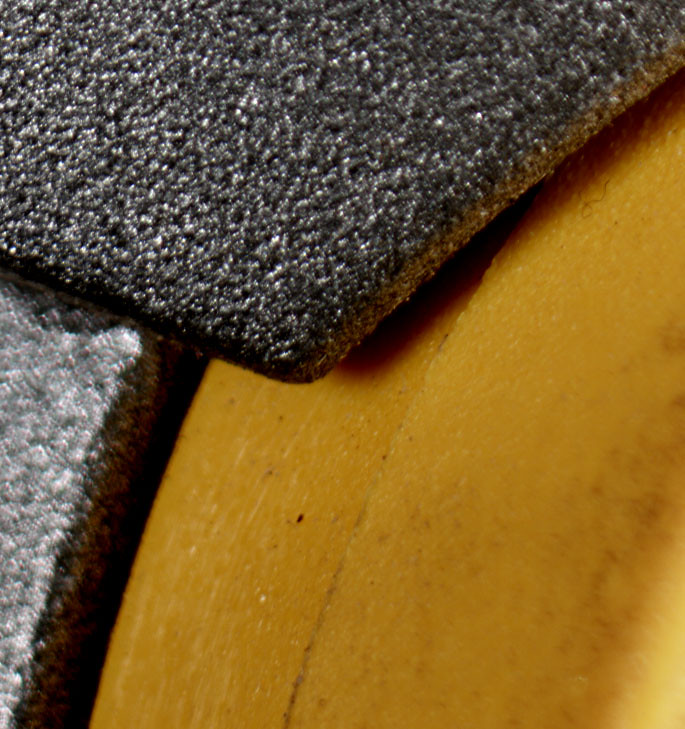
This is at actual capture size, not upsampled. (This was just a quick shot in the studio, with an enlarging lens I had lying about, for repro work, I use an APO copy lens for capture, with a significantly longer focal length to eliminate geometric distortion and it exhibits none of the CA apparent in the above image)
As I suggested earlier, your friend's interest would be better served by finding somebody (via a quick email to Betterlight) that specializes in art reproduction. I haven't even gotten into lighting, lighting spectrum accuracy needed (as well as proper profiling) and issues such as camera to art alignment, etc. It's a somewhat specialized field, and requires a tremendous investment in time, skills and finances to do it right.
Erie Patsellis
(And, yes I have printed numerous projects on silk, and the above numbers are reasonable approximations of the acutal resolution required to create a credible reproduction of a piece of art onto a silk substrate, with the 300 dpi figure for dye-sub and a much higher figure (think ~500-600dpi) for direct inkjet printing)
[SUP]
1[/SUP]for a more detailed explanation on bayer pattern sensors and aliasing artifacts see
here and
here
[SUP]2[/SUP]Joseph Holmes elaborates in great detail
here and
here