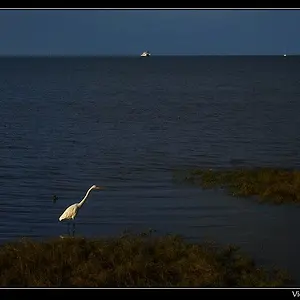
Leala, what do you find confusing about the term 'natural'? Sunlight, firelight, moonlight, light given off by other mechanical forms NOT triggered by the photographer such as city lights, glow of a nearby steel mill although some might argue that is ambient lighting, not natural.
Yes, this is the way the term "natural light" has been understood for literally decades. Artificial light is light that is created by mankind, and includes things like electronic flash, incandescent light, fluorescent lighting, LED panel lighting, carbon-arc lighting, and so on. The asinine among us love semantic games filled with ridiculous statements like, "all photos are natural". Ummm...sorry, but no...there is natural light, and there is artificial light.
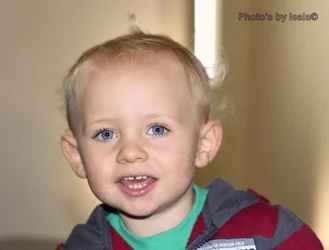
As for the baby photo; a good way to classify that is flash + daylight. In fact, that's a pretty old term: "flash plus daylight", or "daylight plus flash" both having become common by the 1930's, after the roughly 1928 invention of the flashbulb. The flashbulb was, by the way, the first easily-used and relatively safe form of portable artificial light, but by no means the first type of artificial light ever used. (Electric arc had been used in the mid-19th century for stop-motion imaging). The flashbulb did away with the earlier magnesium powder and flash pans, and it was only about another decade before Speedotron in the USA introduced the first "modern" type of electronic flash for studio lighting, using capacitors to hold an electric charge, and then quickly passing that stored electric current through a sealed glass tube filled with gas, producing a bunch of excited electrons which made a nifty, controlled, repeatable flash.
One of the things that differentiates (most) artificial lighting from natural lighting is the use of
ELECTRIC CURRENT to create artificial light. Artificial light is, for the most part, created using stored electricity, or electricity that is generated...by human-made machines or devices.




 ridiculous.

 I'm lost!


![[No title]](/data/xfmg/thumbnail/37/37523-291af5748bb3a98408cc748fb81bb365.jpg?1734170683)
![[No title]](/data/xfmg/thumbnail/36/36666-189f65b1addbb68da2a43dc6f7206a01.jpg?1734169172)
![[No title]](/data/xfmg/thumbnail/35/35948-700e0d840da0ca73727b1bd6d99b4142.jpg?1734167751)
![[No title]](/data/xfmg/thumbnail/35/35952-55c8d42ec1c6ff0e13b45356cbf9c068.jpg?1734167758)