shefjr
No longer a newbie, moving up!
- Joined
- Jan 18, 2012
- Messages
- 1,595
- Reaction score
- 418
- Can others edit my Photos
- Photos NOT OK to edit
- Thread Starter 🔹
- #16
First of all, to all who responded I appreciate you taking time to respond to my probably dumb questions. None of the responses go unnoticed. My wife hates this forum because it consumes my every waking minute if I am not sleeping or working I am on here trying to learn and understand the wealth of knowledge that so many people talk about. I should also say I am thick! lol!
Having said all that,
Cloudwalker,
I am "one of those people who shoot an image not worth talking about". I don't know if it is something that only some people have or just takes time to acquire the skills to shoot an image worth talking about. In either case, I don't have it. I wish I were more creative, imaginative, or just able to see that great shot, but so far that isn't me. So in the mean time all I have is the technical stuff to try and learn. I'm a bricklayer/mason by trade and I don't have any illusions of myself ever being able to do anything more than get maybe one great photo that I can hang in my house (that's my goal). To answer your question, the most important thing to me is taking worth while photos I just can't figure out how. :/ p.s. it's not for lack of trying, I have read the scott kelby books, googled, youtubed, and went onto several photo websites just trying to find that _______(something).
Overread,
Thank you again for taking the time to help a thick headed noob such as myself try to pick up what you're putting down.
1.I feel like I have a good grasp on point number 1. At least at the moment. ;-)
2.As for the second point I agree with you completely. I generally try and shoot for the "sweet spot" and but I first make sure that my shutter speed and iso won't affect too much of the image. I could be wrong but my priorities are as follows, Shutter speed, ISO, Aperture(unless I'm looking for more or less bokeh)
3.With point number 3, I have found that with all my lenses that stepping them down does help and have noticed that the focal length on them does directly affect the softness of the image. I generally never shoot wide open with any of my lenses anymore since I learned about stopping them down. (Funny thing I didn't at first get that the lower the number the wider the aperture)
4.So with Number four is where I get a little confused. <em></em>I understand that the aperture would change with a 2 tc and I believe my new d7k actually did recognize that the f-stops had changed. So part two of this is where I get confused. The image that I could see in the view finder was crystal clear. Literally perfect. SO HERE I HAVE A QUESTION-----is there nothing that I could have/should have done to get that crystal clear image that I could see oh so clearly in my view finder? Even if that included bumping my ISO up to increase the Shutter Speed. Just an fyi one image my f stop was 20, ISO 100, and 1/50 Shutter speed and it was fairly clear. You wanted me to note that a 1.4 TC would also make the image soft which I believe you if someone such as yourself tells me that. However, I guess I need a dumb down explanation of why is it that if I see an image perfectly in my view finder I can't get it in my photo. Also, I did actually use an ok tripod(collapsed so that I actually kneel on the ground to give it even more stability) and hung my photo bag off the hook (on a calm evening) and used a shutter release. (In some of the above I feel like I addressed point number 5)
5.Additional part of point 5. I actually read up on one of the web sites that analog.universe pointed out where in that site review stated that the sigma 150-500 at full 500 focal lengths ideal f stop was between 15 and 18. That is why I choose f 20 in hopes that with the 2 additional stops from the 2 tc would still hit the sweet spot. I wish I would have known that my cameras mirror up function was not in the camera menu. (lesson learned)
One final thought,
I wish I would have done a few things. (let me know if you think this is right or wrong if it's not too much trouble).
1.Bump up the ISO (fix it later in photoshop)+ folks on here have said the d7k has minimal noise even at 800
2.Increase the Shutter Speed to help with atmospheric distortion, shutter shake, any other type of movement
3.Use the Mirror up function (this part I was a dumb a$$ for not knowing )
Again thank you really for taking time to help me! This type of help makes me want to be a supporting member! Not the Nude/NSFW part of the forum. LOL! Although I'm not gonna lie I would take a peek.
Also, If I am being a DUMB A$$ let me know. I do construction, have thick skin and call it what it is when I see it. I can take the same when it comes to myself.
EDL,
Thank you for the link. I could be wrong but, I don't feel that this applies quite as much due to the fact that I wasn't taking pictures of the stars. I know that I'm still shooting through the same atmosphere but, I don't see the "twinkle" in the moon like I do in the stars so I feel like I wouldn't lose quality/softness of the moon. I should say however, a lot of that article was over my head. I'm not the best at reading comprehension, I'm more of a hands on/ need to see it type. So that said I may have missed key points to what you would have liked me to key in on.
PS to all, I have taken so long to write this that the site logged me out so if there are any <br>s or anything it's simply because I had to copy and paste this to Micro word then paste this back to the reply to thread .
Having said all that,
Cloudwalker,
I am "one of those people who shoot an image not worth talking about". I don't know if it is something that only some people have or just takes time to acquire the skills to shoot an image worth talking about. In either case, I don't have it. I wish I were more creative, imaginative, or just able to see that great shot, but so far that isn't me. So in the mean time all I have is the technical stuff to try and learn. I'm a bricklayer/mason by trade and I don't have any illusions of myself ever being able to do anything more than get maybe one great photo that I can hang in my house (that's my goal). To answer your question, the most important thing to me is taking worth while photos I just can't figure out how. :/ p.s. it's not for lack of trying, I have read the scott kelby books, googled, youtubed, and went onto several photo websites just trying to find that _______(something).
Overread,
Thank you again for taking the time to help a thick headed noob such as myself try to pick up what you're putting down.
1.I feel like I have a good grasp on point number 1. At least at the moment. ;-)
2.As for the second point I agree with you completely. I generally try and shoot for the "sweet spot" and but I first make sure that my shutter speed and iso won't affect too much of the image. I could be wrong but my priorities are as follows, Shutter speed, ISO, Aperture(unless I'm looking for more or less bokeh)
3.With point number 3, I have found that with all my lenses that stepping them down does help and have noticed that the focal length on them does directly affect the softness of the image. I generally never shoot wide open with any of my lenses anymore since I learned about stopping them down. (Funny thing I didn't at first get that the lower the number the wider the aperture)
4.So with Number four is where I get a little confused. <em></em>I understand that the aperture would change with a 2 tc and I believe my new d7k actually did recognize that the f-stops had changed. So part two of this is where I get confused. The image that I could see in the view finder was crystal clear. Literally perfect. SO HERE I HAVE A QUESTION-----is there nothing that I could have/should have done to get that crystal clear image that I could see oh so clearly in my view finder? Even if that included bumping my ISO up to increase the Shutter Speed. Just an fyi one image my f stop was 20, ISO 100, and 1/50 Shutter speed and it was fairly clear. You wanted me to note that a 1.4 TC would also make the image soft which I believe you if someone such as yourself tells me that. However, I guess I need a dumb down explanation of why is it that if I see an image perfectly in my view finder I can't get it in my photo. Also, I did actually use an ok tripod(collapsed so that I actually kneel on the ground to give it even more stability) and hung my photo bag off the hook (on a calm evening) and used a shutter release. (In some of the above I feel like I addressed point number 5)
5.Additional part of point 5. I actually read up on one of the web sites that analog.universe pointed out where in that site review stated that the sigma 150-500 at full 500 focal lengths ideal f stop was between 15 and 18. That is why I choose f 20 in hopes that with the 2 additional stops from the 2 tc would still hit the sweet spot. I wish I would have known that my cameras mirror up function was not in the camera menu. (lesson learned)
One final thought,
I wish I would have done a few things. (let me know if you think this is right or wrong if it's not too much trouble).
1.Bump up the ISO (fix it later in photoshop)+ folks on here have said the d7k has minimal noise even at 800
2.Increase the Shutter Speed to help with atmospheric distortion, shutter shake, any other type of movement
3.Use the Mirror up function (this part I was a dumb a$$ for not knowing )
Again thank you really for taking time to help me! This type of help makes me want to be a supporting member! Not the Nude/NSFW part of the forum. LOL! Although I'm not gonna lie I would take a peek.
Also, If I am being a DUMB A$$ let me know. I do construction, have thick skin and call it what it is when I see it. I can take the same when it comes to myself.
EDL,
Thank you for the link. I could be wrong but, I don't feel that this applies quite as much due to the fact that I wasn't taking pictures of the stars. I know that I'm still shooting through the same atmosphere but, I don't see the "twinkle" in the moon like I do in the stars so I feel like I wouldn't lose quality/softness of the moon. I should say however, a lot of that article was over my head. I'm not the best at reading comprehension, I'm more of a hands on/ need to see it type. So that said I may have missed key points to what you would have liked me to key in on.
PS to all, I have taken so long to write this that the site logged me out so if there are any <br>s or anything it's simply because I had to copy and paste this to Micro word then paste this back to the reply to thread .


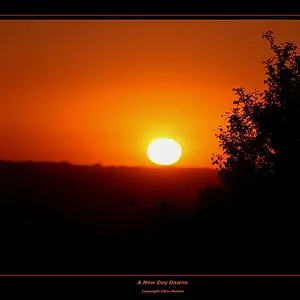
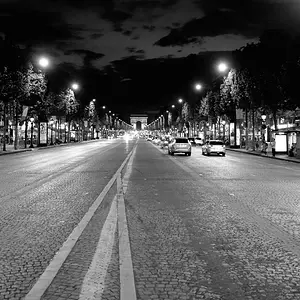
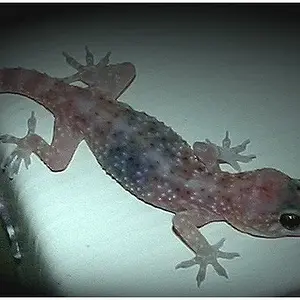
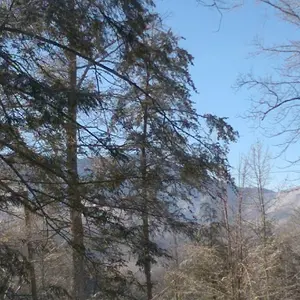
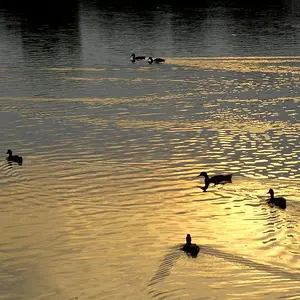
 Which I guess you are kind of telling me my settings were off when it comes to the aperture. I do understand what you mean and it makes sense to me when you talk about sizing down an image. I find I have a lot of images that get soft the larger I blow them up. Once in a while I take a photo here and there that I can blow up that keeps its clarity.


![[No title]](/data/xfmg/thumbnail/34/34346-f7996f51f0624620cfd54a488abeacf9.jpg?1734164887)
![[No title]](/data/xfmg/thumbnail/34/34343-b06994e286a2089b404358d95c37eaf0.jpg?1734164871)
![[No title]](/data/xfmg/thumbnail/42/42018-14ee16974751322cd63966d43d655995.jpg?1734176398)
![[No title]](/data/xfmg/thumbnail/34/34344-0b42e0e92ad436e6710a1b9c4585d6df.jpg?1734164877)