Part of what makes an image interesting, is the ability of the viewer to discern a story. There are many other ways to make an image that viewers want to see, but story-telling is a powerful way to pull the viewer in.
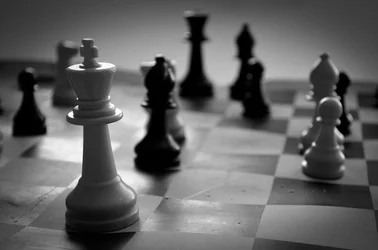
In your example, the White King is isolated. It is not clear if that was because it was escaping a trap, or was in a checkmate position. Let's say it was... Then the next step would be to use lighting and depth of field to make a link between the King and the attacking piece.
In your image, the King piece is backlit, as are the other pieces. Attention is drawn to it because it is sharp, whereas the other pieces are somewhat blurred. If you could put a little fill light on the King piece, it would serve to spotlight that piece and make it more prominent.
The waviness of the board does not add to the image.
Especially with closeups like this one, you need to be very aware of any dust, stain and other detail that may end up distracting from the composition. If you ever shoot on glass or a reflective surface, you'd be amazed at the amount of stuff that the camera sees on a surface you were sure was perfectly clean.
The general suggestion here would be to think about what you want the viewer to see and feel. The arrange the scene, the lighting, and the camera perspective and settings to deliver that vision to the viewer. Ideally, you'll be using the clues of zones of sharpness, light direction and highlight/shadow to guide the viewer's eye to various parts of the composition you want them to see.
In another thread, it was mentioned that most of the great images have had a lot of preparation done prior to the image being taken, with the photographer being very aware of the light(s), the movement of the subject, and the selection of the camera settings to allow the image to occur.
In the last image you posted, we can see the bee, which was your intended subject, pretty clearly, but the sharpness and the bright tones of the flowers on which it is feeding are pulling the eyes away. The background is also relatively clear and brighter than your subject, so the eyes get pulled there too. In this situation, you'd want to have a narrow depth of field, centered on the bee, with a close enough framing that the flower is not competing with the bee for our attention. As well, unless the background is needed for providing context, is is better to see less of it.
The general rule is the brighter and sharper something is, the more it tends to attract our attention. If that's not the subject, then we've got some visual conflict going on.