What's new

Best Canon starter lens...

Ajiamaura

TPF Noob!
Joined
May 31, 2011
Messages
2
Reaction score
0
Location
Bloomington, IN.
Can others edit my Photos
Photos NOT OK to edit
Hello,
I just recently purchased a used Rebel Xti body and wanted to get some advice on the best all around starter lens to purchase. This is my first experience with a dslr and while researching online I've come across allot of negative reviews regarding the kit lens (18-55mm) that generally comes with these particular cameras.
Should I just stick with the kit lens to start with, or is there another lens I should be looking at, possibly a 50mm or 28-200? Any advice would be helpful, Thank you!!

Ajia
 
It does depend on what you want to be photographing. If you want a decent all purpose lens on a budget, Sigma makes a 18-200mm ($399ish) that should treat you pretty well. It's not the fastest lens on the market but you get a decent zoom for the price. Sigma also makes a 18-250mm for about $79 more; I've never used it but it has gotten some good reviews. The kit lens, in actuality, will also serve you quite well, especially if you are just starting photography. Unless you want the extra zoom, just play around with the kit lens and I think you will find that it works fine for general purposes.
 
I think the XTi came with the old non IS kit? It's not much of a lens, the current IS version kit is a much better lens. I'm a big proponant of newbies starting with just a kit lens, provided it's decent enough. With your first slr, better glass won't mean much at the beginning. You need to learn the fundamentals of photography and how to use your camera to it's fullest before good glass really pays off.

So, if you want to do it on the cheap(ish), you can buy the current kit, 18-55 IS, for about $150 new. Or you can search ebay and probably find used no problem. It's a much more capable lens than your kit, and it's more than enough lens to learn with. I've seen a lot of nice stuff posted on teh internets taken with Canon and Nikon kit lenses.

At this point, I'd probably avoid any of the superzooms like the sigmas mentioned above. They have their their place, I own the Canon 18-200IS, but they all have performance issues due to their long zoom range. Plus, on a small Rebel sized body, they're friggin' huge.

And, as always, what's your budget?
 
Last edited:
Get the tamron 17-50mm 2.8 lens.
 
Stick to the kit lens... you can still learn a lot from shooting with it.

You'll know what your next lens purchase should be in due time..... on your own.


Do you need a longer focal length?
Do you need a shorter focal length?
Faster prime?
Longer prime?
Macro?

None of these questions can be answered by anyone else.
 
Thank you all so much for the wonderful advice so far, since I've never used a dslr before I would love to not spend an arm and a leg on a lens if it turns out that I'm not any good at using it; that being said I would like to get a lens that I would be able to use on other cameras if I chose to purchase something better down the road.
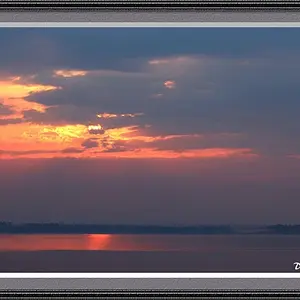
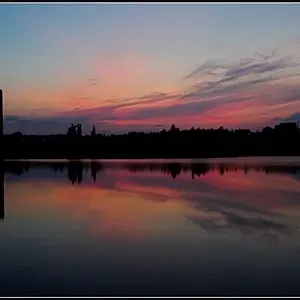
I mostly enjoy taking pictures of nature/animals/landscapes/younger siblings (who are nearly impossible to take pictures of with a point&shoot, btw), and I would love to be able to shoot some nightscapes, if possible. I've attached some of my better pictures maybe it'll help you tell me what would work best...

Thanks again!
Ajia

My sample photos pictures by AjiaMaura - Photobucket
 
Stick to the kit lens... you can still learn a lot from shooting with it.

You'll know what your next lens purchase should be in due time..... on your own.


Do you need a longer focal length?
Do you need a shorter focal length?
Faster prime?
Longer prime?
Macro?

I second this advice - furthermore its very hard to objectively choose lenses when many of the choice factors rely not just on theory, but understanding the real world impact of the various properties of the lenses themselves. This is something you've got to really experience and learn since different photographers find different demands for their gear.
The kit lens might not be the best, but its good enough and you can learn a lot with it - from there you'll have a good steady base from which to expand from according to your interests.

If you find that you've not shot much with the kit lens, after a period of time, reflect on if its because you just don't like it or if its because it can't do something you want it to (eg as said macro, telephoto etc..). Sometimes a cheap lens like a sigma 70-300mm is a good investment if, say, nature and wildlife are of interest since it gives you the reach the kit lens lacks.
 
i never like the 18-55. a 5.6 max aperture at 55mm is quite useless and especially if you use it indoors. lots of dark and blurry shots. i also found the range of 18-55 was quite short. try a 18-105/135.
 
I'd like to also add.... zooms from the 80s and 90s are generally so immature in design that even kit lenses today relatively aren't "that" bad optically. There will be a time that even today's high end optics will be considered obsolete. When you pay to update your equipment, what you are really buying is to remove some of the barriers or limitations of your current equipment. As I mentioned before, you won't know where to invest until you have discovered those limitations. If you discover these things on your own, you'll go a lot farther in your understanding of equipment (as opposed to photography) and pull more enjoyment out of the experience. I can't tell you how many people I have seen go out and spend $$$ on a f/2.8 something zoom and still come back complaining why their photos are still not sharp or blurry... or why their equipment is so heavy.. or why the zoom range is so short.. etc.. The true issue is the inexperience backing such investment decisions.

I even think f/2.8 in a fast zoom isn't always worth it. It doesn't immediately relieve the obstacles (blurry shots) that are met when shooting indoors in low light. Most of these high speed zooms don't work optimally at f/2.8.... not to mention the shallower DOF that may or may not be an issue (group shots of people). They don't fit everyone even though they are VERY nice pieces of equipment. If you search the TPF, you'll find a few Canon 24-70 f2.8L versus 24-105 f4L threads. This is the root of the discussion most people don't realize; What "limitations" does one need to get pass? Unfortunately, most get all caught up in the "What is better?" discussion and there is no general correct answer.

There is a reason why wedding photographers have a large investment in lighting.. not just high speed zooms. I personally rather have something of good IQ with a decent zoom range paired with a few faster primes.

I have some really good glass at my disposal but every-once-in-a-while, I head out with old kit: compact, light weight, no worries about thieft...

A couple snapshots from a "supposedly" crappy kit zoom (pentax 50-200 and 18-55) on an old K10D (I'd post Canon but I only have high end non-kit for that system):


IMGP4613 by usayit_2000, on Flickr


IMGP4585 by usayit_2000, on Flickr


IMGP4636 by usayit_2000, on Flickr


IMGP4619 by usayit_2000, on Flickr
 
Last edited:
I bought Canon EF 24 - 105 mm F4.0L with my canon 550d body as my alround lens.
 
I have an EF 18-135, which is a really great walk-around lens.

PRO:
works close-up and can zoom
price

CON:
There is a little lens distortion at closest / furthest distance. Nothing lightroom can't fix though..
Quite a bit heavier / clumsier than the smaller lenses.

It all depends what you're going for. This one is very versatile i'd say, but the image quality could be stronger.

Dpreview.com is a great ressource for lens selection by the way :-)
 

Create an account or login to comment

You must be a member in order to leave a comment

Create account

Create an account on our community. It's easy!

Log in

Already have an account? Log in here.

Back
Top Bottom