Greetings folks.
I am a bit of an odd bird here as the best thing i know about photography is how to press that small bottom on my cell. fingers crossed, that's going to be changed.
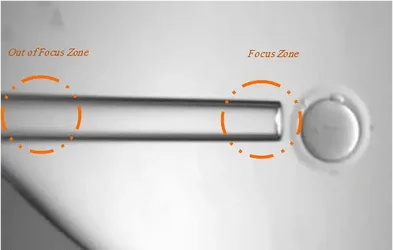
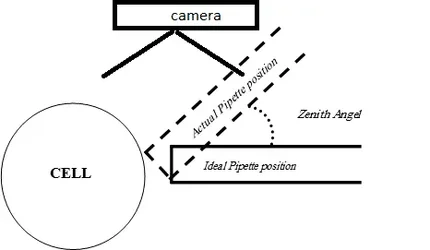
I am a scientist and now we are inspecting a project to see have gone so terribly wrong. the attached picture is from one of our tests in which we pull a living cell inside a small tube and we measures the pulled length. from the picture we can the tip of the pipette is more clear than the root of the tube. we are concluding this means that there is an "in depth" distance between tip and root of the pipette. a diagram is provided in figure 2. the camera which have captured the image belonged to an inverted microscope its placed precisely to be perpendicular to the test plane and focus on that plane, the subject cell is "fairly" in the center of the lens of the camera.
my question is this: could this decrease in picture quality be a result of any factor beside the in depth distance? say some lens feature or any thing like that?
Many thanks
I am a bit of an odd bird here as the best thing i know about photography is how to press that small bottom on my cell. fingers crossed, that's going to be changed.
I am a scientist and now we are inspecting a project to see have gone so terribly wrong. the attached picture is from one of our tests in which we pull a living cell inside a small tube and we measures the pulled length. from the picture we can the tip of the pipette is more clear than the root of the tube. we are concluding this means that there is an "in depth" distance between tip and root of the pipette. a diagram is provided in figure 2. the camera which have captured the image belonged to an inverted microscope its placed precisely to be perpendicular to the test plane and focus on that plane, the subject cell is "fairly" in the center of the lens of the camera.
my question is this: could this decrease in picture quality be a result of any factor beside the in depth distance? say some lens feature or any thing like that?
Many thanks