tpe, take a pic of your setup or explain how you attached a microscope's objective to your camera. Or did I misunderstand? I have 100s of objectives laying around. If I could use them with a camera directly somehow instead of through the microscope that would be neat!
Hi Bifurcator. If you have loads of microscope objectives thats great, they give the best results. Also it is really easy to attach them, I hope you have some bellows because that is the easiest. What i did is just attach the bellows to the camera, then i used a m42 adaptor to help me fit a DVD, painted black and cut down to size to fit the end of the bellows, then i screwed the microscope lens into the hole in the DVD.
Using bellows is really good because it allows you to have the lens at the optimum distance from the plane of the film (it does not have to be exact). The distance is usually 160 mm or 170 mm, coresponding to the equivilant number on the lens. If there is no number but an infinity sign or inf or similar then the distance could be anything, but usually the distance is similar and it will probably work anyway. The bellows also allow you to focus by changing their length.This is also a great help for stacking.

This is one of my setups... the one with the DVD jammed in the end of th ebellows and the microscope objective in the hole of the DVD. The white thing on the end is a ping pong ball to diffuse the light, and there is a little cardboard roll as a lense hood. You can also use an enlargment lens in a similar way, and there are some good quality ones out there for almost nothing as everything has gone digital. Also you really do need the best form of tripod you can get your hands on, for these i use many different things but the best is screwing the camera directly to the table that the subject is on.
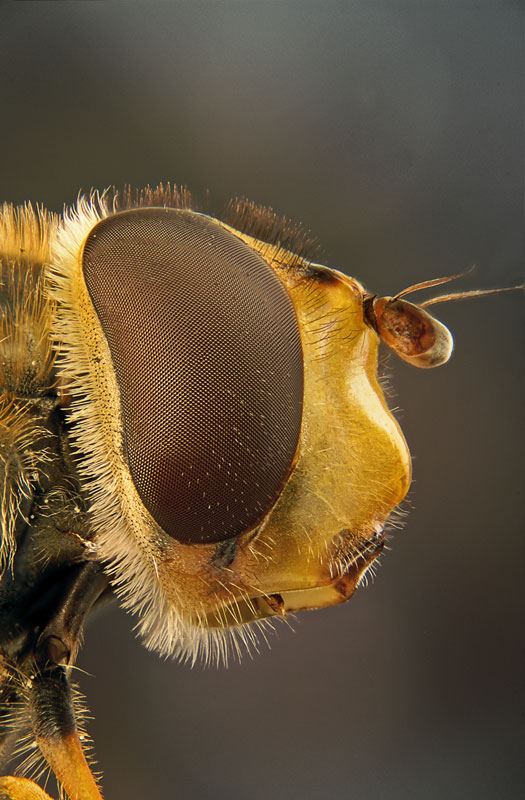
This is one of my best so far as resolution goes, the original is 12mp and will happily enlarge to A3, i am not sure what setup it was now, but it is worth being carefull that when you try a lens with a higher magnification you do actually get more detail on the picture, sometimes you dont and are better of with less magnification and cropping a bit more. You can also place a teleconverter between the bellows and the camera to frame the picture better and remove any vingetting but watch out as you may also lose resolution.
This may help if you get into it and then into stacking, as once you get down to that scale your DOF really is nothing.
http://www.scientificillustration.net/focus_stacking.html
There could be one problem, and that depends on your camera, as if you use a non standard lens i believe that some of them wont release the shutter, and that is make specific. My sony has a setting allowing you to use a non standard lens. I hope yours has the same.
Best of luck, and i would be very interested to see how it goes, dont hesitate to mail/pm if you get any questions. Whatever it is great fun and i hope you enjoy it if you take the plunge.
Hmnn i should probably warn that even though it seems simple it is not extreemly easy, it generally does not work first time (lighting problems etc) and it takes a couple of hours to set up and process a single shot. O.K maybe that doesnt sound too bad, but the worst of it is it is very hard to stop trying because there are so many "almost shots" and that can really eat your time if you know what i mean?
tim



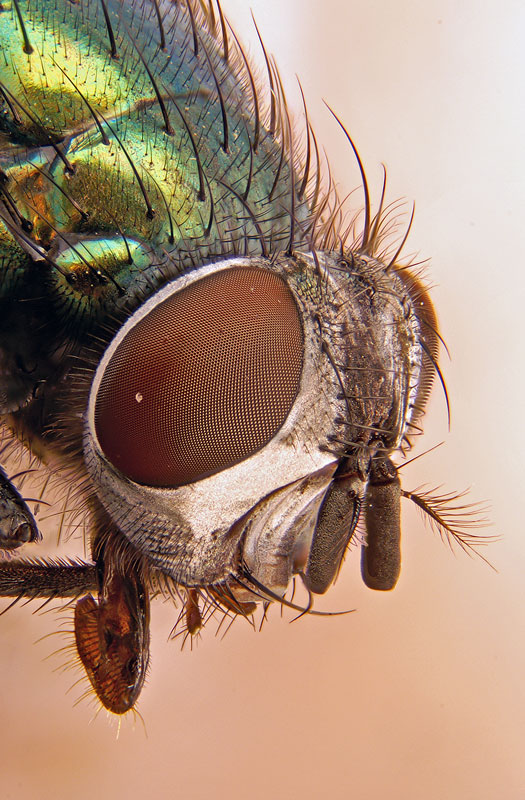
 Basically I can see like these through it and take pics of the same: