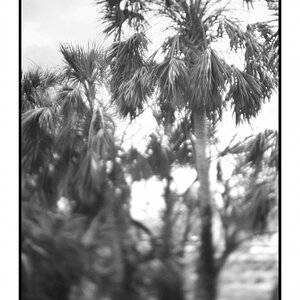
Hmm. That just seems to desaturate the image and makes it look washed out.
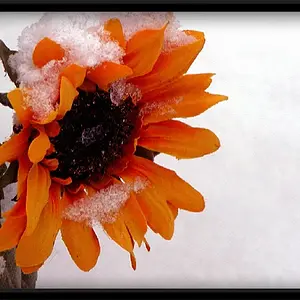
If you look at the blacks in the background of the original they are 'warm'. Changing the colour temp is just an easy way of getting these back to nearer neutral in tone.
Colour temperature is to do with how much red or blue there is in the light. The bluer the light the higher the colour temperature.
Your eye automaticaly compensates for changes in the colour temp of a light source, but film can't. This is why you used to get two kinds of pro colour neg - tungsten and daylight. And you also had lots of Wratten colour correction filters such as 80A, 80B, 82A and so on. You used to find the colour temp of your light source using a colour temp meter and then use appropriate filtration to compensate. The aim was to get the colours back to 'natural'. Without doing tnis the colours developed a cast - too red or too blue - and it could look odd.
Digital alows you to set the colour temp in camera. Usualy it's set to Auto but this can lead to problems - or I have found that it can on my DSLR. I took two shots under the same conditions and the camera decided they were different colour temps with the result that one came out looking yellow.
I had originaly felt that your first shot had the colours looking a bit un-natural because of this. But on a longer view I don't think it bothers me nearly enough now to worry about.
If you have a bit of time on your hands though you might like to play around with the colour saturation and see if you can get the blacks in the back a little nearer neutral - just to see.






![[No title]](/data/xfmg/thumbnail/31/31709-79016edd1a9f5ea41ef60f546bd0236d.jpg?1734160386)