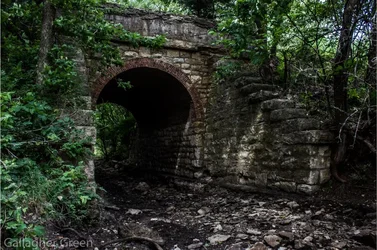
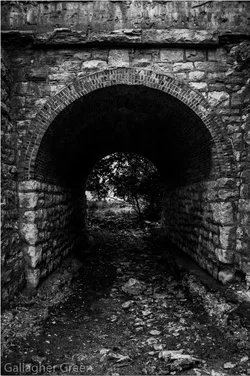
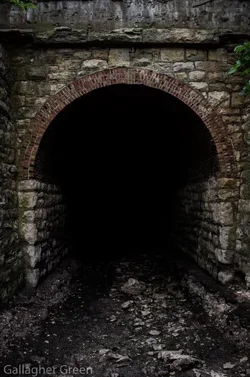
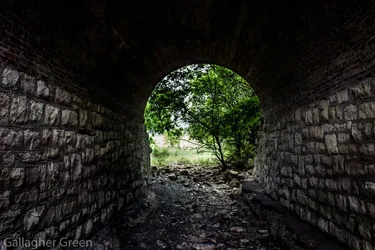
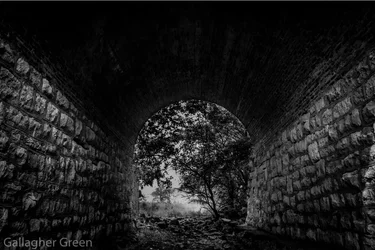
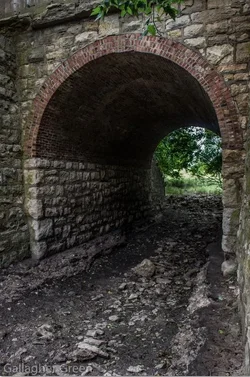
I like #2, but it needs straightening. All except #5 look like you stood in front of the bridge and clicked. Did you try getting down on the ground, or positioning the opening in different thirds of the frame?
What about leading lines in the brickwork taking us from one corner of the frame the other end of the tunnel in the opposite corner of the frame?
Tunnels can be eerie places and there's a lot more eerie to be got out of this one!
I'm not sure exactly what you mean, but am very interested in getting better photos!
So how do I do this?
I am still very new to photography and every little bit helps a lot!

Leading lines are a composition tool which lead the eye through a photo.
Here are a few examples (none of these are mine):
http://4.bp.blogspot.com/-b1wV6UBI3...NA/GnYaJnUcvqQ/s1600/leading-lines-subway.jpg (crap photo, but illustrates the point!)
http://4.bp.blogspot.com/-5uB3SDLtvAM/TV3gHyaN5RI/AAAAAAAAE7c/mGCXBHI140g/s1600/DSC_0408-small.jpg
http://amaristorres.files.wordpress.com/2010/09/img_3653.jpg
The lines in these shots lead the eye from one part of the frame to another. Leading lines can be found in almost anything: brickwork, fences, railways, paving, tiles, telegraph wires and lines of pylons, bridges, anything! They are always useful in photographs of things that have length or depth as instead of the eye simply landing on a shot, the eyes instead naturally follow the lines to see where they lead. If you can put a subject at the end of a line or somewhere on the journey along it (perhaps joining forces with the
Rule of Thirds), that will add another compositional string to your bow.
Tell the viewer where you want them to look without having to tell them!







![[No title]](/data/xfmg/thumbnail/37/37640-803bb25a4f46642289fe136733ddfbde.jpg?1734170763)

![[No title]](/data/xfmg/thumbnail/34/34556-60d61b1903f6554f7373cddfe5823280.jpg?1734165526)