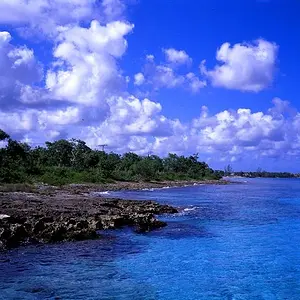
OK, I gotta ask and I don't mean to sound like a jerk...... is the water that blue for real or is that a product of some nice editing.... if it's real, it's time for me to start planning a trip lol
OK, I gotta ask and I don't mean to sound like a jerk...... is the water that blue for real or is that a product of some nice editing.... if it's real, it's time for me to start planning a trip lol
The magnificent intense blue of Crater Lake is due to its great depth and clarity. Sunlight is able to penetrate deep into the water. The depth absorbs many of the longer rays and reflecting the shorter rays of the white light spectrum. Red light is the longest wavelength, thus gets absorbed. Violet and blue light are the shortest wavelengths, thus get scattered and reflected back to us, causing the lake to be its famous Crater Lake blue. The spectrum of the lake color changes from deep blue (31-46 m, or 100-150 ft) to light blue (<31 m, or 100 ft) to green (<15 m, or 50 ft) to yellow (<9 m, or 30 ft). -- Frequently Asked Questions
OK, I gotta ask and I don't mean to sound like a jerk...... is the water that blue for real or is that a product of some nice editing.... if it's real, it's time for me to start planning a trip lol
The magnificent intense blue of Crater Lake is due to its great depth and clarity. Sunlight is able to penetrate deep into the water. The depth absorbs many of the longer rays and reflecting the shorter rays of the white light spectrum. Red light is the longest wavelength, thus gets absorbed. Violet and blue light are the shortest wavelengths, thus get scattered and reflected back to us, causing the lake to be its famous Crater Lake blue. The spectrum of the lake color changes from deep blue (31-46 m, or 100-150 ft) to light blue (<31 m, or 100 ft) to green (<15 m, or 50 ft) to yellow (<9 m, or 30 ft). -- Frequently Asked Questions
OK, I gotta ask and I don't mean to sound like a jerk...... is the water that blue for real or is that a product of some nice editing.... if it's real, it's time for me to start planning a trip lol
The magnificent intense blue of Crater Lake is due to its great depth and clarity. Sunlight is able to penetrate deep into the water. The depth absorbs many of the longer rays and reflecting the shorter rays of the white light spectrum. Red light is the longest wavelength, thus gets absorbed. Violet and blue light are the shortest wavelengths, thus get scattered and reflected back to us, causing the lake to be its famous Crater Lake blue. The spectrum of the lake color changes from deep blue (31-46 m, or 100-150 ft) to light blue (<31 m, or 100 ft) to green (<15 m, or 50 ft) to yellow (<9 m, or 30 ft). -- Frequently Asked Questions



 . Yes. It's that blue.



![[No title]](/data/xfmg/thumbnail/40/40286-86401b94de8b01bea8bb4ea154aaea0a.jpg?1734174701)
![[No title]](/data/xfmg/thumbnail/40/40285-2ce5915035c220ccb3485030863b62d0.jpg?1734174700)

![[No title]](/data/xfmg/thumbnail/40/40287-4f839095000f74d779b90ed75df9dc62.jpg?1734174702)