What's new

Damn it...Im Determined!

:confused:

I think I just have to focus on one thing at a time here...I'm getting slammed from every direction...if I go by the basic stuff I just learned and apply it, then I'll be able to start applying other methods...so...is the basic stuff I listed in my 1st post a resonable starting point to go by?


Baby steps!

Once you start understand the basics of manual setting, and your light meter, you should move on to understanding metering modes. After shooting for a while you will start seeing how often your meter is "wrong". Wrong is generally off by a little bit one way or another. Shooting snow is a great example of this.

Then I would start tackling Depth of Field, and learning about the hyper focal distance, why it is important, when it is needed...

This is where you will start assembling what you learned to take a "creative" exposure. You will be making the decisions to create your image the way you want to.
 
I think I just have to focus on one thing at a time here...I'm getting slammed from every direction...if I go by the basic stuff I just learned and apply it, then I'll be able to start applying other methods...so...is the basic stuff I listed in my 1st post a resonable starting point to go by?

If you are feeling overwhelmed, re-read bitters post below. He makes it very simple to stay in control once you know what you are photographing and what look you want to achieve in the photo.

You do know how your meter works, don't you? It's kinda the key to the puzzle.

Disregarding metering modes for the moment...


Capture3.jpg


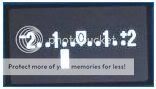
To get your setting for an exposure, your goal is to get the big bar under the scale at zero.
This is what the camera thinks is the correct exposure (it's not always right though).

My method for things that are stationary...
First I consider my lighting conditions and set the ISO.
Then I decide what DoF I want, and set the aperture.
Now I have to change the shutter speed to get that bar at zero.

If I want to stop action...
Again, ISO for the lighting conditions.
I set my shutter speed to something like 1/250
Now you are changing the aperture to get that bar to zero.

If you know you want a certain DoF, and a high shutter speed, you can change your ISO to get that bar to zero.

This is the very basic idea I am putting forth.


Metering modes change what the camera is metering, from The whole scene, down to a very small section of the scene.
The camera tries to tell you the setting that will yield the best exposure for the scene, achieving middle gray.
This is why, when you meter snow, the image comes out gray, and this is an example of where your meter lies to you, and you you have to decide to increase the exposure to expose for white snow, not gray.

You do know how your meter works, don't you? It's kinda the key to the puzzle.

Yep...if the the meter is flashing to the left of the 0 it is underexposed and if its flashing to the right its over...
:lol:
Im slow...but not that slow (I hope)

My D90 reads opposite of what you stated above. I am pretty sure this is the default setting on all Nikons. I seem to remember a way to switch it to the "Canon Style" readings. I have always used right is under, left is over.

Yes!! you are right...I didn't know that!!! when I read the manual (and believe me the manual isn't all it's cracked up to be) it didn't give me the info you just gave me!

The manual can only give you so much information. Do not underestimate it's usefulness though.


p!nK
 

Create an account or login to comment

You must be a member in order to leave a comment

Create account

Create an account on our community. It's easy!

Log in

Already have an account? Log in here.

Back
Top Bottom